If you have lavender growing in your garden, making simple lavender bundles is one of the easiest ways to preserve some of that beautiful harvest.
This post may contain affiliate links.
Unlike lavender wands, which are woven with the stems around the flowers, lavender bundles are wonderfully simple.
You just gather a handful of dried or freshly cut lavender stems, tie them together, and let them dry.
They make beautiful decorations, smell amazing, and are an easy way to bring a little bit of the garden indoors.
What You Need
You don’t need much to make lavender bundles:
- Freshly harvested lavender
- Twine, ribbon, or string
- Scissors or garden snips
- A warm, dry place for drying
I especially like using simple cotton twine because it gives the bundles that old-fashioned cottage-garden look.
When to Harvest Lavender
The best time to harvest lavender for drying is when the flower buds are developed and beginning to open.
Want to try making your own jelly at home?
Get my free guide with 8 easy, beginner-friendly jelly recipes you can confidently make.
Cut the stems in the morning after the dew has dried but before the heat of the day becomes intense. This helps preserve the natural fragrance and oils in the flowers.
Use clean, sharp scissors or garden snips and cut the stems several inches below the flower heads.
If you’re growing lavender specifically for tea or culinary use, be sure you’re using a variety appropriate for that purpose.
You can read more about harvesting lavender for tea in Harvesting Lavender for Tea: A Beginner’s Guide.
How to Make a Lavender Bundle
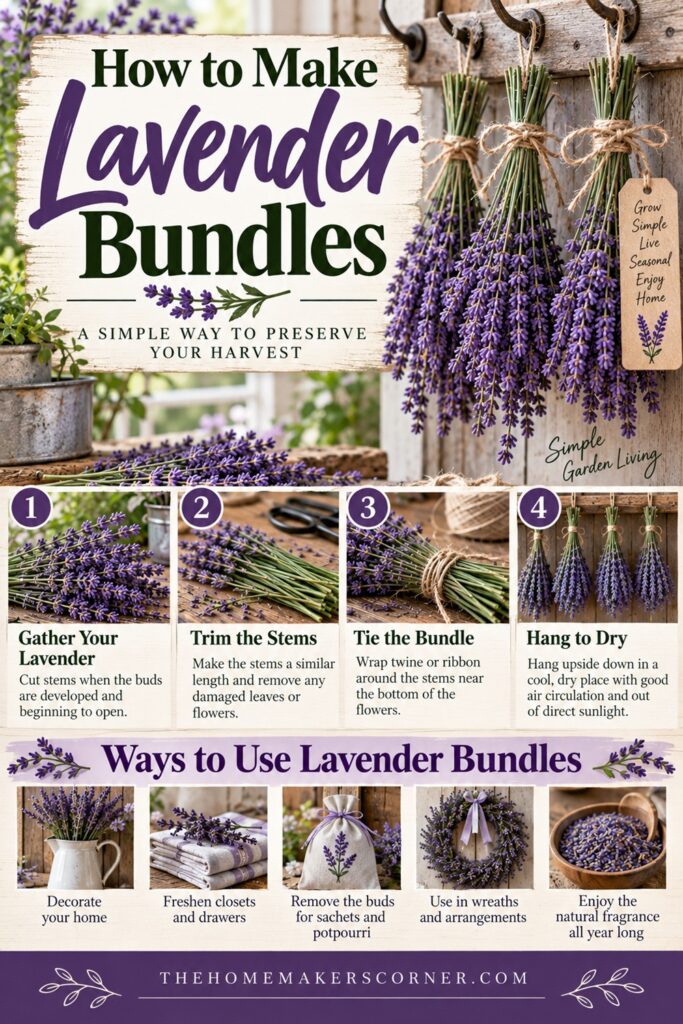
1. Gather the Lavender
Gather a small handful of lavender stems.
Don’t make the bundle too large. A smaller bundle will dry more evenly because air can circulate around the stems and flowers.
You can make all of your bundles the same size, or vary them a little for a more natural look.
2. Trim the Stems
Give the stems a quick trim so they’re roughly the same length.
Remove any damaged leaves or flowers, but don’t worry about making everything perfectly uniform. Lavender bundles look better when they have a little natural variation.
3. Tie the Bundle
Wrap a piece of twine securely around the stems near the bottom of the flower heads.
Tie it tightly enough that the stems won’t fall apart as they dry.
Keep in mind that lavender stems shrink as they dry, so check your bundles after a few days and tighten the string if necessary.
For a decorative bundle, you can use ribbon instead of twine. A simple natural ribbon or muted purple ribbon looks especially pretty with lavender.
4. Hang the Lavender Bundles
Hang the bundles upside down in a cool, dry place with good air circulation.
Keep them out of direct sunlight. A dark pantry, closet, spare room, or covered porch can work well as long as the area isn’t humid.
Don’t hang too many bundles right next to each other. Give them enough space for air to circulate.
5. Let Them Dry Completely
Depending on the humidity and size of your bundles, lavender can take anywhere from several days to a couple of weeks to dry completely.
The flowers should feel dry and the stems should become brittle.
Once your lavender is completely dry, it’s ready to use or store.
If you have more lavender than you can use right away, you can remove the dried buds from the stems and store them in an airtight container.
I have a whole guide on How to Store Dried Lavender that walks through the best way to keep your dried lavender fragrant.
How to Use Lavender Bundles
Once your bundles are dry, there are so many ways to use them around the house.
Decorate With Them
A few bundles tied with twine look beautiful hanging from a peg rail, tucked into a basket, or displayed in a simple pitcher or crock.
You can also add dried lavender bundles to a seasonal centerpiece.
Freshen a Room
Hang a bundle in a closet, bathroom, laundry room, or bedroom where you can enjoy its natural fragrance.
You can gently squeeze or rub the flowers occasionally to release more of their fragrance.
Make Lavender Sachets
Once the lavender has completely dried, remove the flowers from the stems and use the buds to make little lavender sachets for drawers and closets.
This is also a great reason to save the stems separately rather than throwing them away.
Make Lavender Potpourri
Dried lavender is perfect for homemade potpourri. Combine it with other dried flowers, herbs, citrus peel, or spices for a fragrant mixture.
If you’d like to try it, see How to Make Lavender Potpourri for another way to use your garden harvest.
Use Them for Crafts
Dried lavender bundles can be incorporated into wreaths, arrangements, gift wrapping, and other simple homemade decorations.
And if you love working with dried flowers, you might also enjoy learning How to Press Lavender.
How Long Do Lavender Bundles Last?
Lavender bundles can last for a long time when they’re kept dry and protected from humidity.
The fragrance will gradually become weaker, but you can still enjoy the bundles as dried flowers even after they’ve lost some of their scent.
If a bundle becomes damp or develops mold, it’s best to discard it.
Don’t Confuse Lavender Bundles With Lavender Wands
Lavender bundles and lavender wands are sometimes used interchangeably, but they’re actually different projects.
A lavender bundle is simply a bunch of lavender stems tied together.
A lavender wand involves weaving the stems around the flower heads to create a decorative enclosed shape.
Both are beautiful, but if you want something quick and easy, lavender bundles are definitely the way to go.
What to Do With Your Lavender Harvest
One of the things I love about growing lavender is that you can keep finding new ways to use it after the flowers have finished blooming.
You can make simple bundles for decorating, dry the flowers for potpourri and sachets, press the flowers for crafts, or save the dried lavender for homemade projects throughout the year.
If you’re growing a lot of lavender, you may also want to learn Can You Divide Lavender? and The Best Place to Plant Lavender in Your Cottage Garden so you can keep your lavender plants healthy and productive.
And if you’re wondering how to keep your plants looking their best, When and How to Prune Lavender is another helpful guide to keep handy.
Making lavender bundles doesn’t require special equipment or complicated techniques.
Cut. Gather. Tie. Hang.
That’s really all there is to it.
I love projects like this because they’re so simple. You take something you grew in your own garden, tie it up with a little twine, and suddenly you have something beautiful to enjoy around the house for months.
It’s one more little way to bring cottage garden living indoors and make the most of what you’re already growing.
Follow my lavender board on Pinterest.