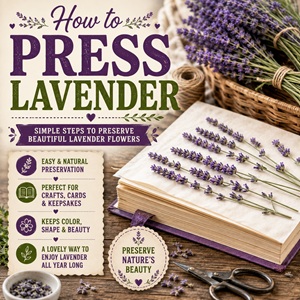
Lavender is one of those garden plants that is almost as beautiful dried as it is growing in the garden.
This post may contain affiliate links.
If you have more lavender than you know what to do with, pressing the flowers is a simple way to preserve them for crafts, cards, journals, homemade decorations, and other projects.
Pressed lavender keeps some of its beautiful color and delicate shape, and the process doesn’t require any special equipment. All you really need is fresh lavender, paper, and something heavy.
When to Harvest Lavender for Pressing
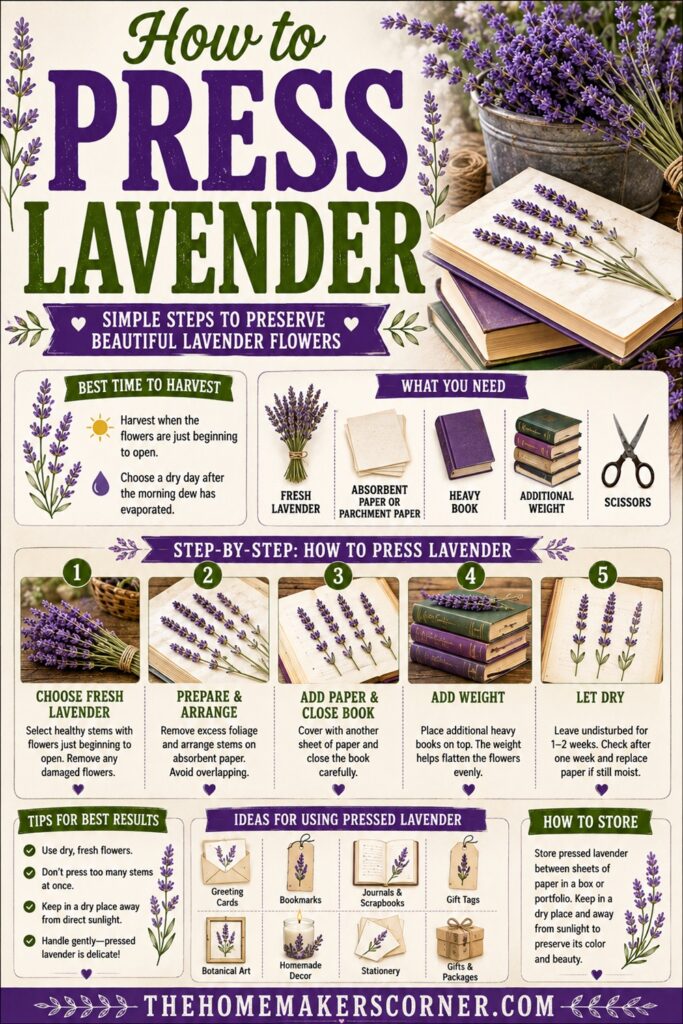
The best time to harvest lavender for pressing is when the flowers are just beginning to open. At this stage, the stems are still relatively fresh and the flowers have good color.
Choose a dry day and harvest after the morning dew has evaporated. Avoid flowers that are wet from rain or heavy dew because excess moisture can cause them to discolor or mold while they are being pressed.
If you’re growing lavender specifically for harvesting, you may also want to read Harvesting Lavender for Tea: A Beginner’s Guide.
What You Need
You don’t need a fancy flower press to get started.
Want to try making your own jelly at home?
Get my free guide with 8 easy, beginner-friendly jelly recipes you can confidently make.
You’ll need:
- Fresh lavender stems
- Absorbent paper or parchment paper
- A heavy book
- Additional books or another heavy object
- Scissors
A flower press works beautifully if you have one, but a heavy book works just as well for a small batch.
How to Press Lavender
1. Choose Fresh Lavender
Select healthy lavender stems with flowers that have just started opening.
Remove any damaged or discolored flowers. If the stems are especially long, cut them into smaller sections that will fit comfortably inside your book.
2. Remove Excess Foliage
You can leave some of the lavender leaves attached, but remove any unnecessary foliage.
The thinner your arrangement is, the more evenly it will press and dry.
3. Arrange the Lavender
Open a heavy book to a clean, dry page.
Place a sheet of absorbent paper on the page and arrange the lavender on top. Try not to overlap the stems and flowers too much.
If you’re pressing several pieces, give them plenty of room. Overlapping flowers can trap moisture and may not dry evenly.
Cover the lavender with another sheet of paper.
4. Close the Book
Carefully close the book so the flowers don’t shift too much.
Place several additional heavy books on top. You want enough weight to flatten the lavender, but you don’t need to crush it.
A stack of cookbooks or other heavy books works well.
5. Let It Dry
Leave the lavender undisturbed for about 1 to 2 weeks.
Check it after the first week. If it still feels soft or moist, replace the paper with fresh, dry paper and press it again.
The lavender is ready when it feels completely dry and papery.
How to Keep Pressed Lavender From Turning Brown
A little care when harvesting can make a big difference.
Choose flowers that are fresh and free from moisture, and don’t pack too many stems into one section of the book. Good air absorption is important while the flowers are drying.
It’s also best to keep the book somewhere dry and away from direct sunlight while the lavender is being pressed.
Sunlight can fade the flowers, while humidity can slow the drying process.
What Can You Do With Pressed Lavender?
Once your lavender is completely dry, there are lots of ways to use it.
Pressed lavender is beautiful for:
- Homemade greeting cards
- Bookmarks
- Scrapbooking
- Journaling
- Botanical artwork
- Gift tags
- Handmade stationery
- Framed botanical art
- Homemade candles and decorations
- Decorating packages and gifts
You can also combine pressed lavender with other flowers and foliage to create a simple botanical arrangement.
If you enjoy growing lavender for homemade projects, you might also like How to Grow Lavender from Cuttings and How to Grow Lavender from Seed (Step-by-Step Guide).
How to Store Pressed Lavender
Handle pressed lavender carefully because the flowers and stems become very fragile once they’re completely dry.
Store pieces flat between sheets of paper in a dry place until you’re ready to use them. A box or portfolio works well if you’re keeping a larger collection.
Keep them away from moisture and direct sunlight to help preserve their color.
Can You Press Lavender That Has Already Dried?
Yes, but fresh lavender usually gives you better results.
Already-dried lavender tends to be more brittle and can crumble when pressed.
If you’re harvesting lavender specifically for pressing, start with fresh flowers rather than waiting until the stems are completely dry.
And if you have lavender that’s already past its prime in the garden, don’t throw it away. You may still be able to use it for other projects, including Canning Lavender Syrup to Enjoy All Year Long,
Homemade Lavender Jelly Recipe You’ll Love, or The Best Lavender Brownie Recipe for Chocolate Lovers.
Pressing Lavender Is an Easy Way to Preserve the Garden
One of the nicest things about pressing flowers is that it lets you keep a little piece of the garden long after the growing season is over.
Lavender is especially rewarding because its slender stems and purple flowers are naturally beautiful, even after they’re flattened and dried.
A few stems from your garden can become a homemade card, bookmark, piece of artwork, or keepsake.
And if you’re growing lavender in a cottage garden, you can keep finding new ways to enjoy the harvest long after the flowers have finished blooming.
Follow my lavender board on Pinterest.