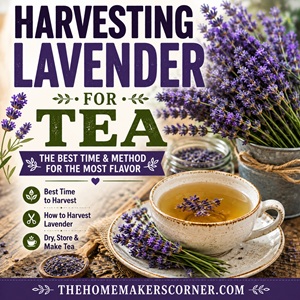
Few things are as relaxing as a cup of homemade lavender tea made from flowers you’ve grown yourself.
This post may contain affiliate links.
Harvesting lavender at the right time makes all the difference in preserving its delicate floral flavor and soothing aroma.
Whether you’re growing lavender in a cottage garden or a small herb bed, it’s easy to harvest enough blooms for tea throughout the season.
Here’s how to harvest, dry, and store lavender for the freshest homemade tea.
Choose a Culinary Lavender Variety
Not all lavender varieties have the same flavor. For tea, English lavender (Lavandula angustifolia) is the best choice because it has a sweeter, less camphor-like taste than many other varieties.
If you’re still deciding what to grow, take a look at The Best Lavender Varieties for Cottage Gardens, Bees, and More to find one that’s perfect for your garden.
Harvest Before the Flowers Fully Open
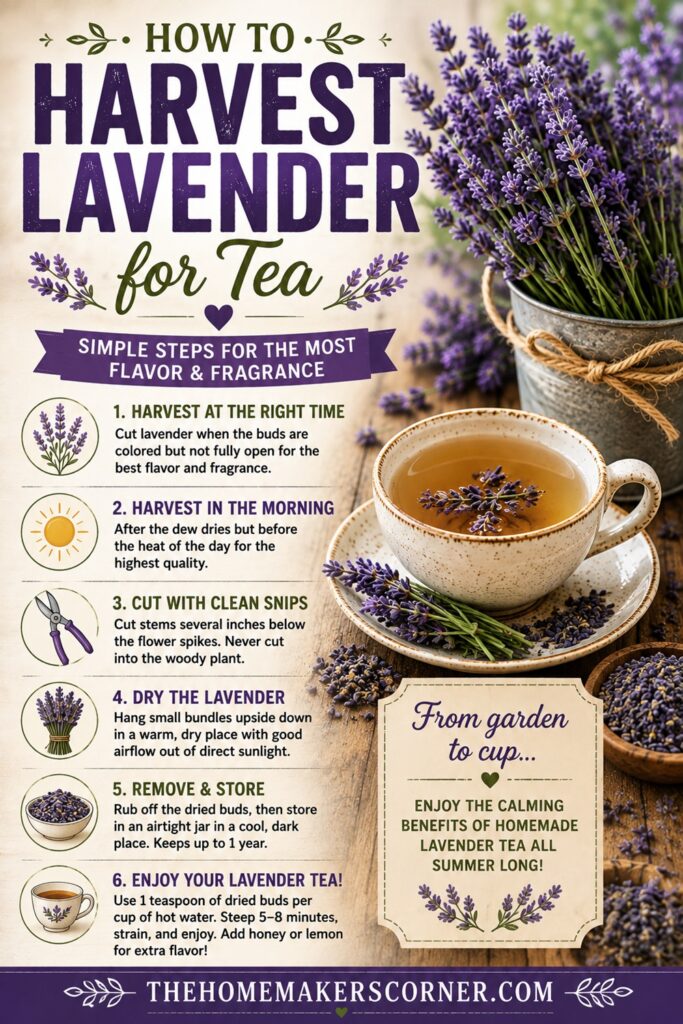
The best time to harvest lavender for tea is when the flower buds have developed color but before most of them have opened.
Want to try making your own jelly at home?
Get my free guide with 8 easy, beginner-friendly jelly recipes you can confidently make.
At this stage:
- Essential oils are at their highest.
- The flowers have the strongest fragrance.
- The flavor is sweeter and less bitter.
- The buds dry beautifully without falling apart.
If you wait until the flowers are fully open, they’ll still make good tea, but much of the fragrance will already have faded.
Harvest in the Morning
For the highest-quality tea, harvest:
- After the morning dew has dried
- Before the afternoon heat arrives
- On a dry, sunny day
Avoid harvesting after rain because moisture can increase drying time and reduce quality.
Use Clean Garden Snips
Cut each flowering stem several inches below the flower spikes, just above a set of healthy leaves.
Never cut into the woody portion of the plant, as lavender doesn’t regrow well from old wood.
If you’re harvesting a large amount, gather stems into small bundles with a rubber band or twine.
You may also enjoy When and How to Prune Lavender (Beginner’s Guide) to keep plants healthy after flowering.
Dry the Lavender
Proper drying helps preserve both flavor and fragrance.
Hang bundles upside down in a warm, dry room with good airflow.
Keep the lavender:
- Out of direct sunlight
- Away from humidity
- In a well-ventilated area
Depending on your climate, drying usually takes 1–3 weeks.
The flowers are ready when they feel crisp and crumble easily between your fingers.
Remove the Flower Buds
Once dry, gently rub each flower spike between your fingers over a bowl.
The tiny purple buds will fall away while the stems remain behind.
Only the dried flower buds are typically used for tea.
Store for Freshness
Place the dried buds in:
- Glass jars
- Airtight containers
- Metal tea tins
Store them in a cool, dark pantry away from heat and sunlight.
Properly stored lavender keeps its flavor for up to one year.
More Herbal Tea Ideas
How to Make Lavender Tea
Use about 1 teaspoon of dried lavender buds for every cup of hot water.
Steep for 5–8 minutes, then strain.
For extra flavor, try adding:
- Honey
- Lemon
- Chamomile
- Mint
- Green tea
- Black tea
Lavender also blends beautifully into homemade herbal tea mixes.
You might also enjoy Easy Lavender Tea Bread Recipe You’ll Want to Bake Again for an afternoon tea pairing.
More Ways to Use Your Lavender Harvest
Once you’ve harvested plenty of lavender, there are countless ways to enjoy it around your home.
Some favorites include:
- Homemade Lavender Jelly Recipe You’ll Love
- How to Make Homemade Lavender Oil from Your Garden
- Canning Lavender Syrup to Enjoy All Year Long
- The Best Lavender Brownie Recipe for Chocolate Lovers
- The Best Honey Iced Lavender Latte Recipe
Growing lavender isn’t just about beautiful flowers—it’s about creating simple, everyday moments that bring the garden into your home.
A few carefully harvested stems can become dozens of comforting cups of tea, filling your kitchen with the relaxing fragrance of one of the cottage garden’s most beloved herbs.
Follow my lavender board on Pinterest.