
Lavender is one of the easiest perennial herbs to grow, but many gardeners aren’t sure when or how to prune it.
This post may contain affiliate links.
A little pruning each year keeps lavender full, healthy, and covered with fragrant blooms. Without regular pruning, plants often become woody, leggy, and produce fewer flowers over time.
If you’ve been wondering when to prune lavender or how much to cut back, this guide will walk you through everything you need to know.
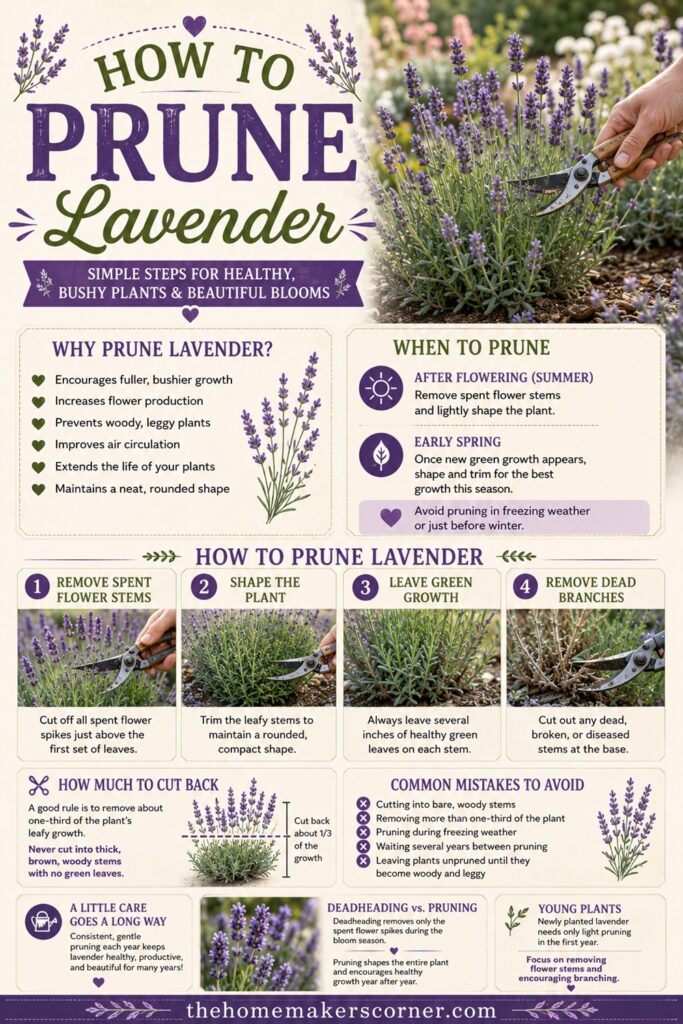
Why Pruning Lavender Is Important
Pruning isn’t just about making lavender look tidy. It also helps:
- Encourage fuller, bushier growth
- Increase flower production
- Prevent plants from becoming woody
- Improve air circulation
- Extend the life of your lavender plants
- Maintain an attractive rounded shape
A well-pruned lavender plant can thrive for many years with very little maintenance.
When to Prune Lavender
Lavender is usually pruned once or twice each year.
After Flowering
The best time for a light pruning is after your lavender finishes blooming in summer. Remove spent flower stems and lightly shape the plant.
Want to try making your own jelly at home?
Get my free guide with 8 easy, beginner-friendly jelly recipes you can confidently make.
Early Spring
In early spring, once you see fresh green growth beginning, give the plant a more thorough shaping if needed. This encourages vigorous new growth for the coming season.
Avoid pruning during freezing weather or just before winter, as new growth can be damaged by cold temperatures.
How to Prune Lavender
Pruning lavender is simple once you know where to cut.
Step 1: Remove Dead Flower Stems
Cut off all spent flower spikes from the previous bloom.
Step 2: Shape the Plant
Trim the leafy stems to maintain a rounded, compact shape.
Step 3: Leave Green Growth
Always leave several inches of healthy green leaves on each stem.
Lavender grows from green wood much more reliably than from old woody stems.
Step 4: Remove Dead Branches
If you find broken, dead, or diseased stems, remove them completely.
How Much Should You Cut Back?
A good rule is to remove about one-third of the plant’s leafy growth.
Avoid cutting into thick, brown woody stems that have no green leaves.
Most lavender varieties struggle to produce new growth from old wood.
Don’t Cut Into Old Wood
This is the biggest mistake gardeners make.
Older lavender develops woody stems near the base. While it’s tempting to cut the plant back hard to make it smaller, severe pruning into bare wood can permanently damage or even kill the plant.
Instead:
- Prune only into leafy green growth.
- Leave a cushion of green foliage.
- Gradually shape the plant over several seasons if it has become large.
More Lavender Ideas
- How Much Water Does Lavender Need
- How to Grow Lavender from Cuttings
- Companion Plants for Lavender
- Deadheading Lavender: When and How to Do It
- The Best Lavender Varieties
How to Prune Young Lavender
Newly planted lavender needs only light pruning during its first year.
Focus on:
- Removing flower stems
- Encouraging branching
- Maintaining a rounded shape
Avoid heavy pruning until the plant is well established.
Pruning Mature Lavender
Older plants benefit from annual maintenance.
Each year:
- Remove faded flower stems.
- Cut back about one-third of the leafy growth.
- Maintain a rounded mound.
- Remove damaged branches.
Consistent yearly pruning helps prevent excessive woody growth.
Should You Prune Lavender in the Fall?
In mild climates, a light trim after flowering is usually fine.
In areas with cold winters, avoid heavy fall pruning. Leaving some foliage helps protect the plant during winter.
Wait until spring for more significant shaping if harsh weather is common in your area.
Deadheading vs. Pruning
These two tasks are often confused.
Deadheading removes only the spent flower spikes throughout the blooming season.
Pruning shapes the entire plant by trimming leafy growth to encourage healthy branching and long-term growth.
Both are important, but they serve different purposes.
Common Lavender Pruning Mistakes
Avoid these common problems:
- Cutting into bare woody stems
- Removing more than one-third of the plant
- Pruning during freezing weather
- Waiting several years between pruning sessions
- Leaving plants unpruned until they become woody and leggy
Regular light pruning is much healthier than occasional severe pruning.
Frequently Asked Questions
Can you cut lavender back to the ground?
No. Lavender should never be cut back to the ground. Always leave healthy green growth on the plant.
Does pruning encourage more flowers?
Yes. Annual pruning encourages new growth, which produces the following season’s blooms.
What happens if lavender isn’t pruned?
Plants often become woody, open in the center, produce fewer flowers, and have a shorter lifespan.
Should every lavender variety be pruned the same way?
Most English, French, Spanish, and lavandin varieties benefit from the same basic approach: remove spent flowers, shape the plant, and avoid cutting into old wood.
Pruning lavender is one of the simplest ways to keep your plants healthy and productive. A few minutes of trimming each year encourages fuller growth, abundant blooms, and a beautiful shape that lasts for years.
With consistent annual pruning, your lavender will reward you with fragrant flowers, healthy foliage, and a stunning display season after season.
Follow my lavender board on Pinterest.