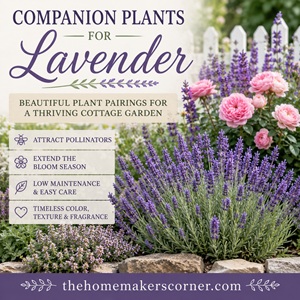
Lavender is one of those plants that seems to make every garden feel a little more peaceful.
This post may contain affiliate links.
Its fragrant blooms sway in the breeze, bees and butterflies gather around it, and its soft purple flowers blend beautifully with almost any garden style.
Choosing the right companion plants can make lavender even more beautiful.
The best companions enjoy the same sunny, well-drained conditions while creating a garden filled with color, texture, and months of continuous blooms.
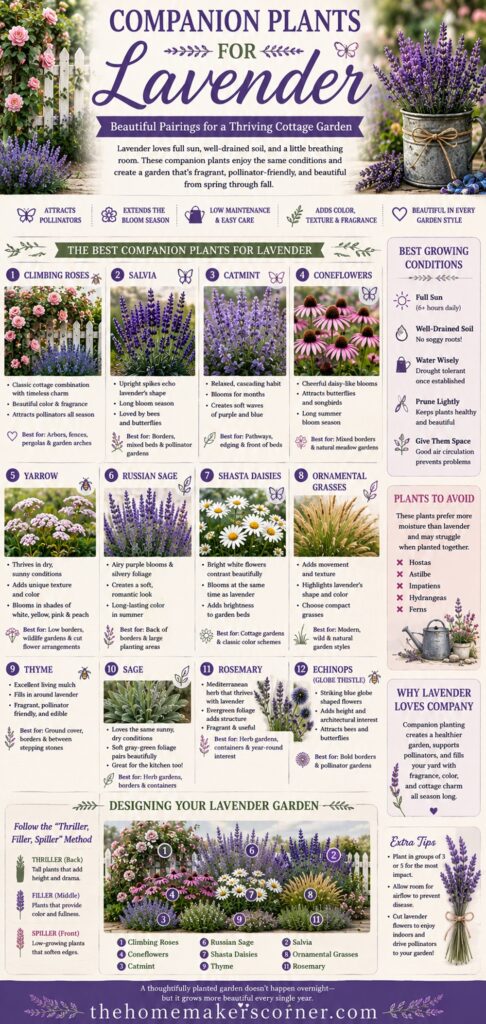
Whether you’re designing a cottage garden, planting a pollinator border, or creating a fragrant herb garden, these companion plants pair wonderfully with lavender.
Why Companion Plant Lavender?
Lavender naturally thrives alongside plants that appreciate similar growing conditions.
Companion planting can help you:
Want to try making your own jelly at home?
Get my free guide with 8 easy, beginner-friendly jelly recipes you can confidently make.
- Create a longer season of blooms
- Attract bees, butterflies, and other pollinators
- Add height, texture, and color to garden beds
- Build a low-maintenance landscape
- Design a classic cottage garden look
The key is choosing plants that love full sun and well-drained soil.
1. Roses
Few combinations are more iconic than roses and lavender.
The soft purple flower spikes beautifully complement roses in every shade, while the contrasting textures create a timeless cottage garden feel. Lavender also attracts pollinators that visit your roses throughout the season.
Best for:
- Cottage gardens
- Garden borders
- Walkways
- Rose beds
2. Salvia
Salvia produces upright flower spikes in shades of blue, purple, pink, and white that echo the form of lavender while extending the bloom season.
Together they create an effortless, natural-looking planting that pollinators love.
3. Catmint
Catmint has a relaxed, cascading habit that softens pathways and flower beds.
Its long bloom season pairs beautifully with lavender, creating waves of purple and blue from late spring into summer.
4. Coneflowers
Coneflowers bring cheerful daisy-like blooms that attract butterflies and songbirds.
Their bold flowers create wonderful contrast with lavender’s delicate flower spikes while adding weeks of summer color.
5. Yarrow
Yarrow thrives in the same sunny, dry conditions as lavender.
Its flat flower clusters provide a different texture and come in shades of white, yellow, peach, and pink that complement lavender beautifully.
6. Russian Sage
Russian sage offers silvery foliage and airy purple blooms that create a soft, romantic look.
Planting the two together gives your garden movement, fragrance, and long-lasting color throughout summer.
7. Shasta Daisies
Bright white daisies brighten lavender plantings and create the classic white-and-purple color combination found in many cottage gardens.
They also bloom during much of the same season.
8. Ornamental Grasses
Soft ornamental grasses provide movement and texture while highlighting lavender’s tidy shape.
Choose compact grasses that won’t overwhelm your lavender plants.
9. Thyme
Creeping thyme makes an excellent living mulch around lavender.
It tolerates dry conditions, attracts pollinators, and fills empty spaces with fragrant foliage.
Read more: How to Grow Thyme from Cuttings
10. Sage
Garden sage is another Mediterranean herb that enjoys the same growing conditions as lavender.
Its soft gray-green leaves create beautiful color contrast while providing fresh herbs for the kitchen.
Read more: How to Grow Sage in Pots: A Complete Guide for Beginners
11. Rosemary
Rosemary and lavender naturally belong together.
Both appreciate sunny locations, excellent drainage, and slightly lean soil. Their evergreen foliage also provides year-round interest in mild climates.
Read more: Preserve Your Rosemary Harvest with This Simple Drying Method
12. Echinops (Globe Thistle)
If you enjoy bold architectural plants, globe thistle pairs beautifully with lavender.
Its striking blue globe-shaped flowers add structure while attracting bees and butterflies.
Companion Plants to Avoid
Not every plant enjoys the same conditions as lavender.
Avoid pairing lavender with plants that prefer consistently moist soil, including:
- Hostas
- Astilbe
- Impatiens
- Hydrangeas
- Ferns
These plants require more water than lavender prefers and often struggle when planted together.
Designing a Lavender Garden
One of the joys of gardening is creating combinations that bloom throughout the seasons.
Try layering your garden with:
Back of the border
- Roses
- Russian sage
- Ornamental grasses
Middle
- Lavender
- Salvia
- Coneflowers
Front
- Creeping thyme
- Catmint
- Yarrow
The result is a garden filled with fragrance, movement, and pollinators from late spring through fall.
Growing Tips
For healthy lavender and companion plants:
- Plant in full sun.
- Choose well-drained soil.
- Avoid overwatering.
- Space plants for good air circulation.
- Remove spent blooms to encourage continued flowering.
- Prune lavender lightly each year to maintain its shape.
More Lavender Ideas
- How to Grow Lavender in Pots
- When to Harvest Lavender
- How to Dry Lavender
- The Best Lavender Varieties
- Lavender Syrup
- Lavender Jelly
- Lavender Lemonade
- Lavender Tea Bread
A Garden That Gets Better Every Year
Lavender has a wonderful way of tying a garden together. As companion plants mature around it, your flower beds become richer with color, fragrance, and life.
Whether you’re creating a peaceful herb garden, a welcoming pollinator border, or the cottage garden you’ve always imagined, lavender and its companions offer timeless beauty that returns year after year.
Take your time adding plants each season. A thoughtfully planted garden doesn’t happen all at once—it grows into something even more beautiful with every passing year.
Follow my lavender board on Pinterest.