
Fresh rosemary is one of the easiest herbs to preserve, and drying it at home is a wonderful way to enjoy your garden harvest all year long.
Whether you’re growing rosemary in your herb garden or harvesting sprigs from a container on your patio, dried rosemary is perfect for soups, roasted vegetables, breads, marinades, and homemade seasoning blends.
In this guide, I’ll show you several easy methods for drying rosemary so you can preserve its wonderful aroma and flavor for months to come.
If you enjoy preserving herbs, be sure to read my guides on How to Dry Mint and How to Dry Lavender for even more ways to make the most of your herb garden.
Why You’ll Love Drying Rosemary
- Easy beginner-friendly project
- Preserves your harvest for months
- Great for cooking and baking
- Perfect for homemade seasoning blends
- Saves money on store-bought dried herbs
- Makes thoughtful handmade gifts
When to Harvest Rosemary for Drying
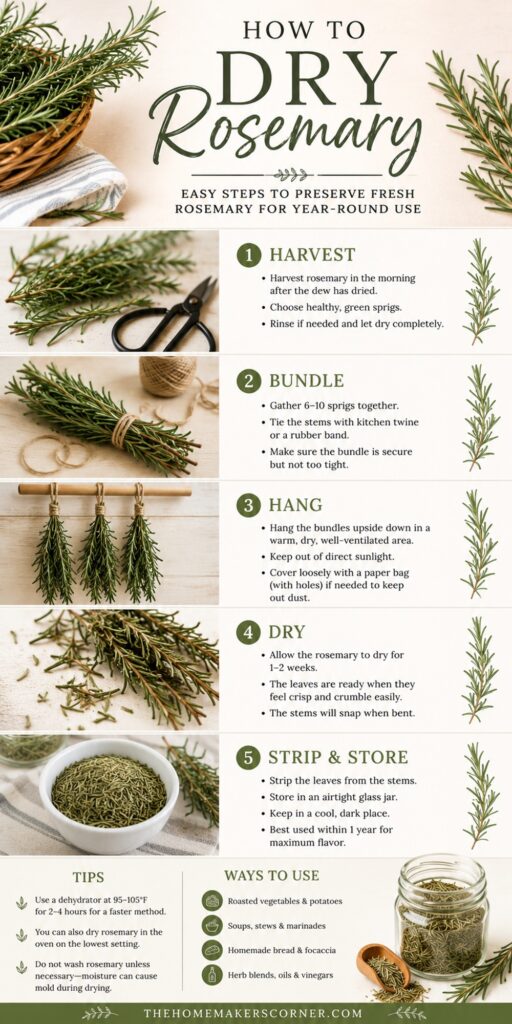
The best time to harvest rosemary is in the morning after the dew has dried but before the heat of the afternoon sun.
This post may contain affiliate links.
Choose healthy stems with fresh green leaves and avoid any branches that are yellowing or damaged.
For the strongest flavor, harvest rosemary just before the plant begins to flower.
Supplies
- Fresh rosemary sprigs
- Kitchen twine or rubber bands
- Scissors or garden snips
- Paper bags (optional)
- Airtight glass jars
Method 1: Air Dry Rosemary (Recommended)
Air drying is the easiest and most traditional method.
Step 1
Harvest several long sprigs of rosemary.
Shake off any dirt or insects and remove damaged leaves.
Avoid washing the rosemary unless necessary. If you do wash it, allow it to dry completely before hanging.
Want to try making your own jelly at home?
Get my free guide with 8 easy, beginner-friendly jelly recipes you can confidently make.
Step 2
Gather 6 to 10 sprigs into a small bundle.
Tie the stems together with kitchen twine or a rubber band.
Step 3
Hang the bundles upside down in a warm, dry, well-ventilated room away from direct sunlight.
If you’re concerned about dust, loosely cover the bundle with a paper bag that has a few holes punched in it.
Step 4
Allow the rosemary to dry for 1 to 2 weeks.
The leaves should feel crisp and easily crumble between your fingers.
Method 2: Dry Rosemary in a Dehydrator
If you’d like to speed up the process, a food dehydrator works very well.
Arrange the rosemary sprigs in a single layer on the dehydrator trays.
Dry at 95–105°F for 2 to 4 hours, checking periodically until the leaves are completely dry.
Method 3: Oven Drying
Preheat your oven to its lowest temperature, usually around 170°F or lower.
Spread the rosemary sprigs in a single layer on a baking sheet lined with parchment paper.
Dry for 1 to 2 hours, checking often to prevent scorching.
Allow the rosemary to cool completely before storing.
How to Store Dried Rosemary
Strip the dried leaves from the stems by gently running your fingers down each stem.
Store the leaves whole until you’re ready to use them, as whole leaves retain their flavor longer than crushed herbs.
Place the dried rosemary in airtight glass jars and store them in a cool, dark pantry.
Properly stored, dried rosemary will keep its best flavor for about one year.
If you’re growing plenty of rosemary, don’t stop in the kitchen. Fresh rosemary is also wonderful for homemade skincare. Visit CreativeHomemaking to learn how to make Rosemary Body Oil with fresh rosemary sprigs.
How to Use Dried Rosemary
Dried rosemary adds wonderful flavor to:
- Roasted potatoes
- Chicken
- Pork
- Beef roasts
- Homemade bread
- Focaccia
- Soups and stews
- Marinades
- Herb butter
- Seasoning blends
- Olive oil infusions
Because dried rosemary has a stronger flavor than fresh, use about one-third as much dried rosemary when substituting in recipes.
Frequently Asked Questions
Should I wash rosemary before drying?
Only if it’s dirty. If you wash it, be sure the sprigs are completely dry before beginning the drying process.
Can I dry rosemary with the stems attached?
Yes. In fact, hanging whole stems is one of the easiest methods. Remove the leaves after they’re completely dry.
How do I know when rosemary is fully dry?
The leaves should crumble easily between your fingers and the stems should snap rather than bend.
More Ways to Preserve Fresh Herbs
If you’re harvesting herbs from your garden, you’ll also enjoy these tutorials:
- How to Dry Mint
- How to Dry Lavender
- How to Freeze Fresh Herbs
- How to Harvest Rosemary
- How to Grow Rosemary in Containers
Drying rosemary is one of the simplest ways to preserve your herb garden and enjoy fresh garden flavor throughout the year.
Whether you choose to air dry, use a dehydrator, or dry it in the oven, you’ll have fragrant rosemary ready for your favorite recipes whenever you need it.
Once you’ve mastered drying rosemary, try preserving other favorite herbs like mint and lavender to build your own homemade herb pantry.