Few plants capture the charm of a cottage garden quite like lavender.
This post may contain affiliate links.
With its fragrant blooms, silvery-green foliage, and ability to attract bees and butterflies, lavender brings beauty, fragrance, and purpose to the garden all summer long.
Whether you’re planting a kitchen herb garden, creating a cottage border, or growing herbs in containers, choosing the right type of lavender will help you enjoy healthier plants and more abundant blooms.
While there are dozens of lavender species and hundreds of named cultivars, most home gardeners grow four main types.
Each offers something a little different, from cold hardiness and culinary uses to long-lasting flowers and ornamental beauty.
Here’s a closer look at the most popular lavender varieties and how to choose the best one for your garden.
The Four Main Types of Lavender
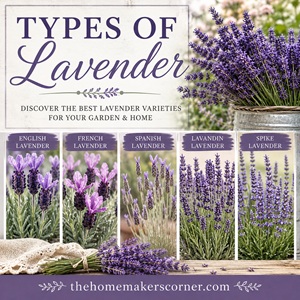
The most common types of lavender include:
Want to try making your own jelly at home?
Get my free guide with 8 easy, beginner-friendly jelly recipes you can confidently make.
- English Lavender (Lavandula angustifolia)
- French Lavender (Lavandula dentata)
- Spanish Lavender (Lavandula stoechas)
- Lavandin (Lavandula × intermedia)
Although all lavender enjoys full sun and well-drained soil, each variety has its own growing habits, fragrance, and best uses.
English Lavender (Lavandula angustifolia)
English lavender is the classic lavender most gardeners picture when they think of fragrant purple fields.
Despite its name, it actually originated around the Mediterranean and has become one of the most popular lavender varieties because of its excellent cold hardiness.
It produces compact plants covered in fragrant flower spikes from late spring through early summer. Many varieties bloom again if lightly pruned after flowering.
English lavender is the best choice for:
- Culinary recipes
- Fresh bouquets
- Dried flowers
- Sachets
- Cottage gardens
- Pollinator gardens
Popular varieties include:
- Hidcote
- Munstead
- Royal Velvet
- Melissa Lilac
- Folgate
Hardiness: USDA Zones 5-9
French Lavender (Lavandula dentata)
French lavender is easy to recognize by its softly toothed leaves and long blooming season. In mild climates, it may flower almost year-round.
Its fragrance is lighter than English lavender, but the plants produce abundant blooms and make excellent container plants.
French lavender grows best in warmer regions where winters are mild.
Best uses include:
- Containers
- Patio gardens
- Ornamental borders
- Warm-climate landscapes
Popular varieties include:
- Goodwin Creek Gray
- Linda Ligon
- Candicans
Hardiness: USDA Zones 8-11
Spanish Lavender (Lavandula stoechas)
Spanish lavender is one of the most distinctive lavender varieties thanks to the colorful bracts that resemble butterfly wings or tiny rabbit ears on top of each flower spike.
It begins blooming earlier than many other lavenders and continues flowering throughout much of the growing season.
Although the fragrance is stronger and slightly more herbal than English lavender, its unusual flowers make it a favorite ornamental plant.
Spanish lavender is ideal for:
- Cottage gardens
- Rock gardens
- Containers
- Pollinator gardens
Popular varieties include:
- Anouk
- Otto Quast
- Bandera Purple
- Primavera
Hardiness: USDA Zones 7-10
Lavandin (Lavandula × intermedia)
Lavandin is a naturally occurring hybrid between English lavender and spike lavender. It combines the cold tolerance of English lavender with larger plants and exceptionally long flower stems.
These vigorous plants produce an abundance of fragrant flowers during midsummer and are often grown commercially for essential oils.
Lavandin is an excellent choice for:
- Hedges
- Large landscape plantings
- Drying
- Essential oils
- Lavender wands
- Sachets
Popular varieties include:
- Grosso
- Provence
- Phenomenal
- Edelweiss
Hardiness: USDA Zones 5-9
Which Lavender Is Best?
The best lavender depends on how you plan to use it.
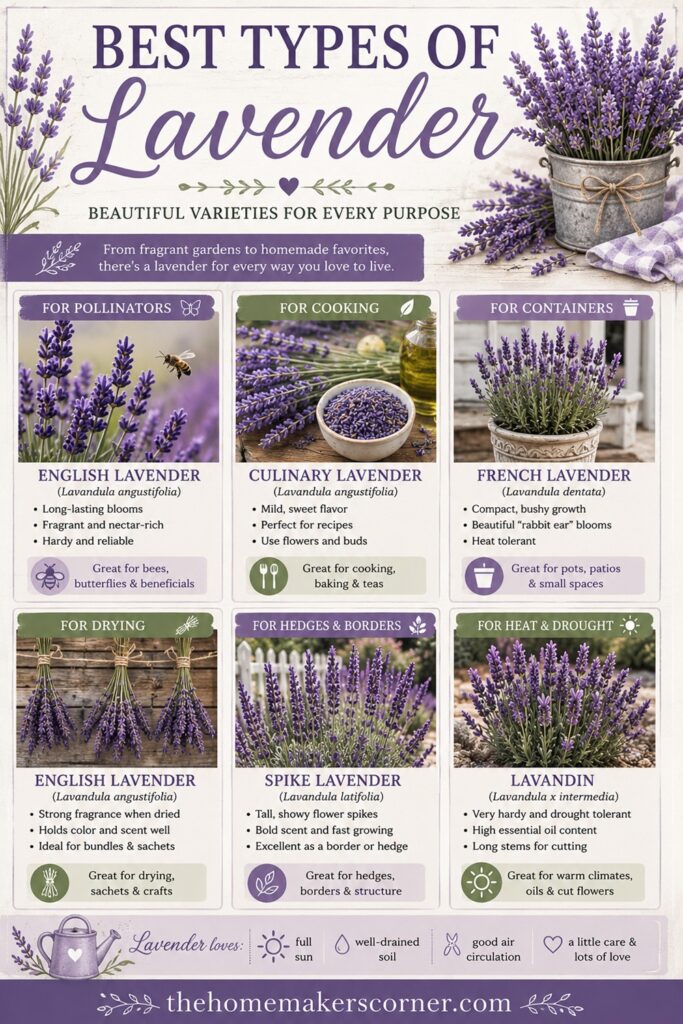
Best for Cooking
English lavender has the sweetest flavor and is the preferred variety for baking, desserts, teas, syrups, and other culinary recipes.
Best for Cold Climates
English lavender and Lavandin are the most cold-hardy choices and perform well in regions with snowy winters.
Best for Containers
French and Spanish lavender stay attractive for long periods and thrive in containers with excellent drainage.
Best for Drying
English lavender and Lavandin both dry beautifully while retaining their fragrance.
Best for Pollinators
All lavender attracts bees and butterflies, making every variety a welcome addition to a pollinator-friendly garden.
Growing Lavender Successfully
No matter which variety you choose, lavender grows best when provided with the right conditions.
- Plant in full sun.
- Use well-drained soil.
- Avoid overwatering.
- Space plants to allow good air circulation.
- Prune after flowering to encourage compact growth.
- Avoid heavy, wet soils during winter.
Healthy lavender plants often thrive for many years with very little maintenance.
More Lavender Ideas
- How to Grow Lavender in Pots
- When to Harvest Lavender
- How to Dry Lavender
- Lavender Companion Plants
- Lavender Syrup
- Lavender Jelly
- Lavender Lemonade
- Lavender Tea Bread
Frequently Asked Questions
Which lavender smells the strongest?
Lavandin varieties such as ‘Grosso’ are among the most fragrant and are commonly used for essential oils and dried arrangements.
Which lavender is edible?
English lavender (Lavandula angustifolia) is considered the best variety for culinary use because of its mild, sweet flavor.
Can different types of lavender be planted together?
Yes. As long as they have similar sunlight, drainage, and watering needs, different lavender varieties can be planted together to create a beautiful display with varying bloom times and flower shapes.
Does lavender come back every year?
Lavender is a perennial in suitable climates and returns each spring with proper care.
Whether you’re dreaming of a fragrant cottage garden, planting herbs near the kitchen door, or filling containers on a sunny patio, there’s a lavender variety that’s perfect for your space.
English lavender is a favorite for cooking and drying, French lavender thrives in warm climates,
Spanish lavender adds unique ornamental charm, and Lavandin offers vigorous growth with wonderfully fragrant blooms.
Once you discover how easy lavender is to grow, it’s hard to stop at just one variety.
Many gardeners enjoy planting several different types to extend the bloom season while adding texture, fragrance, and beauty throughout the garden.
Follow my lavender board on Pinterest.