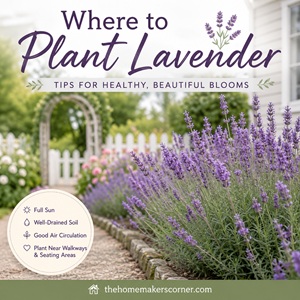
There’s something magical about walking through the garden and brushing against fragrant lavender.
This post may contain affiliate links.
Its silvery foliage, purple blooms, and soothing scent make it one of the most beloved plants in a cottage garden.
The good news is that lavender is easy to grow—if you plant it in the right place. Choosing the proper location is one of the biggest factors in keeping plants healthy for years to come.
Give Lavender Plenty of Sunshine
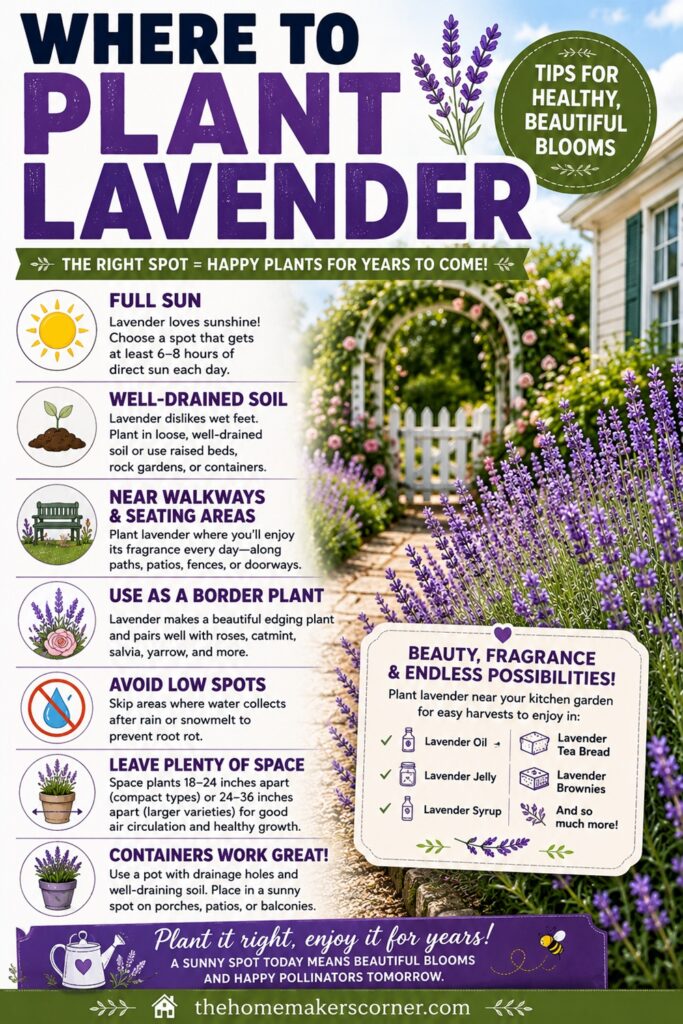
Lavender thrives in full sun and needs at least six to eight hours of direct sunlight each day.
The more sunshine it receives, the stronger the fragrance and the more flowers it produces. If you’re deciding between two planting locations, always choose the sunnier spot.
If you’re just getting started, you may also enjoy reading our guide to Best Lavender Varieties for Cottage Gardens, Bees, and More to choose the right type for your garden.
Choose Well-Drained Soil
Lavender dislikes wet feet.
Want to try making your own jelly at home?
Get my free guide with 8 easy, beginner-friendly jelly recipes you can confidently make.
Plant it in loose, well-drained soil where excess water can drain away quickly. Heavy clay soil often causes root rot, especially during winter.
If your garden has poor drainage, consider:
- Raised beds
- Rock gardens
- Sloped planting areas
- Large containers
These locations help keep roots healthy throughout the year.
Plant Near Walkways and Seating Areas
One of the best places for lavender is where you’ll enjoy it every day.
Try planting lavender:
- Along garden paths
- Near patios
- Beside front walkways
- Around outdoor seating areas
- Along picket fences
Every time someone brushes past the flowers, the fragrance is released into the air.
Use Lavender as a Border Plant
Lavender makes a beautiful edging plant for cottage gardens.
Its tidy mounded shape softens flower beds while creating structure throughout the growing season.
It pairs beautifully with roses, catmint, salvia, yarrow, echinacea, and ornamental grasses.
For more planting ideas, see our guide to Companion Plants for Lavender: Beautiful Garden Pairings for a Thriving Cottage Garden.
Avoid Low Spots
Water naturally collects in low areas of the garden.
Since lavender prefers dry conditions, avoid planting it anywhere that stays soggy after rain or snowmelt.
If your yard tends to hold water, raised beds or containers are often a better option.
Leave Plenty of Space
Good air circulation helps prevent disease and keeps plants looking their best.
Most lavender varieties should be spaced:
- 18–24 inches apart for compact varieties
- 24–36 inches apart for larger shrubs
Giving each plant enough room also creates fuller, healthier growth over time.
Lavender Grows Beautifully in Containers
If you don’t have ideal garden soil, containers are an excellent solution.
Choose a pot with drainage holes and use a well-draining potting mix. Place the container in a sunny location where it receives plenty of direct light.
Container-grown lavender also makes a lovely addition to porches, decks, and patios.
Think Beyond the Garden
Lavender isn’t just beautiful while it’s blooming.
Planting lavender near your kitchen garden makes it easy to harvest fresh stems for homemade projects throughout the summer.
After harvesting, you can enjoy making:
- Homemade lavender oil
- Lavender jelly
- Lavender syrup
- Fresh baked lavender tea bread
- Lavender brownies
Having the plants nearby makes it simple to bring your garden harvest into your home.
Keep Lavender Healthy Year After Year
Once you’ve found the perfect location, a little routine care goes a long way.
Be sure to water young plants while they’re getting established, avoid overwatering mature plants, and prune them regularly to encourage compact growth and abundant blooms.
You may also find these guides helpful:
- When and How to Prune Lavender (Beginner’s Guide)
- Deadheading Lavender: When and How to Do It
- How Much Water Does Lavender Need? A Guide for Healthy Growth
- How to Grow Healthy Lavender: 5 Mistakes to Avoid
The secret to growing beautiful lavender starts long before the first flowers appear. Planting it in a sunny location with excellent drainage gives it the best chance to thrive for years to come.
Whether you tuck lavender along a garden path, line a cottage garden border, or grow it in containers on your patio, choosing the right location will reward you with fragrant blooms, happy pollinators, and plenty of harvests for homemade recipes and garden-inspired projects.
Follow my simple garden living board on Pinterest.