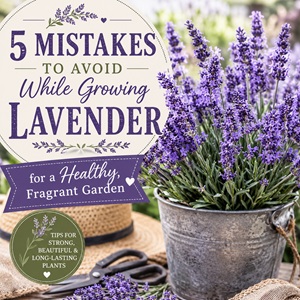
Few plants bring as much beauty, fragrance, and charm to a garden as lavender.
This post may contain affiliate links.
Whether it’s lining a cottage garden path, filling a sunny herb bed, or attracting bees and butterflies, lavender is one of those plants that makes every season feel a little more peaceful.
The good news is that lavender is surprisingly easy to grow once you understand what it needs.
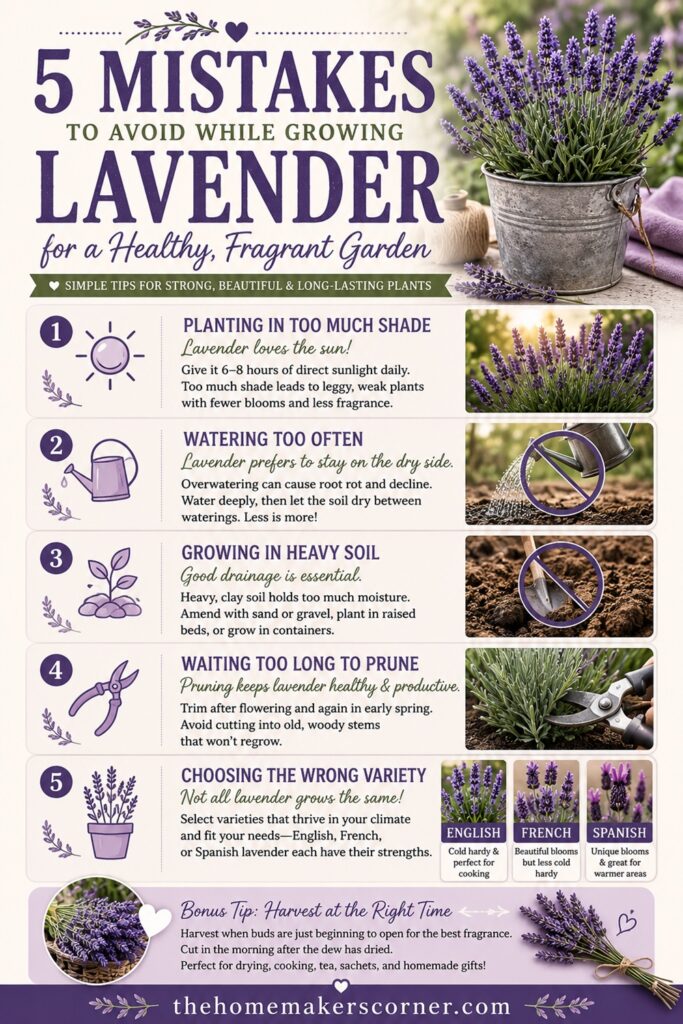
Most problems aren’t caused by difficult care—they’re caused by a few common mistakes that can leave plants struggling.
If you’re just getting started, avoiding these five mistakes will help your lavender stay healthy, fragrant, and beautiful for years to come.
1. Planting Lavender in Too Much Shade
One of the biggest mistakes gardeners make is treating lavender like other flowering perennials that appreciate partial shade.
Lavender thrives in full sun.
Want to try making your own jelly at home?
Get my free guide with 8 easy, beginner-friendly jelly recipes you can confidently make.
Choose a location that receives at least 6 to 8 hours of direct sunlight every day. More sun means stronger stems, more blooms, and a richer fragrance.
Plants grown in too much shade often become:
- Leggy
- Floppy
- Less fragrant
- More prone to disease
- Slow to bloom
If you’re growing lavender in containers, place the pots where they’ll receive sunlight for most of the day.
2. Watering Too Often
Lavender is native to the Mediterranean, where summers are warm and dry.
Once established, it prefers to stay on the dry side.
Overwatering is one of the quickest ways to damage lavender because constantly wet roots can lead to rot.
Instead:
- Water deeply after planting.
- Allow the soil to dry between waterings.
- Water mature plants only during extended dry periods.
Container-grown lavender will need water more often than plants growing in the ground, but the soil should still dry slightly before watering again.
3. Growing Lavender in Heavy Soil
Lavender dislikes soggy soil even more than dry weather.
If water sits around the roots after rain, the plant will struggle.
Well-drained soil is essential.
If your garden has heavy clay soil, consider:
- Mixing in coarse sand or gravel
- Planting in raised beds
- Growing lavender in containers
- Choosing a slightly elevated planting location
Healthy drainage helps roots stay strong and encourages longer-lived plants.
4. Waiting Too Long to Prune
Many gardeners are afraid to prune lavender, but regular trimming keeps plants compact and productive.
Without pruning, lavender becomes woody and produces fewer flowers over time.
Lightly trim plants after flowering to encourage tidy growth.
In early spring, remove winter damage and shape the plant before new growth begins.
Avoid cutting into thick, old woody stems if there are no green shoots, as they often won’t regrow.
Regular pruning helps your lavender:
- Stay compact
- Produce more blooms
- Live longer
- Maintain a beautiful rounded shape
5. Choosing the Wrong Variety
Not all lavender varieties grow the same.
Some thrive in colder climates, while others prefer mild winters.
Before planting, choose a variety that’s well suited to your growing zone and how you plan to use it.
For example:
- English lavender is excellent for cooking, drying, and colder climates.
- French lavender offers beautiful blooms but is less cold hardy.
- Spanish lavender adds unique flower heads and performs well in warmer regions.
Matching the variety to your climate helps your plants thrive from the very beginning.
Bonus Tip: Don’t Harvest Too Late
If you’re growing lavender for drying, sachets, tea, or homemade recipes, harvest at the right time.
The best time to cut lavender is when the flower buds have just begun to open.
Harvesting too late means many of the fragrant oils have already started to fade.
Morning, after the dew has dried, is usually the best time to gather stems.
Enjoy Lavender Through Every Season
One of the joys of growing lavender is discovering how many ways you can enjoy it beyond the garden.
Use your harvest to make:
- Homemade lavender oil
- Lavender lemonade
- Lavender herb salt
- Honey lavender butter
- Lavender mojito
- Lavender tea bread
- Lavender iced tea
A few healthy plants can provide beauty, fragrance, and inspiration throughout the year.
Lavender doesn’t require complicated care—it simply prefers the conditions it was designed to grow in.
Plenty of sunshine, well-drained soil, careful watering, and regular pruning will reward you with healthy plants that bloom beautifully season after season.
Whether you’re creating a fragrant cottage garden, planting a kitchen herb garden, or simply adding a few containers to your patio, avoiding these common mistakes will help your lavender flourish and fill your garden with color, fragrance, and pollinator-friendly blooms for years to come.
Follow my lavender board on Pinterest.