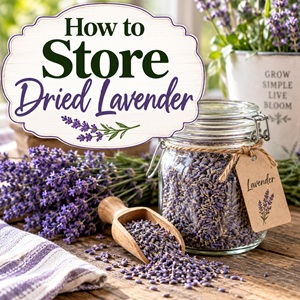
If you grow lavender in your garden, you probably know how easy it is to end up with more lavender than you can use right away.
This post may contain affiliate links.
Thankfully, dried lavender is one of those garden harvests that is incredibly easy to keep on hand.
Whether you’re saving lavender for crafts, homemade beauty products, tea, or simply because you love having that wonderful fragrance around the house, proper storage will help protect its color and aroma.
The good news is that storing dried lavender doesn’t require anything complicated.
Make Sure Your Lavender Is Completely Dry
Before you put your lavender into a container, make sure it is completely dry.
This is the most important step.
Any remaining moisture can lead to mold or spoilage once the lavender is sealed up. When properly dried, the stems should feel brittle and the flowers should easily crumble or separate when handled.
Want to try making your own jelly at home?
Get my free guide with 8 easy, beginner-friendly jelly recipes you can confidently make.
If you’re still working on drying your harvest, lavender can be air-dried in small bunches in a warm, dry, well-ventilated location.
Lavender is generally harvested by cutting the flower spikes when the first flowers begin to open and then drying the whole spikes.
Remove the Flowers From the Stems
You can store lavender with the stems attached if you’re planning to use it for decorative purposes.
For most other uses, though, I like to remove the dried flowers from the stems.
Simply hold the stem over a bowl and gently run your fingers down it. The dried lavender buds should fall away fairly easily.
Be gentle when handling them. Lavender’s fragrance comes from its natural oils, and crushing the flowers unnecessarily can cause those oils to dissipate more quickly.
Choose an Airtight Container
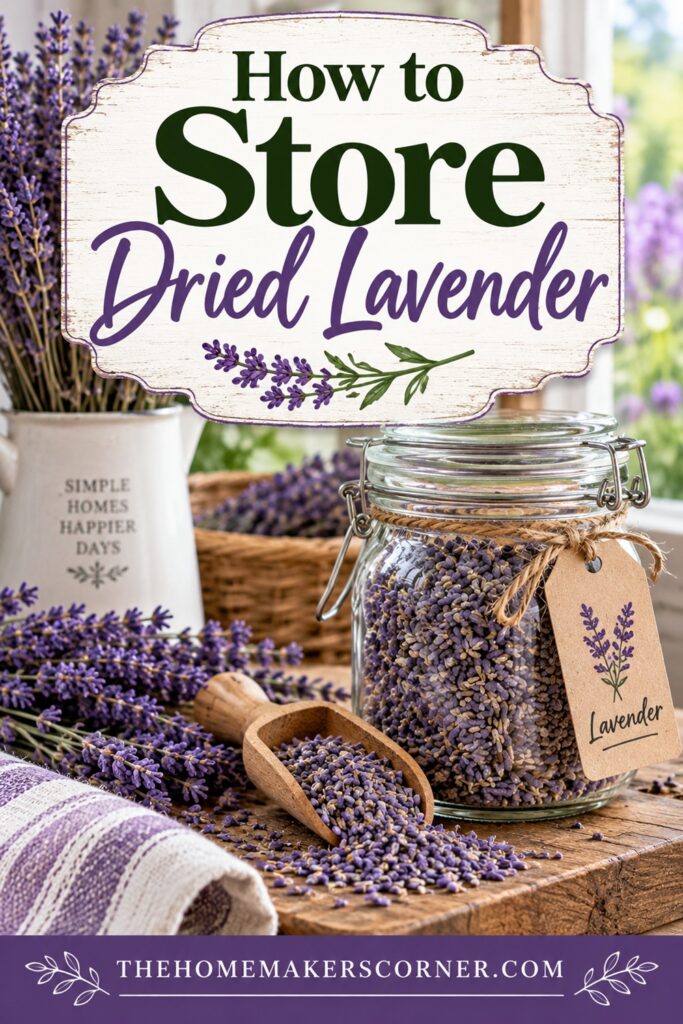
An airtight glass jar is one of my favorite ways to store dried lavender.
Small canning jars work particularly well because they’re inexpensive, easy to label, and keep the lavender protected from air and moisture.
Make sure the jar is completely clean and dry before filling it.
You don’t want to introduce any moisture into your beautifully dried lavender.
Keep Lavender Somewhere Cool and Dark
Once your lavender is in a sealed container, find a cool, dry, dark place to store it.
A pantry or kitchen cupboard works well.
Try to keep it away from:
- Direct sunlight
- Heat
- Steam
- Humidity
- The stove
- The sink
Light, heat, moisture, and exposure to air can all reduce the quality of dried herbs over time. University of Maryland Extension recommends airtight containers and a cool, dry, dark storage location.
That means the pretty jar of lavender sitting on a sunny windowsill might look lovely, but a dark cupboard is actually the better choice for long-term storage.
Label Your Lavender
Don’t skip this little step.
Especially if you grow several varieties of lavender, it’s helpful to label your jar with the variety and the date you harvested it.
You might have several jars of dried herbs in your pantry a few months from now, and you’ll be glad you know exactly what’s inside each one.
How Long Does Dried Lavender Last?
Dried lavender is best used while it still has a strong fragrance and good color.
For the best quality, check your lavender periodically. If it develops a musty smell or shows any sign of mold, discard it.
University of Maryland Extension recommends using dried herbs within about six months for best quality.
If your lavender is getting older but still looks and smells good, there’s no reason not to find a use for it around the house.
Ways to Use Your Dried Lavender
This is where saving a lavender harvest gets fun.
You can use dried lavender to make:
- Lavender sachets
- Lavender potpourri
- Homemade bath salts
- Lavender sugar scrub
- Dried flower arrangements
- Decorative lavender wands
- Homemade tea
- Lavender-infused crafts
- Lavender baked goods
If you enjoy making things with lavender, you might also want to try DIY Lavender Wands or learn How to Make Lavender Potpourri. Both are great ways to use up some of that dried garden harvest.
And if you grow lavender specifically for culinary purposes, Harvesting Lavender for Tea: A Beginner’s Guide is another good place to start.
Can You Store Dried Lavender in the Refrigerator?
You generally don’t need to.
A cool, dry cupboard is a much simpler option for properly dried lavender. The goal is to keep moisture out, so refrigeration isn’t necessary for normally dried and properly stored lavender.
Can You Freeze Dried Lavender?
You can, but there’s usually no reason to if you’ve dried and stored it properly.
For most home gardeners, an airtight container in a cool, dark cupboard is all that’s needed.
What About Lavender Stems?
Don’t throw those stems away!
Even after you’ve removed the flowers, the dried stems can still be useful for crafts and decorative projects.
If you have quite a collection of lavender stems, you might even want to press some lavender for crafts. How to Press Lavender is a great project to try with some of your garden harvest.
The Simple Way to Store Dried Lavender
Storing dried lavender really comes down to four simple things:
Dry it completely.
Protect it from air and moisture.
Keep it away from heat and light.
Store it in an airtight container.
That’s it.
A few small jars of dried lavender can give you a year-round supply for crafts, homemade projects, and recipes—and there’s something especially satisfying about opening that jar in the middle of winter and getting a little reminder of your summer garden.
A garden harvest doesn’t have to end when the flowers stop blooming. Dried lavender lets you carry a little bit of the cottage garden into every season.
Follow my lavender board on Pinterest.