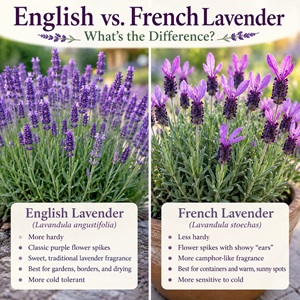
If you’re planning a lavender garden, you may have noticed that not all lavender looks or grows the same.
This post may contain affiliate links.
English lavender and French lavender are two popular choices, but they have some pretty important differences—especially when it comes to hardiness, appearance, fragrance, and how you care for them.
Both are beautiful additions to a cottage garden, but choosing the right one for your climate can make a big difference.
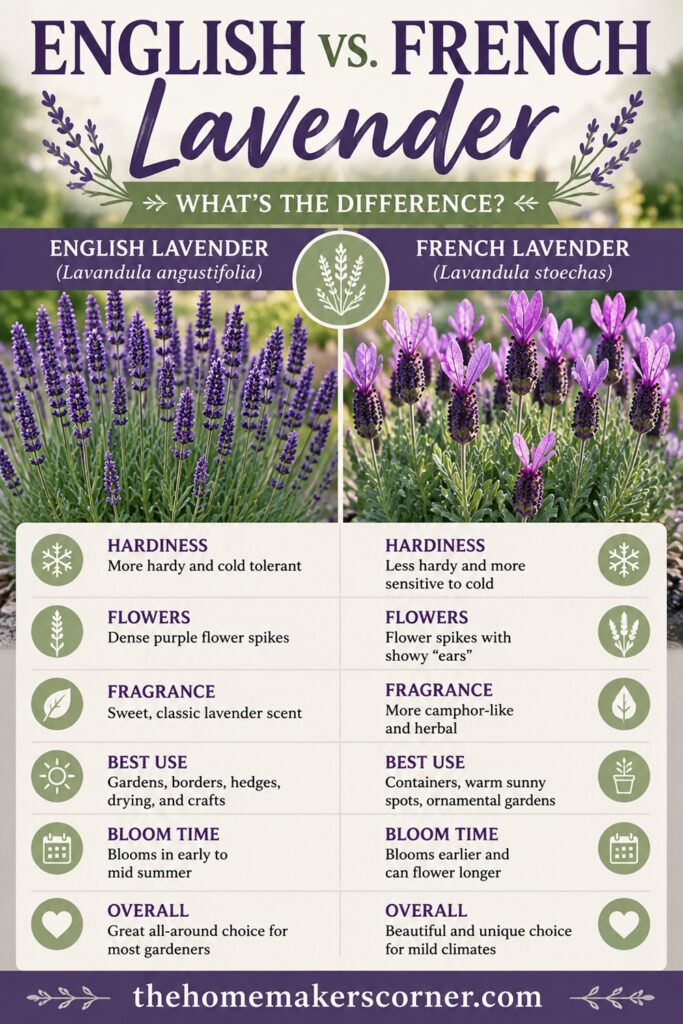
English Lavender vs. French Lavender at a Glance
| English Lavender | French Lavender | |
|---|---|---|
| Botanical name | Lavandula angustifolia | Lavandula stoechas |
| Hardiness | More hardy | Less hardy |
| Flowers | Dense purple flower spikes | Flower spikes with distinctive “ears” |
| Foliage | Narrow, gray-green leaves | Gray-green, often more textured foliage |
| Fragrance | Sweet, classic lavender scent | More camphor-like fragrance |
| Best location | Sunny garden beds and borders | Sunny, sheltered spots and containers |
| Cold tolerance | Better | More sensitive to cold |
| Blooming | Summer | Often earlier and can flower for a longer period |
The Royal Horticultural Society lists Lavandula angustifolia and its hybrids among the hardiest lavenders, while French and other tender types are generally less hardy and may need winter protection.
What Is English Lavender?
English lavender (Lavandula angustifolia) is the classic lavender most people picture when they think of a traditional lavender garden.
It forms a compact, bushy plant with narrow gray-green foliage and fragrant flower spikes in shades of purple, blue, pink, and white. Plants can reach roughly 1 to 3 feet depending on the variety.
It’s particularly well suited to cottage gardens, herb gardens, borders, edging, and containers.
Want to try making your own jelly at home?
Get my free guide with 8 easy, beginner-friendly jelly recipes you can confidently make.
English lavender also has the advantage of being considerably more cold hardy than French lavender, making it the better choice if you want a lavender plant that can remain outdoors through winter in a colder climate.
English Lavender Is a Great Choice For:
- Cottage gardens
- Herb gardens
- Flower borders
- Garden edging
- Lavender hedges
- Dry, sunny areas
- Cutting and drying
- Lavender crafts and recipes
If you’re growing lavender specifically for harvesting, English lavender is an especially useful choice because of its classic fragrance.
What Is French Lavender?
French lavender usually refers to Lavandula stoechas. It has a very distinctive appearance that makes it easy to recognize.
Instead of ending in a simple flower spike like English lavender, French lavender produces a dense flower head topped with showy upright bracts that look almost like little ears or flags.
That’s what gives French lavender its more unusual, almost whimsical appearance.
French lavender tends to be more tender than English lavender and does best in a warm, sunny, sheltered location with excellent drainage. In colder climates, growing it in a container can make winter protection much easier.
Which Lavender Is More Hardy?
English lavender wins this one.
If you’re gardening somewhere with cold winters, Lavandula angustifolia is generally the safer choice.
French lavender is more sensitive to cold and wet winter conditions. The RHS recommends giving tender lavenders protection from harsh weather and notes that they can be better suited to containers that can be moved somewhere sheltered.
One thing both types absolutely dislike is wet soil. Lavender needs excellent drainage and plenty of sun.
Which Has the Better Fragrance?
This really comes down to personal preference.
English lavender has the classic sweet lavender fragrance most people associate with lavender sachets, dried flowers, baking, and homemade products.
French lavender has a somewhat different scent that can be more camphor-like and herbal.
If you’re growing lavender primarily for its traditional fragrance, I’d lean toward English lavender.
Which Is Better for a Cottage Garden?
For a traditional cottage garden, English lavender is probably my first choice.
Its compact shape, gray-green foliage, and purple flower spikes look beautiful planted along pathways, around roses, beside herbs, or along the edge of a flower bed.
French lavender can be beautiful too, but its unusual flower heads give it a slightly more Mediterranean or ornamental appearance.
And if you’re building a lavender garden, don’t overlook the value of combining lavender with other plants that enjoy the same sunny, well-drained conditions.
What About Lavender for Containers?
Both types can be grown in containers, but French lavender is especially useful as a container plant in colder climates because you can move it somewhere protected for winter.
Choose a pot with drainage holes and use a growing medium that drains freely. Avoid letting the roots sit in constantly wet soil.
Container lavender also makes a beautiful addition to a patio, porch, or sunny balcony.
Which One Should You Grow?
If you’re trying to decide between the two, I’d keep it simple:
Choose English lavender if:
- You live in a colder climate
- You want a hardy perennial
- You love the classic lavender fragrance
- You want lavender for drying and crafts
- You’re creating a traditional cottage garden
Choose French lavender if:
- You live in a mild climate
- You want unusual, showy flowers
- You’re growing lavender in containers
- You have a warm, sheltered location
- You’re willing to provide winter protection in colder areas
And there’s no reason you can’t grow both if your growing conditions allow it. Their different flower shapes and textures can actually make a lavender planting much more interesting.
More Lavender Growing Ideas
Since you’re building out your lavender content, these would make natural internal links within this post:
- 12 Cottage Garden Flowers That Pair Beautifully with Lavender — a great follow-up for readers planning a lavender border.
- The Best Place to Plant Lavender in Your Cottage Garden — perfect for readers who aren’t sure where to put their plants.
- When and How to Prune Lavender — useful once readers have chosen their variety.
- How Much Water Does Lavender Need? — especially helpful for beginners.
- How to Grow Lavender from Cuttings — a natural next step for gardeners who want more plants.
- Harvesting Lavender for Tea: A Beginner’s Guide — ideal for readers growing lavender for culinary or herbal use.
- Can You Divide Lavender? Here’s What You Need to Know — another useful propagation-related article.
English and French lavender are both beautiful, but they’re not interchangeable.
English lavender is the better all-around choice for hardiness, classic fragrance, and traditional cottage gardens.
French lavender is the choice when you want distinctive flowers and you’re gardening in a warmer climate or can provide winter protection.
Whichever you choose, give lavender what it loves most: sun, excellent drainage, and a little room to breathe. Then let it do what lavender does best—fill your garden with fragrance and pollinators.
Follow my lavender board on Pinterest.