If you have rosemary growing in your garden, making rosemary olive oil is a wonderful way to bring that fresh, woodsy flavor into the kitchen.
This post may contain affiliate links.
It’s delicious drizzled over roasted vegetables, used in marinades, spooned over bread, or added to homemade salad dressings.
It also makes a beautiful homemade gift when poured into a pretty bottle with a simple label.
There is one important thing to know before you make it, though: fresh herbs infused in oil need special food-safety handling.
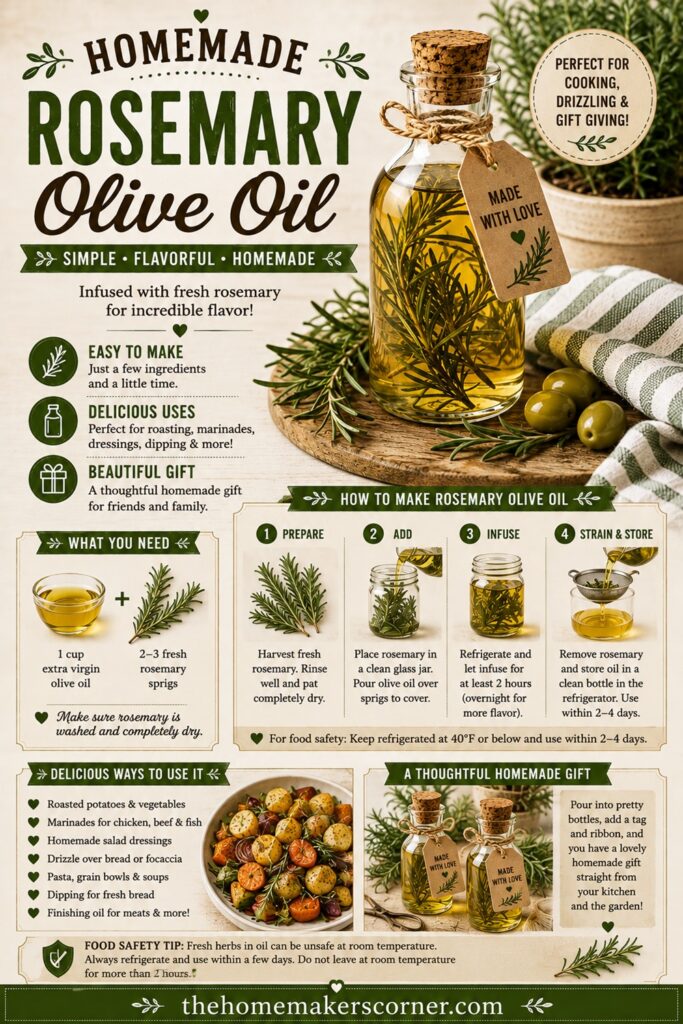
Fresh rosemary in oil can create an environment where Clostridium botulinum can grow if the oil is stored improperly.
For a simple home recipe, the safest approach is to make a small batch, refrigerate it, and use it within a few days.
If you want a shelf-stable rosemary oil, use the tested acidification method specifically developed for rosemary rather than improvising with vinegar or lemon juice.
What You’ll Need
- 1 cup extra virgin olive oil
- 2–3 fresh rosemary sprigs
- A clean glass jar or bottle
For the refrigerated version, make sure the rosemary is washed and completely dry before adding it to the oil.
How to Make Rosemary Olive Oil
1. Prepare the Rosemary
Harvest fresh rosemary and remove any damaged or discolored leaves.
Wash the sprigs well and pat them completely dry. It’s important not to introduce excess water into the oil.
2. Add the Rosemary
Place the rosemary into a clean glass jar.
Pour the olive oil over the rosemary until it is completely covered.
For a stronger rosemary flavor, you can gently bruise the rosemary leaves before adding them to the oil.
3. Let the Flavor Develop
For this simple refrigerated version, you can allow the rosemary to flavor the oil briefly in the refrigerator.
I like making a small batch rather than trying to keep infused oil for weeks.
Homemade fresh-herb oils should be refrigerated and used within 2–4 days unless you follow a tested acidification procedure for safe longer storage.
4. Strain and Store
Remove the rosemary from the oil and pour the finished oil into a clean container.
Keep it refrigerated at 40°F or below.
Don’t leave homemade fresh-herb infused oil sitting at room temperature for extended periods.
Clemson Extension advises discarding non-acidified herb oil that has been left at room temperature for more than two hours.
How to Use Rosemary Olive Oil
There are so many delicious ways to use rosemary-infused olive oil.
Try it for:
- Roasted potatoes
- Roasted carrots or other vegetables
- Homemade salad dressings
- Marinades
- Grilled chicken
- Pasta
- Homemade focaccia
- Dipping bread
- Grain bowls
- Drizzling over soups
- Finishing roasted meats
One of my favorite uses is simply drizzling it over warm roasted potatoes with a little salt.
Can You Make Rosemary Olive Oil for Gifts?
Yes—but don’t give someone a bottle of fresh rosemary infused in oil with instructions to store it in the pantry.
Homemade fresh-herb oil isn’t shelf-stable unless the herbs have been properly acidified using a tested method.
If you want to make rosemary oil specifically as a homemade gift, use the tested University of Idaho/Clemson Extension acidification procedure for rosemary.
It uses a measured 3% citric acid solution and a specific soaking time before the rosemary is added to the oil. That method has been tested specifically for rosemary, basil, oregano, and garlic.
Don’t substitute vinegar or lemon juice for the citric acid—the tested procedure specifically calls for citric acid.
A Simple Garden-to-Kitchen Project
I love recipes like this because they give you another way to use herbs from the garden beyond the usual dried herbs.
A little rosemary can turn ordinary olive oil into something special for everyday cooking.
And when you combine it with homemade bread, roasted vegetables, or a simple salad, you have an easy garden-to-table meal.
If you’re growing your own rosemary, it’s also worth experimenting with other ways to preserve and use your harvest.
Homemade herb oils, vinegars, dried herbs, and seasoning blends are all wonderful ways to make the most of a productive herb garden.
Important food-safety note: This recipe is intentionally written as a small-batch refrigerated oil.
For shelf-stable rosemary olive oil, follow a tested acidification method exactly; don’t rely on simply heating the oil or adding fresh rosemary to a decorative bottle.
Follow my homemade pantry board on Pinterest.