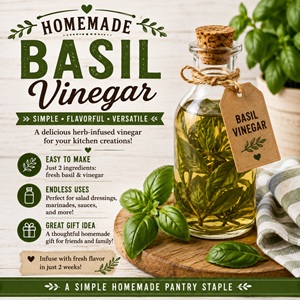
If your garden is producing more basil than you can possibly use, making basil vinegar is one of my favorite ways to preserve that fresh summer flavor.
This post may contain affiliate links.
It’s incredibly simple, too. Fresh basil is infused into vinegar until the vinegar takes on that wonderful herbal flavor.
Then you can use it in salad dressings, marinades, sauces, and all kinds of homemade recipes.
I especially like making herb vinegars at the end of summer when the garden is still producing plenty of basil.
What Is Basil Vinegar?
Basil vinegar is simply vinegar that has been infused with fresh basil.
The vinegar takes on the flavor and aroma of the basil, giving you a bright, herbaceous ingredient that you can keep in your pantry or refrigerator and use throughout the year.
You can use white wine vinegar, white distilled vinegar, or apple cider vinegar depending on the flavor you want.
Want to try making your own jelly at home?
Get my free guide with 8 easy, beginner-friendly jelly recipes you can confidently make.
For a milder, lighter vinegar, I prefer white wine vinegar. Apple cider vinegar gives you a little more depth and a slightly fruity flavor.
Ingredients
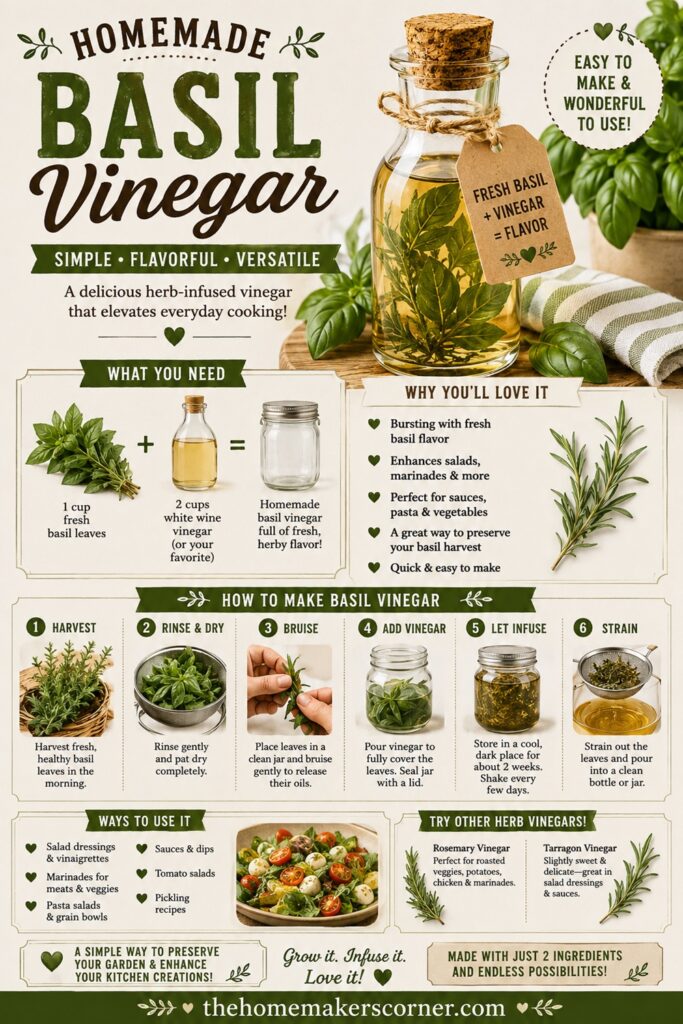
You only need two ingredients:
- 1 cup fresh basil leaves
- 2 cups vinegar
Fresh basil is best for this recipe because it gives the vinegar a much brighter flavor.
Choose leaves that are fresh and free from brown spots or damage.
If you have basil growing in your garden, this is a great way to use some of those larger harvests. Regular harvesting also helps keep basil plants producing new growth.
How to Make Basil Vinegar
1. Harvest the Basil
Pick fresh basil leaves in the morning once the dew has dried.
Give them a gentle rinse and pat them completely dry.
You don’t want excess water going into your vinegar.
2. Bruise the Leaves
Place the basil leaves in a clean glass jar.
Gently crush or bruise the leaves with your fingers or the back of a wooden spoon. You don’t need to pulverize them—just break them up enough to help release their oils.
3. Add the Vinegar
Pour the vinegar over the basil, making sure the leaves are completely covered.
If any leaves are sticking above the surface, push them down with a clean spoon.
Put a lid on the jar.
Tip: If you’re using a metal lid, place a piece of plastic wrap between the jar and lid to keep the vinegar from contacting the metal.
4. Let It Infuse
Place the jar somewhere cool and dark and let the basil infuse the vinegar for about 2 weeks.
Give the jar a gentle shake every few days.
The vinegar will gradually become more fragrant and take on the flavor of the basil.
5. Strain the Vinegar
After about two weeks, strain the vinegar through a fine-mesh strainer or cheesecloth.
Press the basil gently to extract as much vinegar as possible.
Discard the spent basil.
Pour the finished vinegar into a clean bottle or jar.
How to Use Basil Vinegar
There are so many ways to use homemade basil vinegar.
Try it in:
- Homemade salad dressings
- Vinaigrettes
- Marinades for chicken or vegetables
- Pasta salads
- Tomato salads
- Fresh vegetable salads
- Sauces
- Pickling recipes
- Grain salads
It’s especially good drizzled over fresh tomatoes, mozzarella, and basil for an easy summer salad.
You can also combine it with olive oil, a little honey, salt, and pepper for a simple homemade vinaigrette.
If you enjoy making your own salad dressings, my Strawberry Basil Vinaigrette is another delicious way to use basil’s fresh summer flavor.
Other Herb Vinegars to Try
Once you make basil vinegar, you’ll probably want to try other herbs from the garden.
Rosemary vinegar is wonderful with roasted vegetables, potatoes, chicken, and homemade marinades.
And tarragon vinegar has a slightly sweet, distinctive flavor that’s especially good in salad dressings and sauces.
You can also experiment with combinations such as basil and garlic, basil and thyme, or basil and oregano.
A Simple Way to Preserve Your Herb Garden
I love recipes like this because they don’t require a complicated preservation project.
A handful of fresh basil and a bottle of vinegar can become something you’ll use for months.
And if you grow your own herbs, it’s another easy way to turn the garden harvest into something useful for your kitchen.
So the next time your basil is growing faster than you can make pesto, make a jar of basil vinegar instead.
Follow my homemade pantry board on Pinterest.