
If you have rosemary growing in your garden, homemade rosemary vinegar is an easy way to preserve some of that fresh herb flavor for your pantry.
This post may contain affiliate links.
The rosemary infuses the vinegar with a wonderful savory, woodsy flavor that works beautifully in salad dressings, marinades, sauces, roasted vegetables, and more.
It also makes a lovely homemade pantry gift. Pour the finished vinegar into a pretty bottle, add a simple label and ribbon, and you have an inexpensive holiday gift idea for gardeners and home cooks.
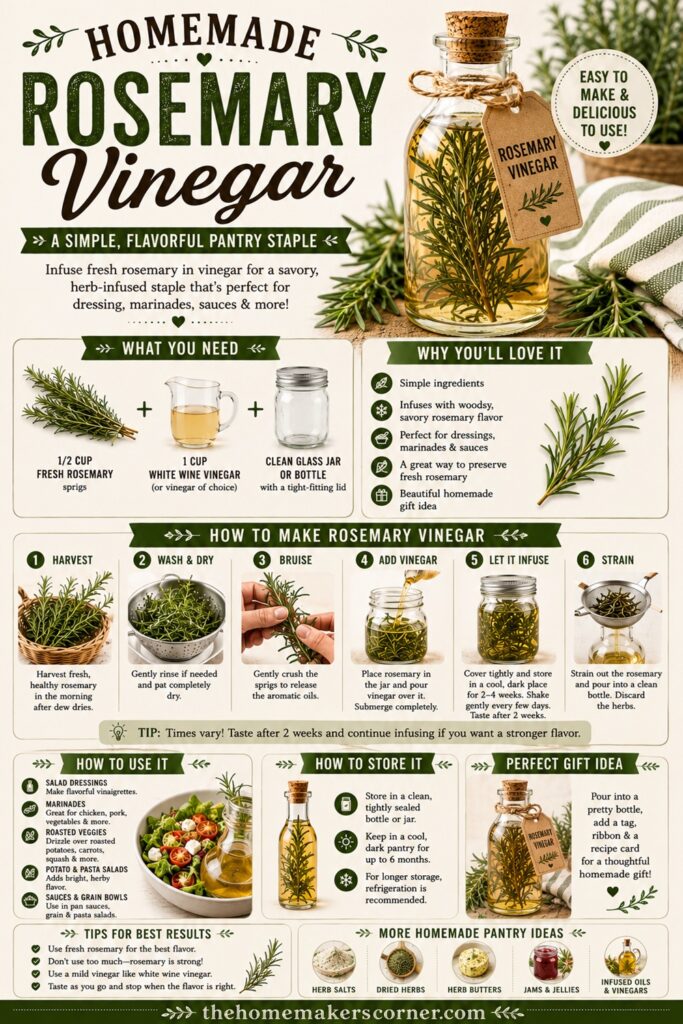
What Is Rosemary Vinegar?
Rosemary vinegar is simply vinegar infused with fresh rosemary. As the rosemary sits in the vinegar, its aromatic oils and flavor are released into the liquid.
You can use it anywhere you would use regular vinegar, but the rosemary gives it a more complex flavor that’s especially good with savory foods.
What You Need
You only need a few ingredients:
- 1 cup white wine vinegar
- ½ cup fresh rosemary sprigs
- A clean glass jar or bottle with a tight-fitting lid
White wine vinegar is my favorite because its mild flavor allows the rosemary to stand out.
Want to try making your own jelly at home?
Get my free guide with 8 easy, beginner-friendly jelly recipes you can confidently make.
Apple cider vinegar can also be used if you’d like a slightly sweeter, more robust flavor.
How to Make Rosemary Vinegar
1. Harvest Fresh Rosemary
Choose healthy, green rosemary sprigs without yellow or damaged leaves.
Morning is a good time to harvest herbs, after the dew has dried.
If your rosemary plant has become overgrown, this is also a great opportunity to harvest while pruning.
See Preserve Your Rosemary Harvest with This Simple Drying Method for another way to use your rosemary harvest.
2. Wash and Dry the Rosemary
Gently rinse the rosemary if necessary.
Pat the sprigs completely dry with a clean kitchen towel.
It’s important to remove as much excess moisture as possible before adding the herbs to the vinegar.
3. Bruise the Rosemary
Gently crush the rosemary sprigs between your fingers or lightly press them with the side of a knife.
You don’t need to chop them finely. Bruising the herbs simply helps release their aromatic oils.
4. Add the Rosemary and Vinegar
Place the rosemary in a clean glass jar.
Pour the vinegar over the herbs, making sure the rosemary is completely submerged.
Cover the jar tightly.
5. Let It Infuse
Place the jar somewhere cool and dark for about 2–4 weeks.
Give the jar a gentle shake every few days.
Start tasting it after about two weeks. If you’d like a stronger rosemary flavor, allow it to continue infusing.
6. Strain the Vinegar
Once the rosemary flavor is where you want it, strain out the herbs.
Pour the vinegar through a fine-mesh strainer or cheesecloth into a clean bottle.
Discard the rosemary.
How to Store Rosemary Vinegar
Store your finished vinegar in a clean, tightly sealed bottle or jar in a cool, dark pantry.
For best quality, use it within several months and check it before use for any unusual changes in appearance, smell, or flavor.
If you’re preparing infused vinegar for long-term storage or gifting, refrigeration is the more conservative choice.
How to Use Rosemary Vinegar
There are lots of ways to use this flavorful homemade pantry staple.
Salad Dressings
Combine rosemary vinegar with olive oil, Dijon mustard, honey, salt, and pepper for a simple homemade vinaigrette.
Marinades
Rosemary vinegar works especially well in marinades for chicken, pork, vegetables, and mushrooms.
Roasted Vegetables
Drizzle a small amount over roasted potatoes, carrots, squash, or other vegetables just before serving.
Potato Salad
Add a splash to potato salad for a bright, herby flavor.
Grain and Pasta Salads
Rosemary vinegar adds acidity and herb flavor to pasta salads, grain bowls, and other cold dishes.
Sauces
Use it in homemade sauces and pan sauces whenever you want a little acidity and rosemary flavor.
Tips for Making Rosemary Vinegar
Use fresh rosemary. Fresh sprigs provide the best flavor for an infused vinegar.
Don’t use too much rosemary. Rosemary has a strong flavor, so a little goes a long way.
Use a mild vinegar. White wine vinegar lets the rosemary flavor shine.
Taste as it infuses. You can stop the process as soon as the vinegar reaches the flavor you prefer.
Rosemary Vinegar as a Homemade Gift
Infused vinegars make wonderful homemade gifts because they’re inexpensive to make but look beautiful when bottled.
For a simple holiday gift idea, pour your rosemary vinegar into a small decorative bottle and add:
- A handwritten label
- A sprig of dried rosemary for decoration
- A ribbon or twine
- A small recipe card with ideas for using the vinegar
You could even create a small homemade pantry gift basket with rosemary vinegar, homemade herb salt, and dried herbs.
More Homemade Pantry Ideas
If you enjoy making your own pantry staples, you’ll also want to try our homemade Herb Salt Recipes and Herb Butter Recipes.
More Rosemary Recipes and Guides
If you’re growing rosemary, don’t let any of your harvest go to waste.
Try:
- Preserve Your Rosemary Harvest with This Simple Drying Method
- Rosemary Sage Herb Salt
- Garlic Rosemary Butter
- How to Grow Rosemary in Pots
- Best Companion Plants for Rosemary
And if you’re building a collection of homemade herb infusions, try Homemade Tarragon Vinegar next.
Homemade rosemary vinegar is an easy way to turn a handful of fresh rosemary into something you’ll be able to enjoy long after the garden season ends.
It’s flavorful enough to make everyday salad dressings and marinades more interesting, yet simple enough to become a regular homemade pantry staple.
And because it looks so pretty in a small glass bottle, it’s also a wonderful holiday gift idea for anyone who loves gardening, cooking, and homemade food.
Follow my homemade pantry board on Pinterest.