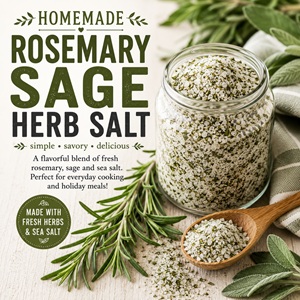
Homemade rosemary sage herb salt is a flavorful seasoning blend made with fresh herbs and coarse sea salt.
This post may contain affiliate links.
Combining the earthy richness of sage with the piney aroma of rosemary creates a versatile herb salt that’s perfect for roasted meats, vegetables, potatoes, soups, breads, and holiday dishes.
This easy two-ingredient recipe is a wonderful way to preserve fresh herbs from your garden while creating a homemade pantry staple you’ll use all year.
Why You’ll Love This Recipe
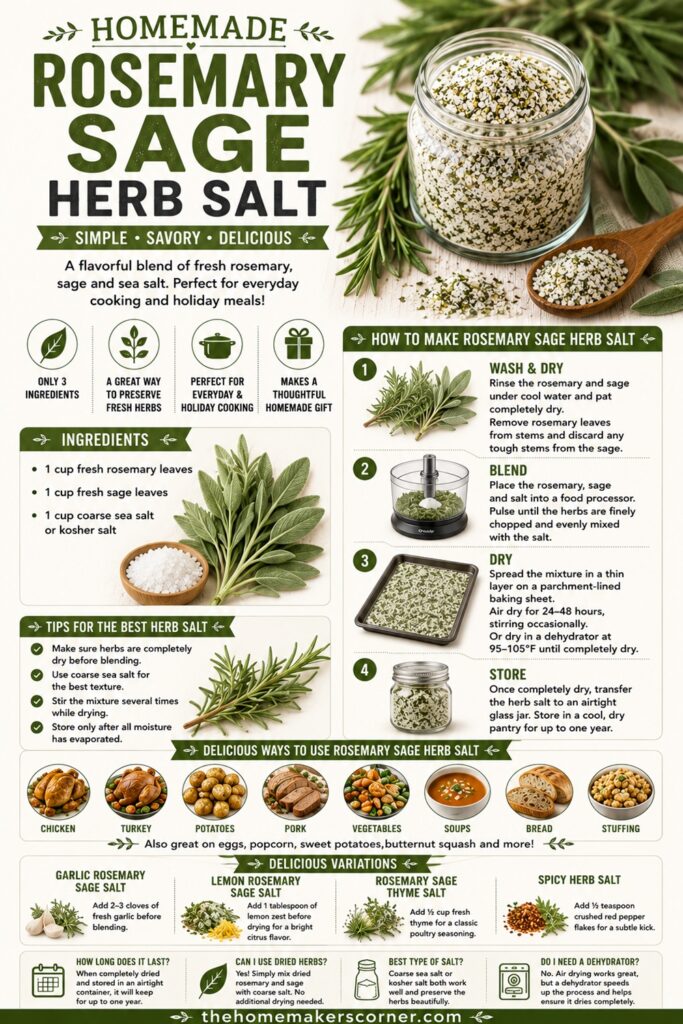
- Made with just 3 simple ingredients
- A delicious way to preserve fresh herbs
- Perfect for everyday cooking and holiday meals
- Easy homemade pantry staple
- Makes a thoughtful homemade gift
What Is Herb Salt?
Herb salt is made by blending fresh herbs with coarse salt, then drying the mixture until it’s shelf stable.
The salt preserves the herbs while capturing their fresh flavor, giving you an easy seasoning that’s ready whenever you need it.
Ingredients
- 1 cup fresh rosemary leaves
- 1 cup fresh sage leaves
- 1 cup coarse sea salt or kosher salt
How to Make Rosemary Sage Herb Salt
Step 1: Wash and Dry the Herbs
Rinse the rosemary and sage under cool water and pat completely dry.
Remove the rosemary leaves from the stems and discard any tough stems from the sage.
Want to try making your own jelly at home?
Get my free guide with 8 easy, beginner-friendly jelly recipes you can confidently make.
Step 2: Blend
Place the rosemary, sage, and salt into a food processor.
Pulse until the herbs are finely chopped and evenly blended with the salt.
Step 3: Dry
Spread the mixture in a thin layer on a parchment-lined baking sheet.
Allow it to air dry for 24-48 hours, stirring every few hours.
Or dry in a dehydrator at 95-105°F until completely dry.
Step 4: Store
Transfer the dried herb salt to an airtight glass jar.
Store in a cool, dry pantry for up to one year.
Tips for the Best Herb Salt
- Dry the herbs thoroughly before blending.
- Use coarse sea salt for the best texture.
- Stir the mixture several times while drying.
- Make sure all moisture has evaporated before storing.
Ways to Use Rosemary Sage Herb Salt
Sprinkle this herb salt on:
- Roasted chicken
- Turkey
- Pork loin
- Beef roast
- Roasted potatoes
- Sweet potatoes
- Stuffing
- Roasted carrots
- Butternut squash
- Homemade bread
- Focaccia
- Eggs
- Popcorn
Variations
Garlic Rosemary Sage Salt
Blend in 2-3 cloves of fresh garlic before drying for an extra savory seasoning.
Lemon Rosemary Sage Salt
Add 1 tablespoon of finely grated lemon zest before drying for a bright citrus flavor.
Rosemary Sage Thyme Salt
Mix in ½ cup of fresh thyme leaves for a classic poultry seasoning blend.
Spicy Herb Salt
Add ½ teaspoon crushed red pepper flakes for a subtle kick.
Frequently Asked Questions
How long does rosemary sage herb salt last?
When completely dried and stored in an airtight container, it will keep for up to one year.
Can I use dried herbs?
Yes. Simply mix dried rosemary and dried sage with coarse salt. Since the herbs are already dry, no additional drying is needed.
What kind of salt works best?
Coarse sea salt and kosher salt both work well because they preserve the herbs and provide excellent texture.
Do I need a dehydrator?
No. Air drying works perfectly, although a dehydrator speeds up the drying process and helps ensure the mixture is completely dry.
More Homemade Herb Salt Recipes You’ll Love
- Sage Herb Salt
- Garlic Herb Salt
- Rosemary Herb Salt
- Basil Herb Salt
- Dill Herb Salt
- Chive Herb Salt
- Lavender Herb Salt
Rosemary sage herb salt is one of the easiest ways to preserve fresh herbs while adding incredible flavor to your everyday cooking.
Whether you’re seasoning roasted vegetables, preparing holiday dinners, or baking homemade bread, this savory herb salt is a pantry staple you’ll reach for again and again.
Follow my homemade pantry board on Pinterest.