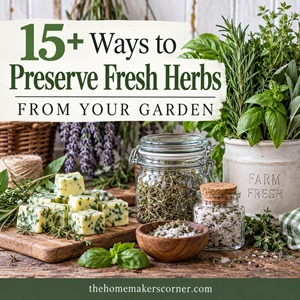
There’s nothing quite like walking out to the garden and cutting a handful of fresh herbs for dinner.
This post may contain affiliate links.
But when the garden starts producing more herbs than you can possibly use, it’s time to start thinking about ways to preserve them.
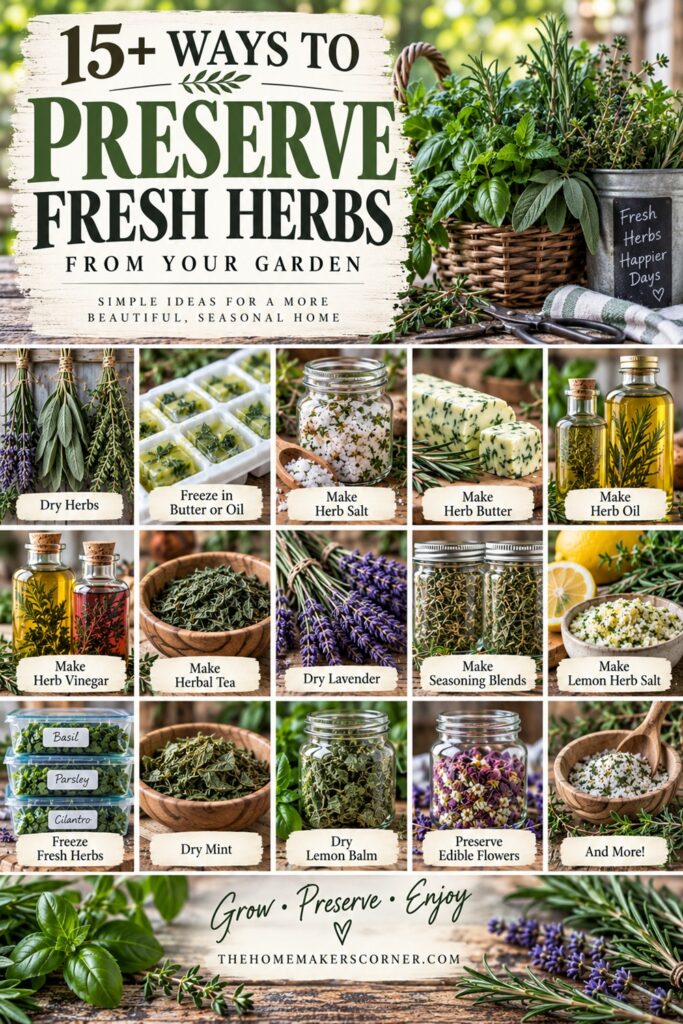
Fortunately, herbs are some of the easiest things to preserve. You can dry them, freeze them, turn them into herb salts and butters, or use them to make homemade vinegars and other kitchen staples.
If you’re growing a kitchen garden this year, here are 15+ simple ways to preserve fresh herbs so you can enjoy them long after the garden season is over.
1. Dry Rosemary
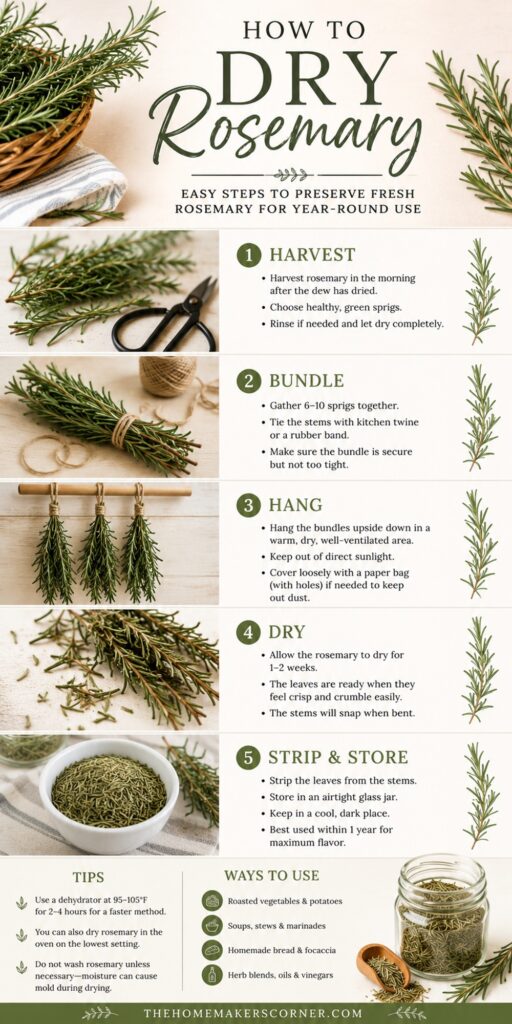
Rosemary is one of the easiest herbs to dry because its sturdy leaves hold onto their flavor beautifully.
You can air-dry rosemary in small bundles, use a dehydrator, or dry it in the oven at a very low temperature.
Once completely dry, strip the leaves from the stems and store them in an airtight jar.
Want to try making your own jelly at home?
Get my free guide with 8 easy, beginner-friendly jelly recipes you can confidently make.
2. Freeze Fresh Herbs in Butter or Oil
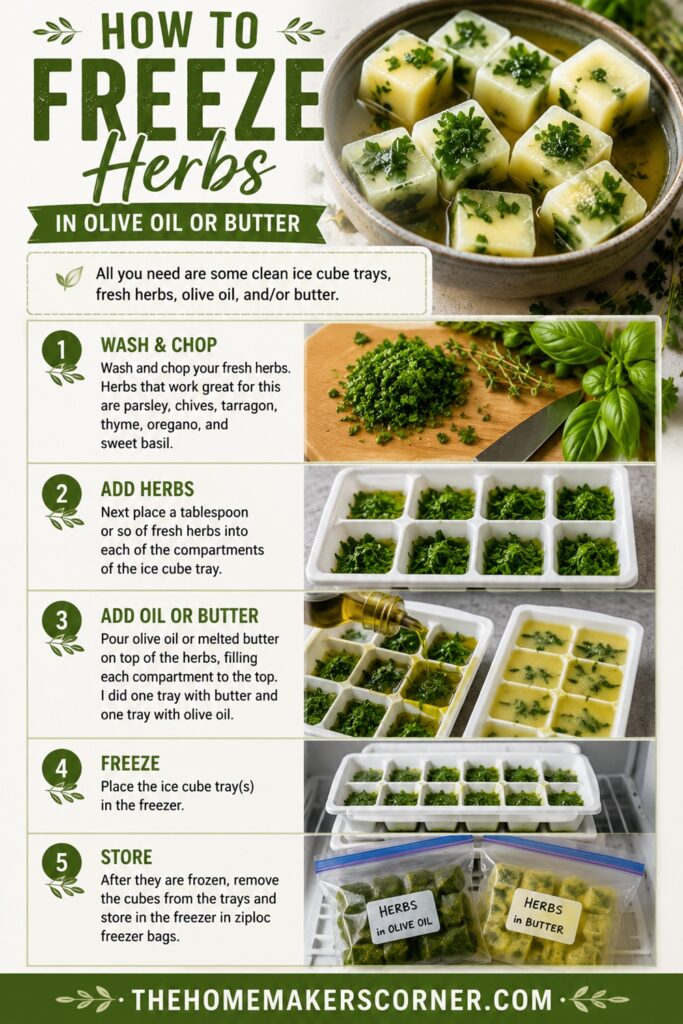
Freezing herbs in butter or oil is one of my favorite ways to preserve herbs for cooking.
Chop fresh herbs and place them into ice cube trays. Cover them with melted butter or olive oil and freeze.
Once frozen, transfer the cubes to a freezer container or bag. They’re perfect for tossing into soups, sauces, roasted vegetables and skillet dishes.
How to Freeze Herbs in Butter or Oil
3. Make Homemade Herb Salt
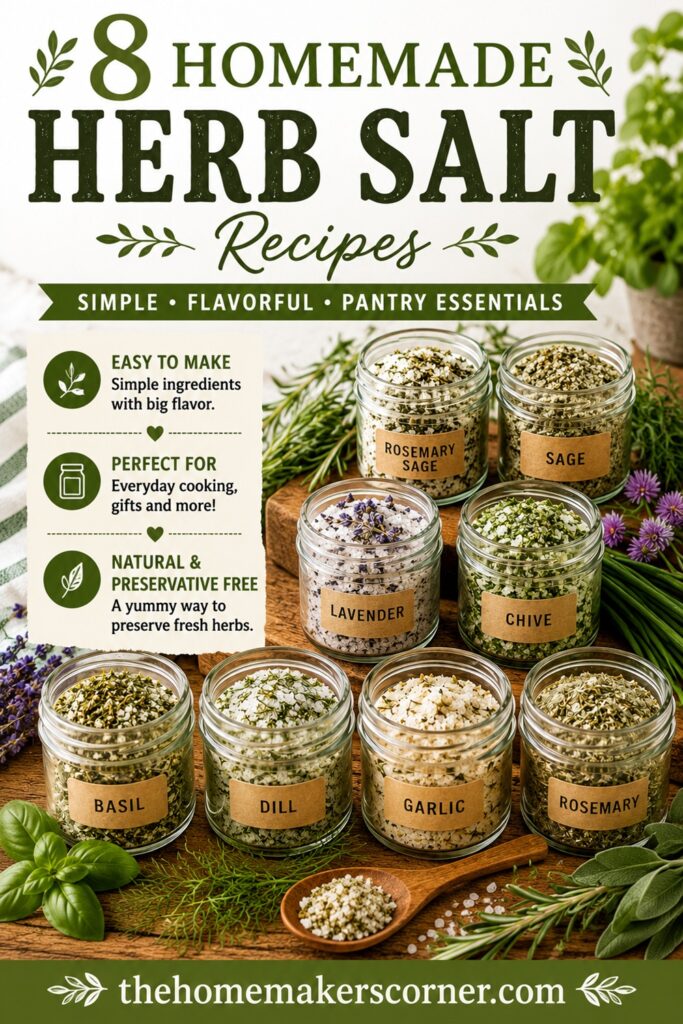
Herb salt is such a simple way to preserve the flavor of fresh herbs, and you can make so many different combinations.
Try rosemary, thyme, parsley, basil, dill or a combination of several herbs.
Herb salt makes a wonderful everyday seasoning and is also an easy homemade gift.
4. Make Lemon Rosemary Salt
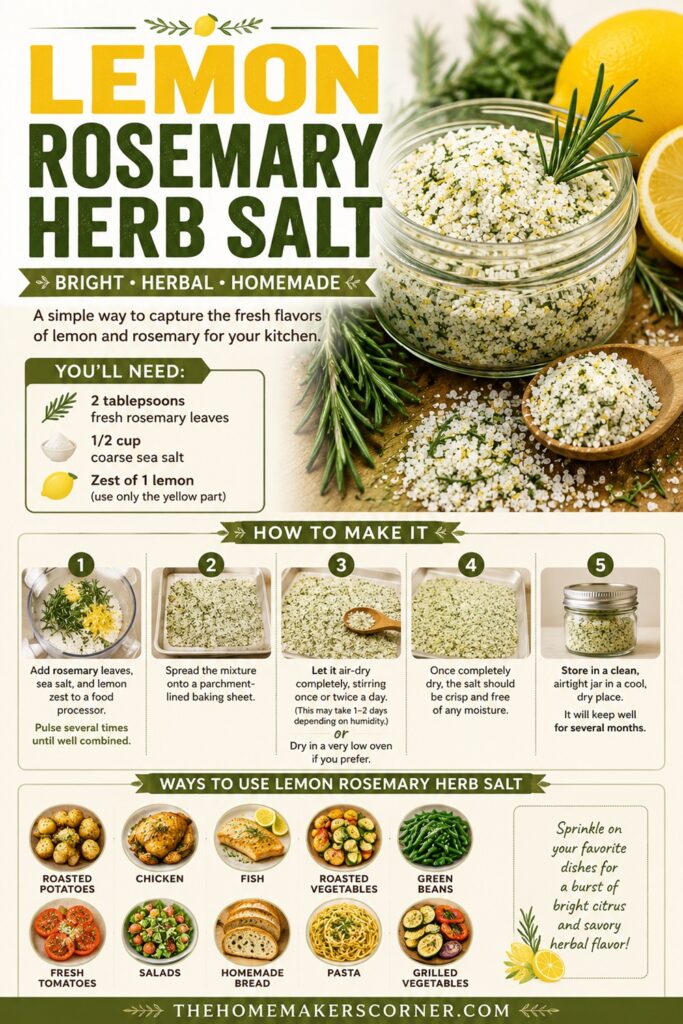
Lemon and rosemary make a particularly good combination for homemade seasoning salt.
Use it on roasted vegetables, chicken, potatoes, fish or even homemade bread.
5. Make Tuscan Herb Salt
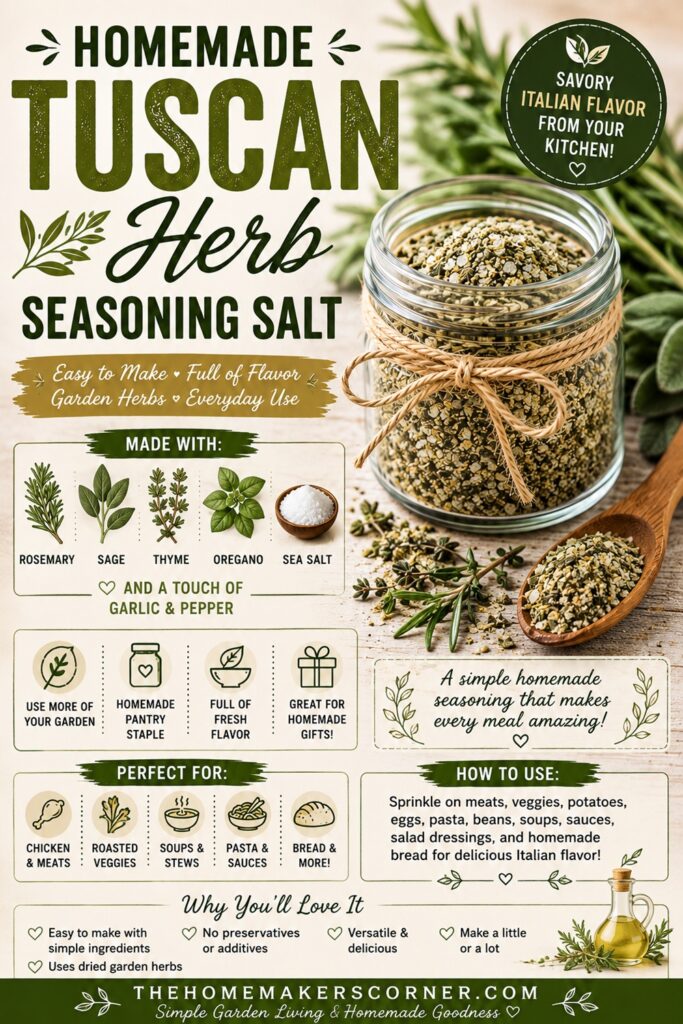
A homemade Tuscan herb salt is another great way to use an abundance of garden herbs.
It’s especially good for seasoning chicken, vegetables, pasta dishes and homemade soups.
6. Make Mediterranean Herb Salt
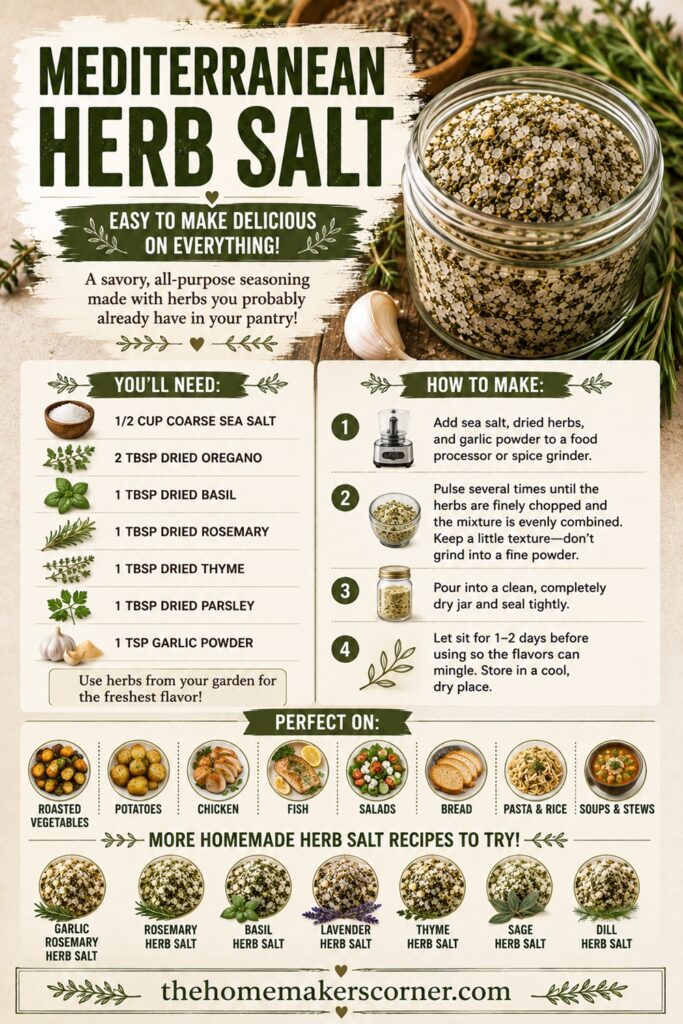
If you love Mediterranean flavors, combine your garden herbs with salt to create a seasoning blend you can use all year.
This is especially good on roasted vegetables, potatoes, chicken and fish.
7. Make Rosemary Herb Salt
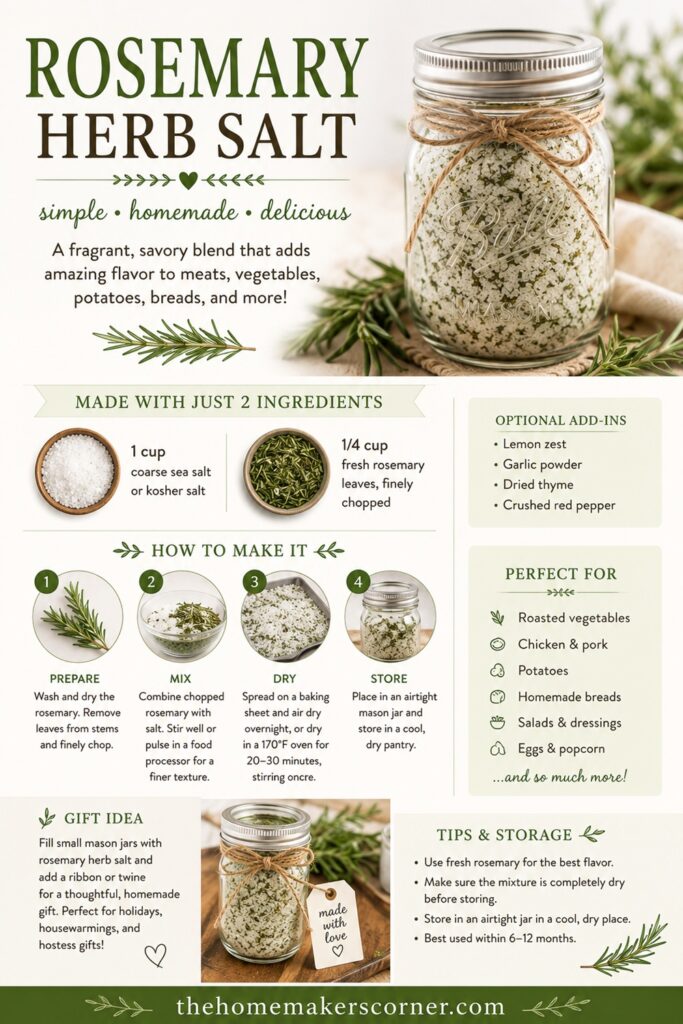
Have an especially productive rosemary plant?
Turn some of that harvest into rosemary salt. It’s an easy way to keep rosemary on hand without having to keep a fresh plant going all winter.
8. Make Italian Herb Salt
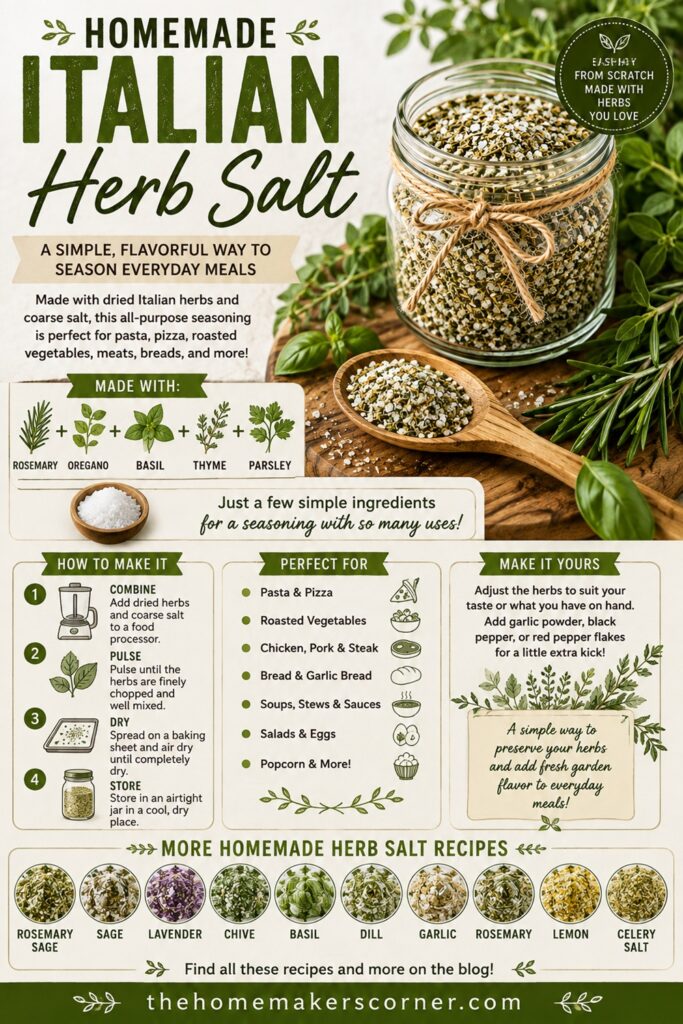
An Italian-style herb salt is perfect for anyone who cooks with oregano, basil, rosemary and thyme.
Keep a jar beside the stove and use it anywhere you’d normally reach for a bottle of Italian seasoning.
9. Make Garlic Herb Salt
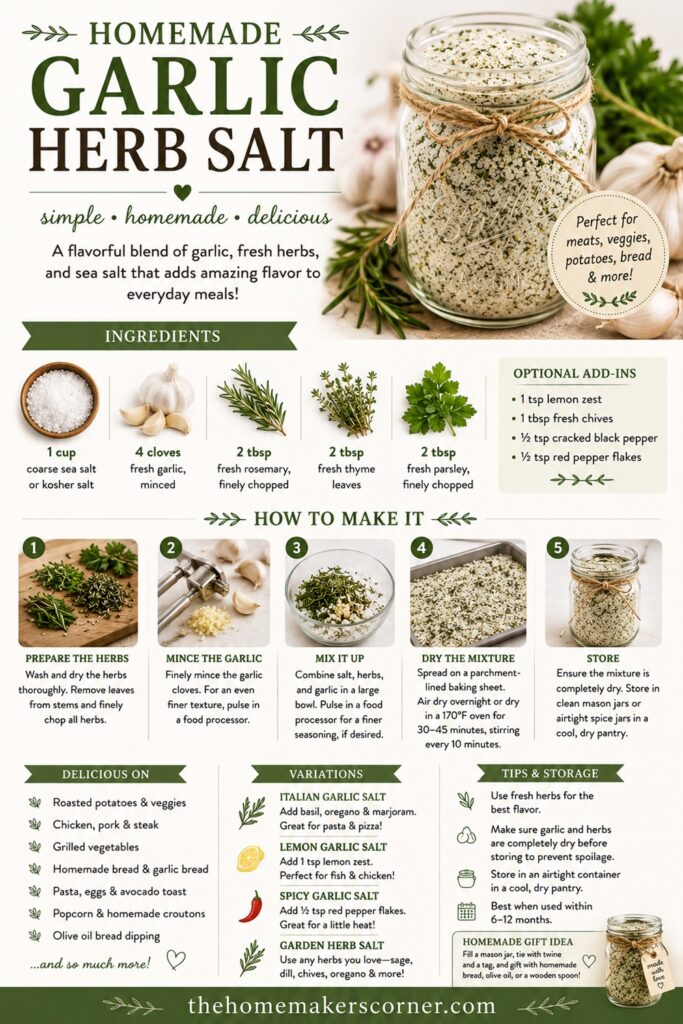
Fresh garlic combined with garden herbs makes a flavorful seasoning that’s useful for everything from roasted potatoes to grilled meats.
Easy Homemade Garlic Herb Salt
10. Make Parsley Herb Salt
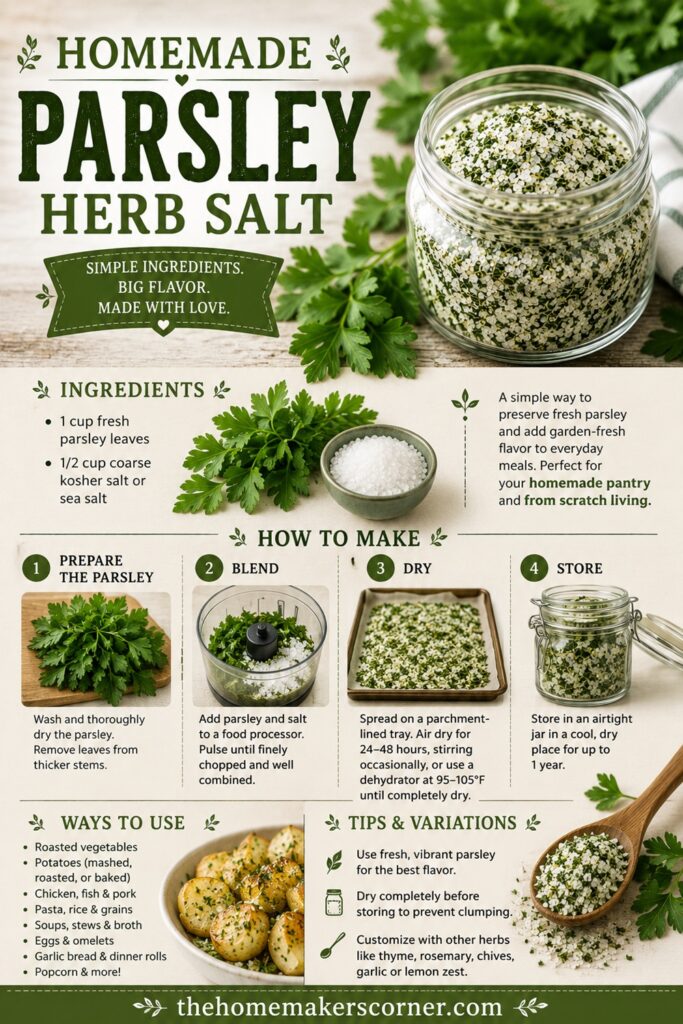
Parsley is one of those herbs that can seem to produce endlessly once it gets established.
Making parsley herb salt is an easy way to preserve some of that harvest for later.
11. Make Lemon Herb Salt
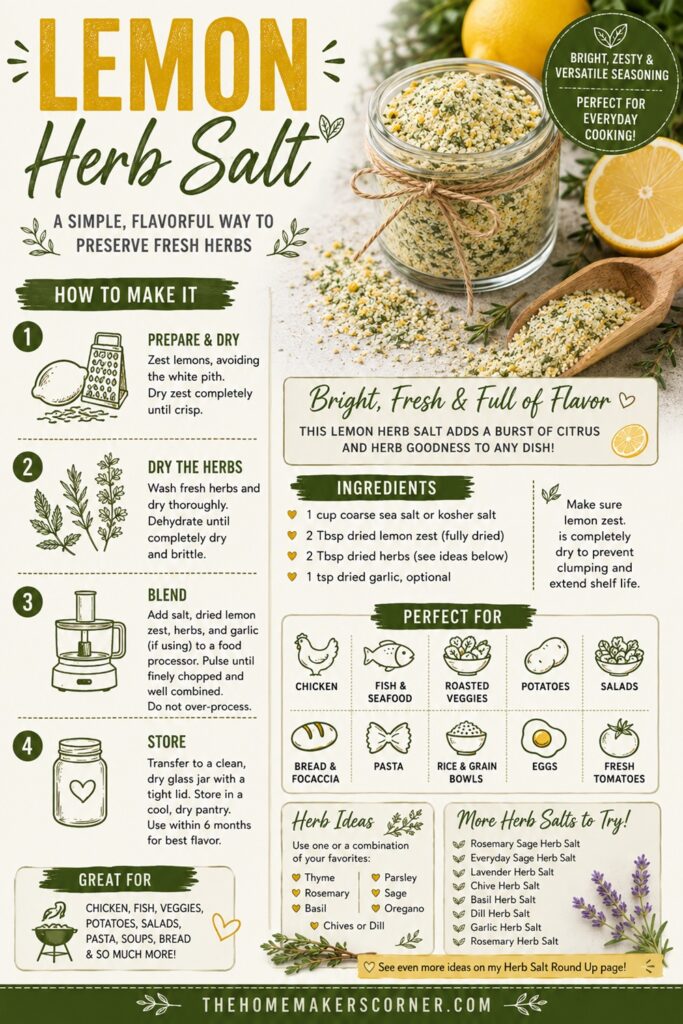
Fresh lemon zest combined with garden herbs makes a bright seasoning that’s wonderful in the winter when fresh herbs aren’t readily available.
12. Make Herb Butter
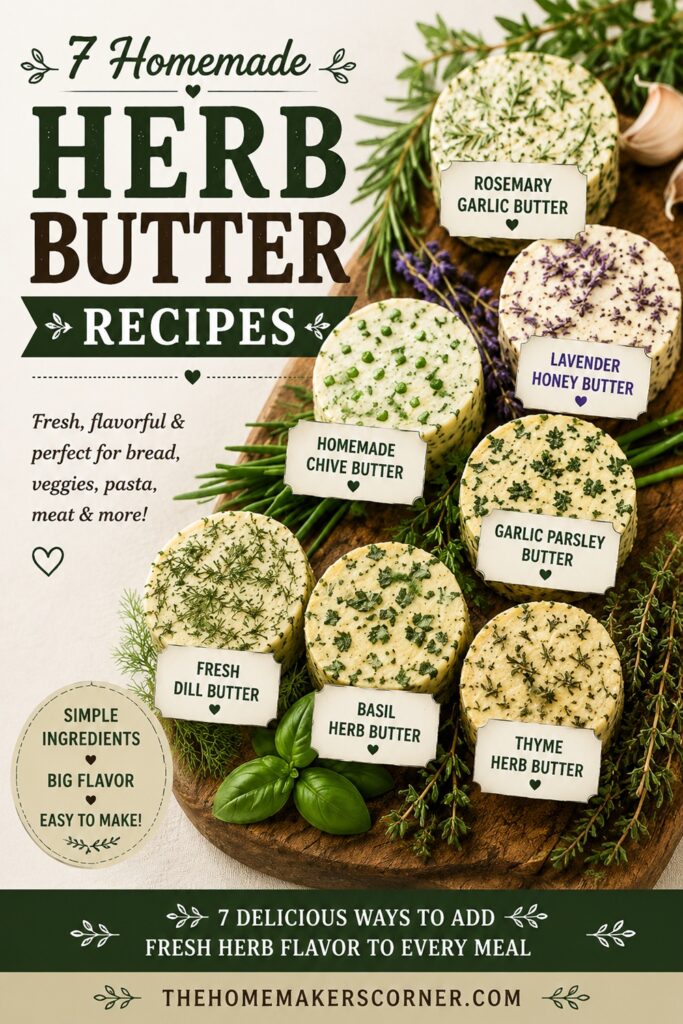
Herb butter is another great way to preserve fresh herbs in the freezer.
Mix chopped herbs into softened butter, shape it into a log or freeze it in portions. Add it to vegetables, bread, meat, pasta or potatoes whenever you need a little extra flavor.
7 Homemade Herb Butter Recipes
13. Dry Lavender
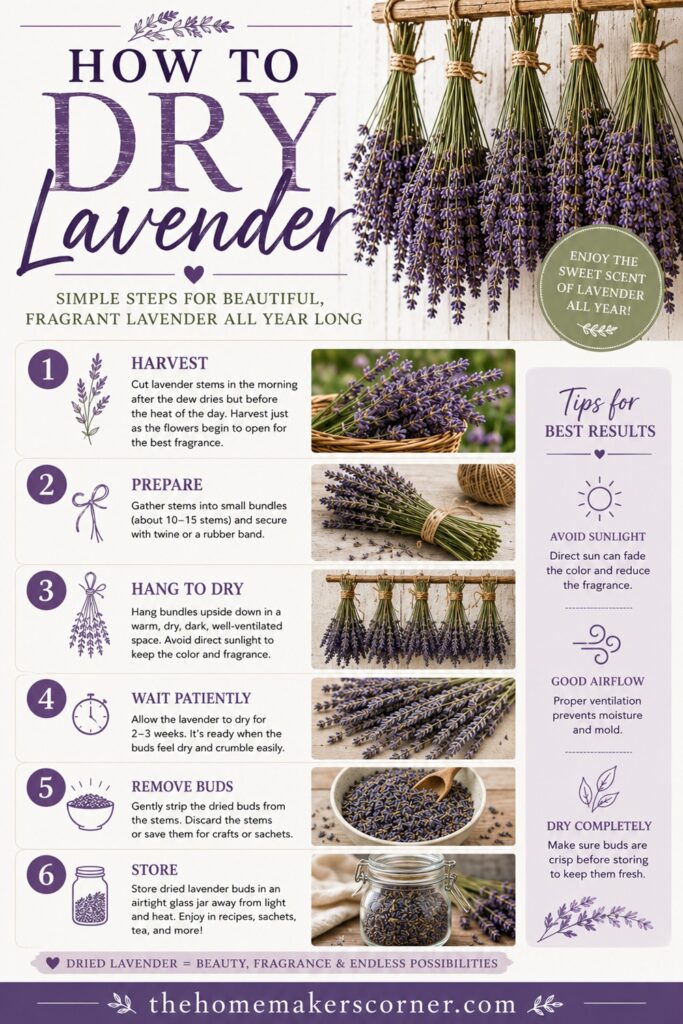
Lavender can be preserved simply by drying the flower stalks.
Once dried, you can use the flowers for tea, sachets, potpourri, bath projects and a whole lot more.
And if you’re looking for ideas for all that dried lavender, I’ve put together 17+ Ways to Use Lavender From Your Garden.
14. Make Lavender Oil
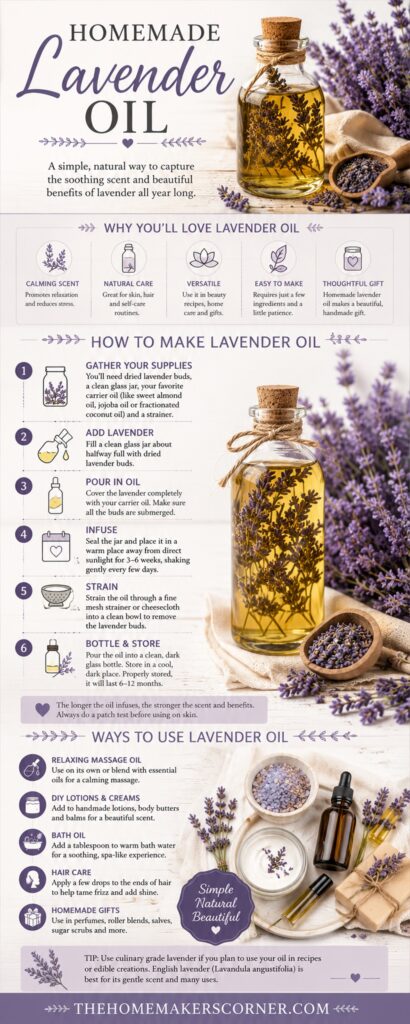
Dried lavender can also be used to make homemade lavender oil for skincare and other projects around the house.
It’s a wonderful example of taking something you’ve grown in the garden and turning it into something useful for your home.
How to Make Homemade Lavender Oil
15. Harvest Mint for Tea
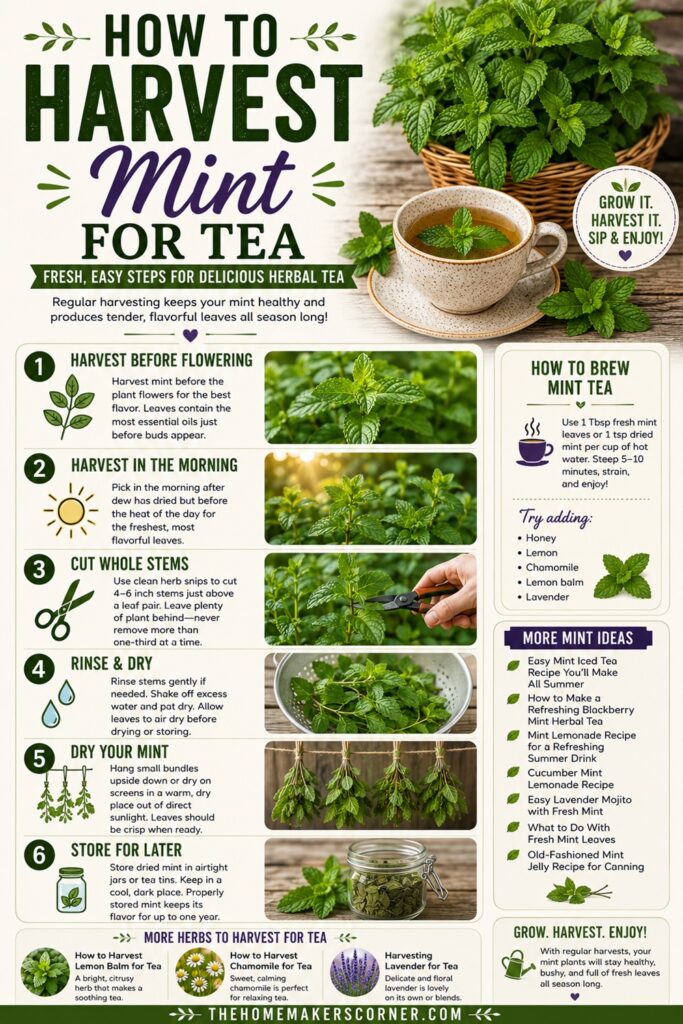
Mint is another herb that can quickly get ahead of you in the garden.
Harvesting and drying mint gives you an easy supply of homemade tea throughout the year.
16. Dry Lemon Balm
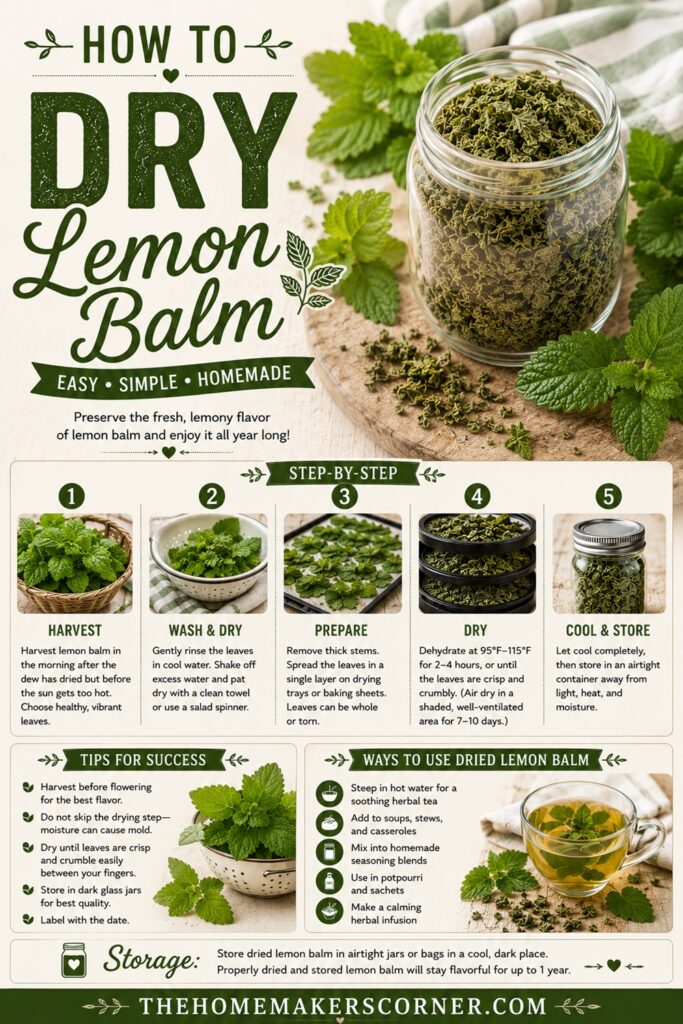
Lemon balm is another prolific garden herb that’s easy to preserve by drying.
Once dried, it can be used for herbal teas and other homemade projects.
17. Dry Herbs for Homemade Seasoning Blends
One of the simplest preservation methods is also one of the most useful: dry your herbs and make your own seasoning blends.
Instead of buying bottles of dried herbs and seasoning mixes all winter, you can make your own using herbs you’ve grown yourself.
Try combinations of rosemary, thyme, oregano, basil, parsley, sage and other herbs from your garden.
18. Make Homemade Herb Vinegar
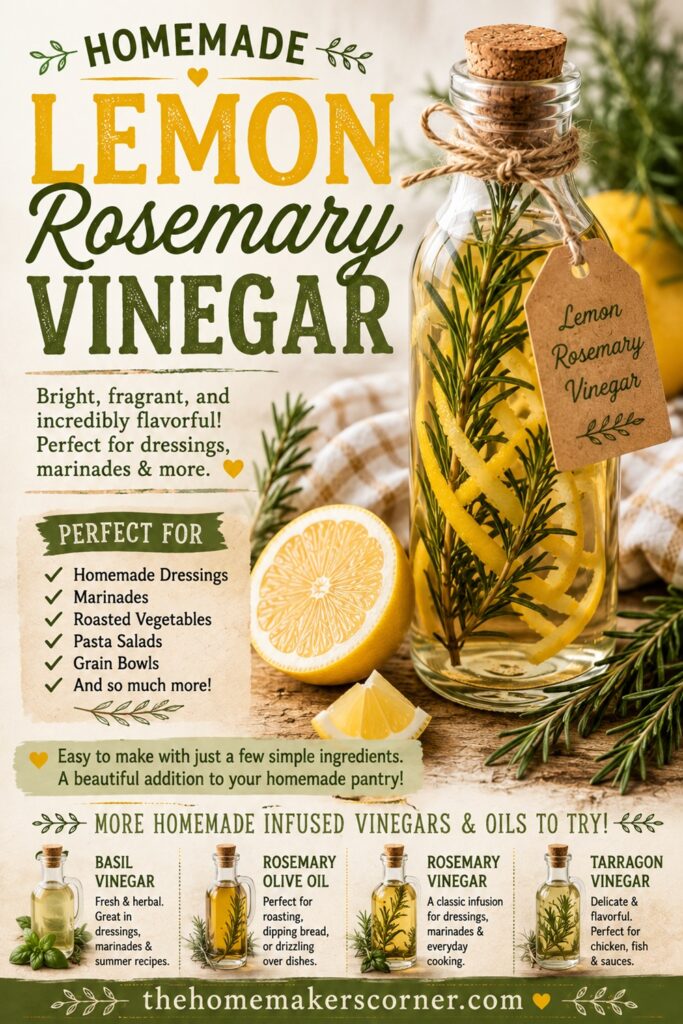
Fresh herbs can also be used to flavor vinegar.
Pack a clean jar with fresh herbs, cover them with vinegar and let the flavors infuse. Strain and bottle the finished vinegar for salad dressings, marinades and homemade cooking.
One of my favorites is Homemade Lemon Rosemary Vinegar.
19. Preserve Herbs as Homemade Seasoning
Don’t feel like you have to preserve every herb in exactly the same way.
Some herbs are wonderful dried, while others retain more of their fresh flavor when frozen.
Tender herbs such as parsley, cilantro and basil often do especially well frozen, while rosemary, thyme, oregano and sage are excellent candidates for drying.
The important thing is simply to preserve them while they’re fresh and flavorful.
How to Choose the Best Way to Preserve Your Herbs
If you’re standing in the garden with a huge basket of herbs, here’s a simple way to decide what to do with them.
For sturdy herbs:
Rosemary, thyme, oregano and sage are excellent dried.
For tender herbs:
Parsley, basil, cilantro and other tender herbs are often better frozen.
For herbs you use every day:
Make herb butter or herb salt so they’re already prepared when you need them.
For herbs you want to use for tea:
Dry mint, lemon balm and lavender.
For herbs you want to turn into homemade products:
Dry lavender, rosemary, lemon balm and other herbs for use in oils, sachets, bath products, teas and other garden-to-home projects.
Don’t Let Your Herb Garden Go to Waste
One of the best things about growing a kitchen garden is that the harvest doesn’t have to end when summer does.
A little time spent drying, freezing and preserving your herbs now can give you jars of homemade seasonings, herb butter, dried tea herbs and other garden-made staples to use throughout the year.
It’s one of my favorite parts of kitchen garden living—growing something yourself, bringing it into the kitchen, and finding a way to make that harvest last.
And once you’ve started preserving herbs, you may find yourself looking around the garden wondering, What else can I preserve? That’s where the fun really begins.
Follow my kitchen garden living board on Pinterest.