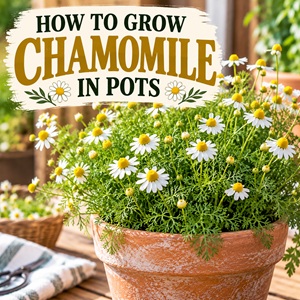
Growing chamomile in pots is an easy way to add a beautiful, fragrant herb to your patio, porch, or kitchen garden.
This post may contain affiliate links.
With its delicate white flowers and cheerful yellow centers, chamomile looks lovely in containers and is a wonderful addition to a garden filled with herbs.
Chamomile is also popular for making homemade herbal tea. If you’ve ever wanted to grow and dry your own chamomile flowers, starting with a container is a simple way to get started, even if you don’t have a traditional garden.
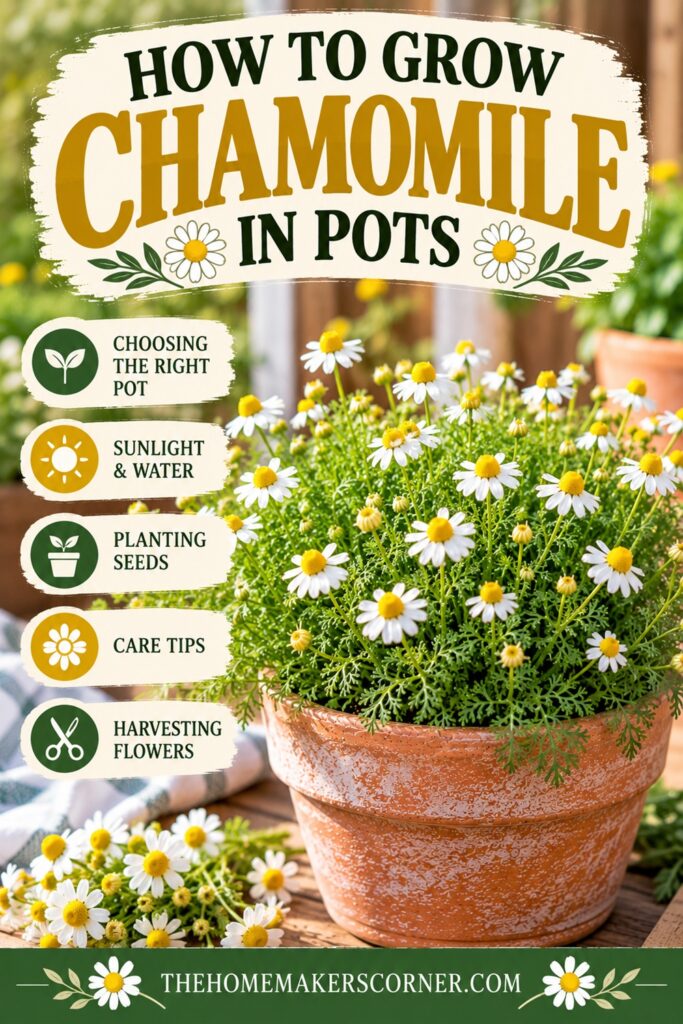
In this guide, I’ll show you how to choose the right pot, plant chamomile seeds, care for your plants, and harvest the flowers for drying.
Why Grow Chamomile in Containers?
Chamomile is a great choice for container gardening because it doesn’t require a lot of space or complicated care.
Here are a few reasons to grow chamomile in pots:
- Perfect for patios, balconies, and small gardens
- Beautiful white flowers that attract pollinators
- Easy to grow from seed
- Useful for homemade potpourri and craft projects
- A lovely addition to a kitchen herb garden
- Provides flowers you can harvest and dry
If you’re building a container herb garden, chamomile pairs beautifully with other herbs. You might also enjoy my guides to growing basil in pots, growing dill in pots, and growing chives in containers.
Want to try making your own jelly at home?
Get my free guide with 8 easy, beginner-friendly jelly recipes you can confidently make.
Which Type of Chamomile Should You Grow?
There are two common types of chamomile you may see when shopping for seeds.
German chamomile is an annual herb that grows upright and produces abundant daisy-like flowers. It is the most popular choice for harvesting flowers to dry for tea.
Roman chamomile is a low-growing perennial that spreads along the ground and is often used as an ornamental plant or ground cover.
It can also be grown in containers, although it has a different growth habit from German chamomile.
For a container garden focused on harvesting flowers, German chamomile is a great place to start.
Check the seed packet carefully so you know which variety you’re planting.
Choose the Right Pot for Chamomile
Chamomile doesn’t need an enormous container, but it does need enough room for its roots and foliage to develop.
Choose a pot that is approximately 8–12 inches deep and at least 10–12 inches wide for a small planting. A larger container works well if you want to grow several plants together.
Make sure the pot has drainage holes in the bottom. Chamomile prefers well-drained soil and doesn’t do well when its roots remain constantly wet.
You can use terracotta, plastic, ceramic, or another suitable garden container. Terracotta pots dry out more quickly, while plastic and glazed containers tend to hold moisture longer.
If you’re growing several herbs, consider giving chamomile its own pot or placing it with other plants that enjoy similar growing conditions.
The Best Soil for Growing Chamomile in Pots
Chamomile grows well in loose, well-draining potting soil. It doesn’t need especially rich soil, so there’s no need to overdo the compost or fertilizer.
Use a good-quality potting mix formulated for containers. Avoid using heavy garden soil, which can become compacted and hold too much moisture in a pot.
Fill your container to within an inch or two of the rim to leave room for watering.
Good drainage is especially important because overly wet soil can lead to unhealthy roots and poor plant growth.
When to Plant Chamomile
Chamomile grows best during the cooler parts of the growing season.
In many areas, you can sow seeds in early spring or start them indoors several weeks before your last expected frost.
You can also plant in late summer or early fall when temperatures begin to cool, depending on your climate.
If you live somewhere with hot summers, try to get your plants established before the hottest weather arrives.
One advantage of growing chamomile in containers is that you can move the pot to a more sheltered location when temperatures become extreme.
How to Plant Chamomile Seeds in Pots
Chamomile is easy to grow from seed, but there is one important detail to remember: the seeds need light to germinate.
Unlike many garden seeds, chamomile seeds should not be buried deeply in the soil.
Follow these steps to plant chamomile in containers:
- Fill your pot with a well-draining potting mix.
- Moisten the soil lightly before planting.
- Sprinkle the tiny chamomile seeds over the surface of the soil.
- Press the seeds gently against the soil so they make good contact, but do not cover them with a thick layer of soil.
- Mist the surface gently to avoid washing the seeds away.
- Place the pot in a bright location and keep the soil surface lightly moist.
- Watch for seedlings, which may appear within one to two weeks under suitable conditions.
Once the seedlings have developed a few sets of true leaves, thin them as needed so they have room to grow and good air circulation.
If you start seeds indoors, handle young seedlings gently when transplanting them. Established chamomile plants generally do not transplant as easily as small seedlings.
How Much Sunlight Does Chamomile Need?
Chamomile grows best in a sunny location.
Aim for approximately six hours of sunlight a day for healthy growth and flowering. In areas with very hot summers, some afternoon shade can help protect container-grown plants from excessive heat.
A sunny patio, porch, balcony, or garden area is often an excellent place for a chamomile pot.
If your plants become tall and leggy or produce few flowers, they may need more sunlight.
How Often Should You Water Chamomile?
Chamomile prefers soil that stays lightly moist while young plants are becoming established, but it does not like waterlogged conditions.
Container-grown plants dry out faster than plants growing in the ground, so check your pot regularly.
Here are a few watering tips:
- Check the soil surface daily during warm weather.
- Water when the top layer of soil begins to dry.
- Water thoroughly enough to moisten the root zone.
- Allow excess water to drain through the holes in the bottom of the pot.
- Never leave the container sitting in standing water.
Once chamomile is established, it generally needs less frequent watering than many leafy herbs. However, small containers may dry out quickly in hot, windy weather.
The goal is to keep the soil from becoming completely dry for long periods without allowing it to stay soggy.
Does Chamomile Need Fertilizer?
Chamomile is not a heavy feeder. In fact, overly rich soil and excessive fertilizer are unnecessary for this easygoing herb.
A quality potting mix is usually enough to get your plants started. If growth becomes weak, you can use a diluted, balanced fertilizer according to the package directions.
Avoid overfertilizing. Chamomile can grow quite well without frequent feeding, and good sunlight and proper watering are more important than adding lots of fertilizer.
How to Care for Chamomile in Pots
Chamomile is relatively low-maintenance once it becomes established.
Keep these simple tips in mind:
Remove weeds and crowded seedlings. Young chamomile plants need room to grow, especially when several seeds germinate close together.
Provide good air circulation. Avoid overcrowding the pot, which can keep foliage damp and encourage plant problems.
Watch for aphids. These small insects sometimes gather on tender stems and new growth. Inspect your plants occasionally and rinse small infestations away with water.
Harvest flowers regularly. Picking flowers as they bloom helps you collect your harvest before the blossoms fade.
Keep an eye on moisture. Container plants may need more frequent watering during hot weather, even if established chamomile growing in the ground needs very little.
How to Harvest Chamomile Flowers
One of the best parts of growing chamomile is harvesting the little flowers.
For the best results, harvest the flower heads when they are fully open or nearly fully open, before the petals begin to fade.
Here’s how to harvest chamomile:
- Choose a dry day after the morning dew has evaporated.
- Look for flowers with bright white petals and yellow centers.
- Pinch or snip the flower heads from the stems.
- Collect the flowers in a clean basket or bowl.
- Use them fresh or prepare them for drying.
Harvesting regularly encourages you to keep checking the plants for new blooms and helps you collect flowers before they deteriorate.
If you’re growing German chamomile for tea, harvest the flowers throughout the blooming season as they mature.
How to Dry Chamomile Flowers
If you grow chamomile for tea or homemade projects, drying the flowers is a useful way to preserve your harvest.
Spread the flower heads in a single layer on a clean screen or drying tray. Place them in a warm, dry, well-ventilated area away from direct sunlight.
You can also use a food dehydrator on a low setting suitable for delicate herbs. Follow your dehydrator’s instructions and check the flowers frequently.
The flowers should be completely dry before you store them. Allow them to cool, then place them in a clean, airtight container away from heat, light, and moisture.
Label the container with the herb’s name and the date you dried it.
How to Use Homegrown Chamomile
Chamomile flowers have several uses around the home.
You can use your harvest for:
- Homemade chamomile tea
- Potpourri and scented sachets
- Dried flower crafts
- Homemade botanical decorations
- Decorative garnishes, where appropriate
If you plan to use chamomile for tea, make sure you have correctly identified the plant and harvested it from an area free of pesticides or other contaminants.
Chamomile may cause allergic reactions in people sensitive to plants in the daisy family.
Anyone who is pregnant, takes medication, or has a medical condition should check with a qualified healthcare professional before using chamomile medicinally.
Other Herbs to Grow in Containers
Once you have chamomile growing, you may want to add more herbs to your patio or kitchen garden.
Here are some other container gardening guides:
- Easy Tips for Growing Basil in Pots
- Growing Dill in Pots
- How to Grow Tarragon in Pots
- How to Grow Sage in Pots
- How to Grow Rosemary in Pots
- How to Grow Thyme in Pots
- How to Grow Chives in Containers
Growing several herbs in containers is a practical way to enjoy fresh ingredients and fragrant plants without needing a large garden.
Enjoy Growing Chamomile in Pots
Chamomile is a beautiful and useful herb that deserves a place in any container garden.
With a suitable pot, well-draining soil, plenty of sunlight, and careful watering, you can grow your own plants even if you’re short on garden space.
Start with German chamomile seeds if you’d like to harvest flowers for drying, and remember to press the seeds onto the soil surface rather than burying them.
Before long, you’ll have cheerful little flowers to enjoy in your garden and a harvest you can dry for future projects.
Whether you’re growing chamomile for its beauty, fragrance, or flowers, it’s an easy and rewarding addition to your collection of container herbs.
Follow my container gardening board on Pinterest.