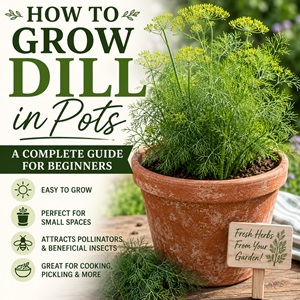
Growing dill in pots is an easy way to enjoy fresh herbs, even if you have limited gardening space.
This post may contain affiliate links.
With its feathery foliage, bright green leaves, and fragrant seeds, dill is a favorite for everything from pickles and potato salad to seafood and homemade dressings.
Whether you’re gardening on a patio, balcony, porch, or sunny deck, dill grows beautifully in containers with just a little care.
Why Grow Dill in Containers?
Dill is an excellent herb for container gardening because it’s easy to grow, fast-growing, and produces an abundant harvest throughout the season.
Benefits of growing dill in pots include:
- Perfect for patios, balconies, and small spaces
- Easy to harvest fresh leaves whenever you need them
- Great for companion planting near vegetables
- Attracts bees, butterflies, and beneficial insects
- Produces edible leaves, flowers, and seeds
- Ideal for beginner gardeners
Best Dill Varieties for Containers
Several varieties grow well in containers.
Popular choices include:
Want to try making your own jelly at home?
Get my free guide with 8 easy, beginner-friendly jelly recipes you can confidently make.
- Bouquet Dill – The classic variety for cooking and pickling.
- Fernleaf Dill – A compact variety that’s ideal for containers.
- Dukat Dill – Known for its abundant, flavorful foliage.
- Mammoth Dill – Larger plants that produce plenty of seeds for pickling.
If you’re growing dill in a smaller pot, Fernleaf Dill is an excellent choice.
Choosing the Right Pot
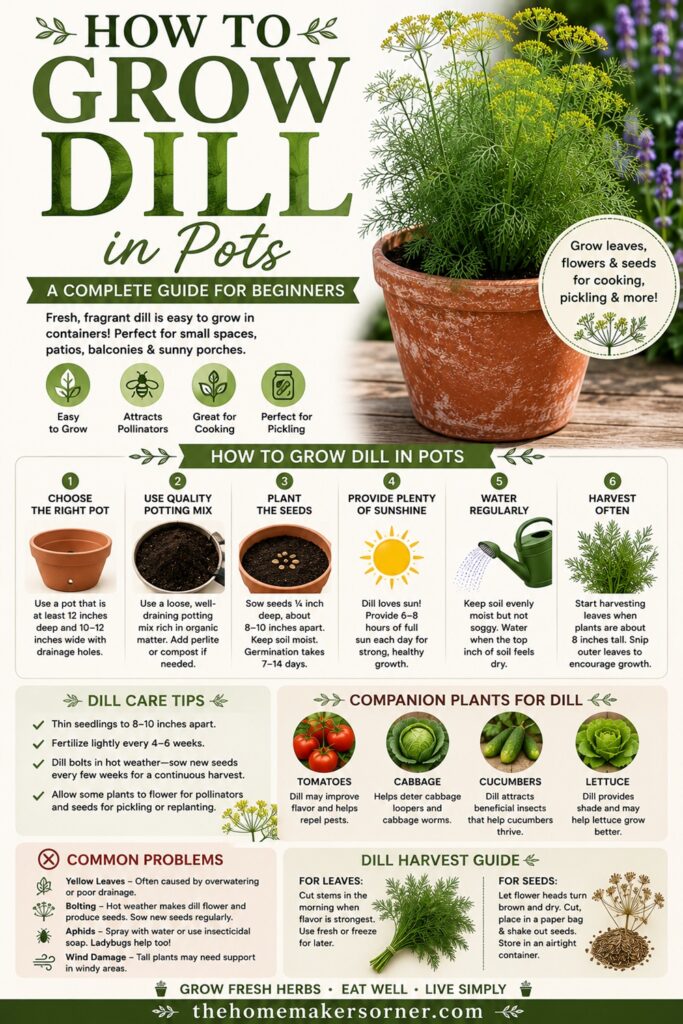
Dill develops a long taproot, so choose a container that’s deeper than you might expect.
Look for a pot that’s:
- At least 12 inches deep
- 10 to 12 inches wide
- Equipped with drainage holes
Terracotta pots are an excellent option because they help excess moisture evaporate.
The Best Soil for Dill
Dill prefers loose, well-draining soil that’s rich in organic matter.
Fill your container with a high-quality potting mix. If needed, improve drainage by adding:
- Perlite
- Coarse sand
- Compost
Avoid heavy garden soil, which can become compacted in containers.
Sunlight Requirements
Dill loves sunshine.
Provide:
- 6 to 8 hours of full sun each day.
If you live in a very hot climate, afternoon shade can help prevent plants from wilting during the hottest part of the day.
How to Plant Dill in Pots
Because dill develops a taproot, it’s best to sow seeds directly into the container instead of transplanting seedlings.
- Fill your pot with potting mix.
- Sow seeds about ¼ inch deep.
- Lightly cover with soil.
- Water gently.
- Thin seedlings once they’re a few inches tall, leaving 8 to 10 inches between plants.
Seeds usually germinate within 7 to 14 days.
Watering Dill
Keep the soil evenly moist while seeds are germinating.
Once established:
- Water when the top inch of soil feels dry.
- Avoid letting the soil become soggy.
- Water deeply rather than frequently.
Fertilizing
Dill doesn’t require heavy feeding.
Apply a balanced liquid fertilizer every 4 to 6 weeks, or mix a slow-release fertilizer into the soil when planting.
Too much fertilizer encourages leafy growth but can reduce flavor.
Harvesting Dill
You can begin harvesting leaves once the plants reach about 8 inches tall.
To harvest:
- Snip outer leaves first.
- Leave the center growing point intact.
- Harvest regularly to encourage fresh growth.
For dill seeds, allow flower heads to dry on the plant before collecting.
Growing Dill Indoors
Dill can also be grown indoors in a sunny window.
Place containers:
- Near a south-facing window
- Under grow lights if necessary
Rotate the pot occasionally so plants grow evenly.
Common Problems
Yellow Leaves
Usually caused by overwatering or poor drainage.
Bolting
Hot weather naturally causes dill to flower and produce seeds.
To extend the harvest, sow new seeds every few weeks.
Aphids
Wash plants with a strong stream of water or introduce beneficial insects like ladybugs.
Wind Damage
Tall dill plants may benefit from a small stake if they’re growing on windy patios or balconies.
Frequently Asked Questions
Can dill grow in a small pot?
Dill prefers deeper containers because of its taproot. Choose a pot that’s at least 12 inches deep for the healthiest plants.
Does dill come back every year?
Most dill is grown as an annual, but it often self-seeds and returns the following season.
Can you grow dill indoors?
Yes! As long as it receives plenty of sunlight or supplemental grow lights, dill grows well indoors.
Should I let dill flower?
Yes. The flowers attract pollinators, and the seeds are perfect for pickling and saving for future planting.
More Herbs to Grow in Pots
If you’re building a productive container herb garden, be sure to grow these herbs too:
- How to Grow Basil in Pots
- How to Grow Rosemary in Pots
- How to Grow Thyme in Pots
- How to Grow Oregano in Pots
- How to Grow Mint in Pots
- How to Grow Sage in Pots
- How to Grow Lemon Balm in Pots
Together, these herbs create a beautiful kitchen garden that’s perfect for cooking, preserving, and homemade living.
Growing dill in pots is one of the easiest ways to enjoy fresh herbs throughout the growing season.
With a deep container, plenty of sunshine, and regular harvesting, you’ll have an abundant supply of flavorful dill leaves and seeds for everything from homemade pickles to fresh salads and seafood dishes.
Whether you’re starting your first herb garden or expanding your collection, dill is a rewarding herb that’s well worth growing in containers.
Follow my kitchen garden living board on Pinterest.