Are you interested in growing fresh herbs at home but don’t have a lot of outdoor space? Lemon balm, also known as Melissa officinalis, is a great option for growing in pots.
This post may contain affiliate links.
This herb is a member of the mint family and is a hardy, herbaceous perennial that can thrive in containers with the right care.
Lemon balm is a versatile herb that has a variety of uses in the kitchen and beyond. Its leaves have a lemony scent and flavor that can be used to add a citrusy twist to teas, salads, and cocktails.
It’s also known for its calming properties and is often used to make herbal remedies for anxiety and insomnia. Plus, growing lemon balm in pots is a great way to keep pests like mosquitoes and flies at bay.
With a little bit of effort, you can easily grow this herb in your own home and enjoy its many benefits.
Related Article: Lemon Balm a Fragrant Garden Herb
Understanding Lemon Balm
Lemon balm, also known as Melissa officinalis, is a herbaceous perennial that belongs to the mint family. It is a popular herb that is widely used for its medicinal and culinary benefits.
Want to try making your own jelly at home?
Get my free guide with 8 easy, beginner-friendly jelly recipes you can confidently make.
One of the most distinctive features of lemon balm is its scent. The leaves of this herb release a strong lemony aroma when crushed or bruised.
The fragrance is refreshing and soothing, making it a popular choice for aromatherapy and relaxation.
Related Article: Bee Balm, A Beautiful and Useful Plant for your Garden
Lemon balm is a relatively easy herb to grow, making it a great choice for beginners.
It is a hardy plant that can survive in a range of growing conditions. It is also a great option for those who have limited space as it can be grown in pots.
The leaves of lemon balm are oval-shaped and have a slightly wrinkled appearance.
They are light green in color and have a slightly serrated edge. The foliage of this herb is quite attractive and makes it a great addition to any garden.
In the summer months, lemon balm produces small white flowers that are highly attractive to bees and other pollinators.
If you are a fan of honeybees, then growing lemon balm in your garden is a great way to attract them.
Related Article: Lemon Balm Tea: A Natural Herbal Infusion You’ll Love
Choosing the Right Pot
When it comes to growing lemon balm in pots, choosing the right container is crucial. Here are some things to keep in mind when selecting a pot for your lemon balm:
Size Matters
Lemon balm can grow up to 2 feet tall and 2 feet wide, so you’ll need a container that’s at least 12 inches deep and 12 inches wide.
If you’re planting more than one lemon balm plant in the same pot, make sure it’s large enough to accommodate all of them.
Related Article: Growing Dill in a Soil-Based or Hydroponic Herb Garden
Drainage is Key
Lemon balm needs well-draining soil to thrive, so make sure your pot has drainage holes in the bottom.
If your container doesn’t have holes, drill some yourself or place a layer of gravel or pebbles at the bottom to improve drainage.
Consider Your Environment
If you’re growing lemon balm indoors, choose a pot that complements your decor and fits in with the overall style of your home.
If you’re growing lemon balm outdoors, consider the climate and weather conditions in your area. A heavy pot may be necessary to keep your lemon balm from toppling over in windy conditions.
Related Article: Homemade Lemon Balm Tincture Easy Steps for a Calming Herbal Remedy
Material Matters
Pots come in a variety of materials, including clay, plastic, and ceramic. Clay pots are porous and allow air and water to circulate, but they can dry out quickly.
Plastic pots are lightweight and retain moisture well, but they may not last as long as other materials. Ceramic pots are sturdy and look great, but they can be heavy and may crack in extreme temperatures.
By keeping these factors in mind, you can choose the perfect pot for your lemon balm and ensure that it thrives in its new home.
Related Article: Growing Grapes on a Fence
Related Herb Gardening Guides
If you’re building a container herb garden, these guides can help:
- Easy Tips for Growing Basil in Pots
- How to Prune Basil
- How to Grow Thyme in Pots
- How to Grow Rosemary in Pots
- How to Grow Mint in Pots
- How to Grow Oregano in Pots
Preparing the Soil
Before planting your lemon balm in a pot, it is important to prepare the soil properly.
This will ensure that your plant has the best chance of thriving and producing healthy leaves. Here are a few tips on how to prepare your soil:
Choosing the Right Soil
The first step is to choose the right type of soil. Lemon balm prefers well-drained soil that is slightly acidic with a pH between 6.0 and 7.5.
You can purchase potting soil that is specifically formulated for herbs or make your own by mixing equal parts of compost, sand, and regular potting soil.
Testing the Soil pH
It is important to test the pH of your soil before planting your lemon balm. You can purchase a soil testing kit at your local garden center or online.
If the pH is too low, you can add lime to raise it. If the pH is too high, you can add sulfur to lower it.
Related Article: Complete Guide to Preserving Herbs
Adding Compost
Adding compost to your soil will provide your lemon balm with the nutrients it needs to grow.
Compost is rich in nitrogen, phosphorus, and potassium, which are essential for plant growth.
You can purchase compost at your local garden center or make your own by composting kitchen scraps and yard waste.
Ensuring Good Drainage
Lemon balm prefers well-drained soil, so it is important to ensure that your pot has good drainage.
You can add a layer of gravel or stones to the bottom of your pot to help with drainage. Make sure that your pot has drainage holes at the bottom to allow excess water to drain out.
By following these tips, you can prepare the soil for your lemon balm and ensure that it has the best chance of thriving in your pot.
Related Article: Growing Blackberries in Pots: Tips and Tricks
Planting Lemon Balm
Growing lemon balm in pots is a great way to enjoy fresh herbs all year round. Here are some tips on how to plant lemon balm in pots:
Choosing the Right Pot
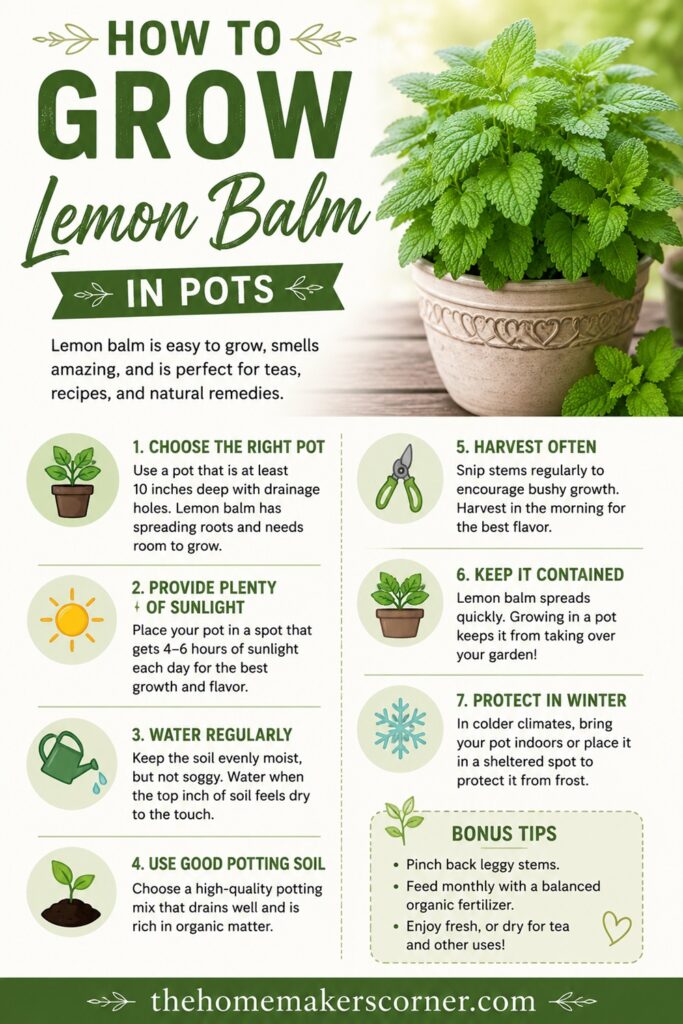
When planting lemon balm, choose a pot that is at least 8-10 inches deep and wide.
Make sure the pot has drainage holes to prevent water from pooling at the bottom. You can also use a pot with a saucer to catch excess water.
Soil and Fertilizer
Lemon balm prefers well-draining soil that is rich in organic matter. Mix equal parts of potting soil, compost, and perlite to create a suitable growing medium.
Fertilize the soil with a balanced fertilizer every four to six weeks during the growing season.
Related Article: Growing Clematis in Pots
Planting Seeds or Seedlings
You can plant lemon balm seeds directly in the pot or start them indoors six to eight weeks before the last frost.
Sow the seeds 1/4 inch deep and water them well. Lemon balm seeds usually germinate within two weeks.
If you prefer to use seedlings, transplant them into the pot once they have grown two to three sets of true leaves.
Gently loosen the soil around the roots and plant the seedlings at the same depth as they were in their original container.
Transplanting Cuttings
Lemon balm can also be propagated from cuttings. Take a 4-6 inch cutting from a healthy lemon balm plant and remove the lower leaves.
Dip the cut end in rooting hormone and plant it in moist soil. Cover the pot with a plastic bag to create a mini greenhouse and keep the soil moist until the cutting roots.
Related Article: How to Dry Lemon Balm Quickly and Easily at Home
Planting in Spring
Plant lemon balm in the spring after the last frost. This will give the plant plenty of time to establish itself before the hot summer months.
Place the pot in a sunny location with at least six hours of direct sunlight per day.
By following these simple steps, you can easily grow lemon balm in pots and enjoy its refreshing scent and flavor all year round.
Caring for Lemon Balm
Growing lemon balm in pots is an easy and rewarding experience. However, to ensure that your plants thrive, you need to provide them with proper care. Here are some tips to help you care for your lemon balm plants:
Watering
Lemon balm plants need regular watering, especially during hot and dry weather.
Water your plants deeply and thoroughly, making sure that the soil is moist but not waterlogged. Allow the top inch of soil to dry out between watering to prevent overwatering.
Light and Temperature
Lemon balm plants prefer full sun to partial shade. They need at least 6 hours of direct sunlight per day to grow well.
However, they can also tolerate some shade. Keep your plants in a location that receives plenty of sunlight, but protect them from intense afternoon sun.
Lemon balm plants grow best in temperatures between 60 and 80°F (15 and 27°C).
They can tolerate some cold weather, but they are not frost-tolerant. If you live in a cold climate, bring your plants indoors during the winter or cover them with a frost blanket.
Humidity
Lemon balm plants prefer moderate humidity levels. If the air in your home is too dry, mist your plants with water or place a humidifier nearby.
Fertilizer
Lemon balm plants do not need much fertilizer. However, you can feed them with a balanced, water-soluble fertilizer once a month during the growing season. Do not over-fertilize, as this can damage your plants.
Pruning
Prune your lemon balm plants regularly to keep them healthy and bushy.
Pinch off the tips of the stems to encourage branching and remove any dead or yellowing leaves. You can also cut back your plants by one-third in the spring to promote new growth.
Air Circulation
Lemon balm plants need good air circulation to prevent fungal diseases.
Make sure that your plants are not overcrowded and that there is enough space between them. You can also use a small fan to improve air circulation around your plants.
By following these tips, you can ensure that your lemon balm plants stay healthy and productive.
Follow my gardening board on Pinterest.