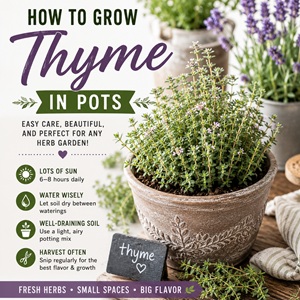
Fresh thyme is one of the easiest and most rewarding herbs you can grow in containers.
This post may contain affiliate links.
Whether you have a sunny patio, balcony, porch, or kitchen windowsill, thyme thrives in pots with very little maintenance.
Its fragrant leaves are perfect for cooking, attract pollinators, and look beautiful alongside other herbs.
If you’re looking for a low-maintenance herb that keeps producing year after year, thyme is an excellent choice.
Why Grow Thyme in Containers?
Growing thyme in pots offers several advantages.
- Perfect for small spaces
- Easy to move into the sun
- Excellent drainage helps prevent root rot
- Easy to harvest while cooking
- Beautiful addition to patios and balconies
- Helps attract bees and butterflies
Since thyme naturally prefers dry, rocky soil, containers actually provide one of the best growing environments.
Choose the Right Pot
Thyme doesn’t need a large container, but drainage is essential.
Want to try making your own jelly at home?
Get my free guide with 8 easy, beginner-friendly jelly recipes you can confidently make.
Look for a pot that is:
- 8 to 12 inches wide
- At least 8 inches deep
- Made of terra cotta, ceramic, or plastic
- Equipped with drainage holes
Terra cotta pots are especially nice because they allow excess moisture to evaporate, keeping the roots healthy.
Use Well-Drained Potting Soil
One of the biggest mistakes gardeners make is planting thyme in heavy soil.
Instead, use:
- High-quality potting mix
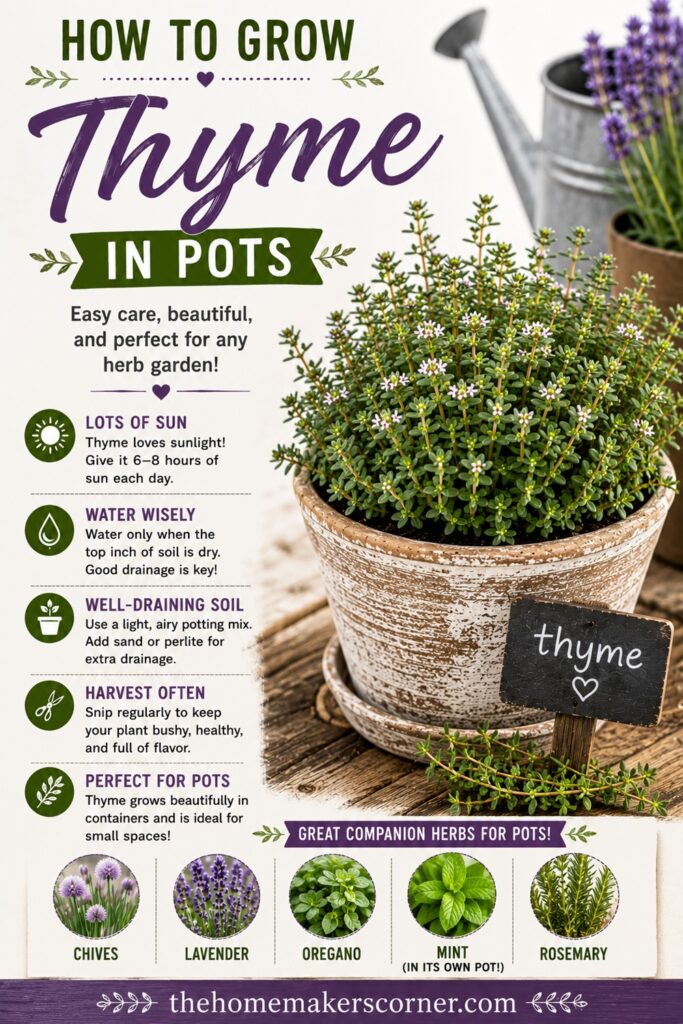
- A little coarse sand or perlite for extra drainage
- Compost only in small amounts
Avoid moisture-retaining soils that stay soggy after watering.
Give Thyme Plenty of Sun
Thyme loves sunshine.
Aim for:
- 6–8 hours of direct sunlight daily
- A south- or west-facing patio
- Bright windows if growing indoors
Without enough sun, plants become leggy and lose much of their wonderful flavor.
Water Carefully
Thyme prefers to stay on the dry side.
Water only when the top inch or two of soil feels dry.
When watering:
- Water thoroughly.
- Allow excess water to drain away.
- Never let the pot sit in standing water.
Overwatering is the number one reason container-grown thyme struggles.
Fertilize Sparingly
Unlike many herbs, thyme doesn’t need rich soil.
Too much fertilizer encourages leafy growth with less concentrated flavor.
A light feeding once or twice during the growing season is usually plenty.
Harvest Often
The more you harvest thyme, the fuller the plant becomes.
To harvest:
- Snip stems just above a leaf node.
- Never remove more than one-third of the plant at one time.
- Harvest regularly throughout the growing season.
Fresh thyme can be used immediately or dried for later use.
Prune to Keep Plants Healthy
After flowering, lightly trim back the stems to encourage fresh growth.
In spring:
- Remove any dead or woody stems.
- Shape the plant to maintain a compact form.
- Replace older plants every few years if growth slows.
Growing Thyme Indoors
Thyme grows surprisingly well indoors if it receives enough light.
Place containers:
- Near a bright south-facing window
- Under grow lights during winter if necessary
- Away from heating vents
Rotate the pot every week so all sides receive even sunlight.
Best Companion Herbs for Container Gardens
Thyme grows beautifully alongside many other Mediterranean herbs that enjoy similar growing conditions.
Some excellent companions include:
- Rosemary
- Lavender
- Oregano
Mint is another wonderful container herb, but it should always have its own pot because of its aggressive spreading habit.
You might also enjoy:
- How to Grow Chives in Pots
- How to Grow Lavender in Pots
- How to Grow Oregano in Pots
- How to Grow Mint in Pots
- How to Grow Rosemary in Pots
Together, these herbs create a beautiful, fragrant container garden that’s both attractive and productive.
Common Problems
Yellow Leaves
Usually caused by overwatering or poor drainage.
Woody Stems
Older thyme naturally becomes woody over time. Prune regularly and replace plants every few years if necessary.
Root Rot
Almost always the result of soil staying too wet.
Good drainage is the best prevention.
Leggy Growth
Plants that stretch or flop typically need more direct sunlight.
Frequently Asked Questions
Can thyme live in a pot year-round?
Yes. Thyme is a perennial in many climates and grows very well in containers throughout the year. In colder regions, protect pots from repeated freezing by moving them to a sheltered location.
How often should I water potted thyme?
Water only when the soil has dried out. Thyme prefers slightly dry conditions over consistently moist soil.
Does thyme need full sun?
Yes. For the healthiest plants and best flavor, thyme should receive at least six hours of direct sunlight every day.
Can thyme share a pot with other herbs?
Yes. Thyme grows well with rosemary, oregano, and lavender because they all enjoy similar sunlight and watering requirements. Avoid planting it with moisture-loving herbs like basil or parsley.
Thyme is one of the easiest herbs to grow in containers. With plenty of sunshine, excellent drainage, and occasional watering, you’ll enjoy fragrant harvests for months with very little effort.
Whether you’re creating a patio herb garden or growing herbs on a sunny windowsill, thyme is a beautiful, versatile plant that belongs in every container garden.
Follow my kitchen garden living board on Pinterest.