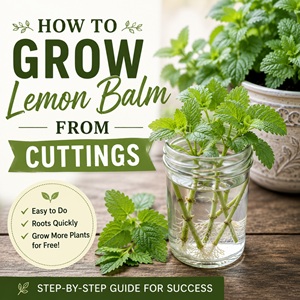
Lemon balm is one of the easiest herbs to propagate from cuttings. Instead of buying new plants every year, you can grow healthy new lemon balm plants from a few stems taken from an existing plant.
This post may contain affiliate links.
Whether you’re expanding your herb garden, filling more containers, or sharing plants with friends, propagating lemon balm is an inexpensive and rewarding gardening project.
Why Grow Lemon Balm from Cuttings?
Growing lemon balm from cuttings allows you to:
- Create identical plants from your favorite lemon balm
- Expand your herb garden for free
- Grow more plants for containers
- Replace older plants easily
- Share plants with friends and family
Lemon balm roots quickly, making it an excellent choice for beginner gardeners.
The Best Time to Take Cuttings
Take cuttings in late spring through midsummer while the plant is actively growing.
Choose stems that are:
- Healthy and vigorous
- Bright green
- Free of flowers
- Pest and disease free
Soft new growth roots much faster than older, woody stems.
Want to try making your own jelly at home?
Get my free guide with 8 easy, beginner-friendly jelly recipes you can confidently make.
Supplies You’ll Need
- Healthy lemon balm plant
- Sharp scissors or garden snips
- Small glass or jar
- Fresh water
- Small pots with drainage holes
- High-quality potting mix
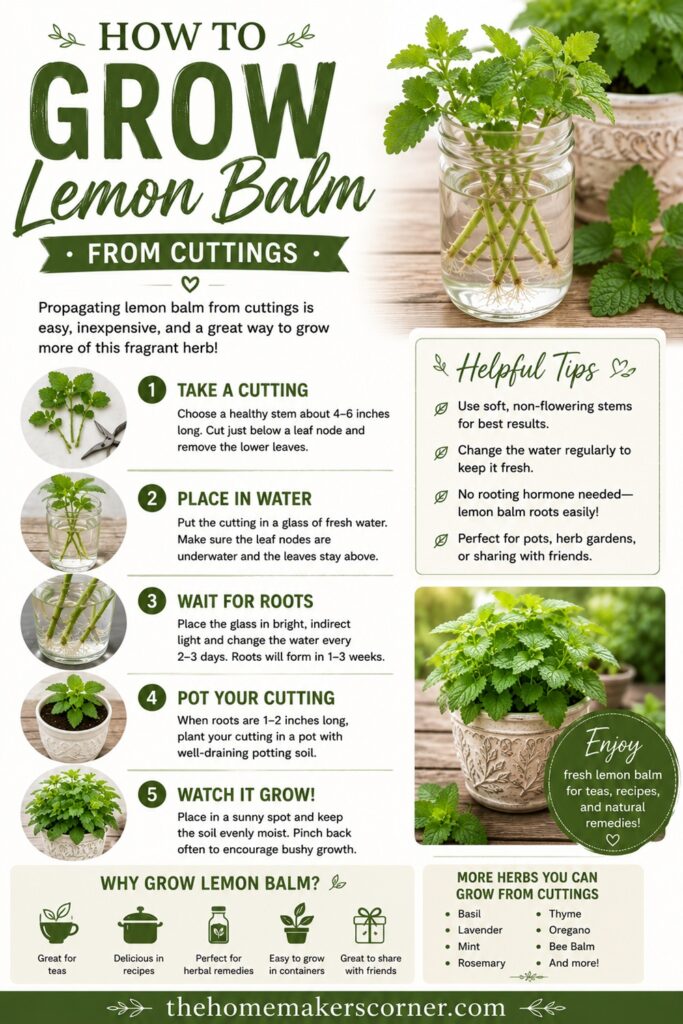
Step 1: Choose a Healthy Stem
Select a stem about 4–6 inches long.
Look for stems with:
- Several sets of leaves
- Flexible green growth
- No flower buds
Flowering stems use more energy producing seeds than roots.
Step 2: Make the Cutting
Using clean scissors:
- Cut just below a leaf node.
- Remove the lower leaves.
- Leave several healthy leaves near the top.
Roots will develop from the leaf nodes beneath the water or soil.
Step 3: Root the Cutting in Water
Fill a small glass with fresh water.
Place the cutting into the water so the leaf nodes are submerged while the leaves remain above the waterline.
Set the jar in bright, indirect sunlight.
Avoid placing it in harsh afternoon sun.
Step 4: Change the Water
Replace the water every 2–3 days.
Fresh water helps prevent bacteria and encourages healthy root development.
Roots usually begin appearing within 1–3 weeks.
Step 5: Plant Your Rooted Cutting
When roots are about 1–2 inches long:
- Fill a small pot with quality potting mix.
- Plant the rooted cutting carefully.
- Water thoroughly.
- Place the pot in bright light.
Keep the soil evenly moist until the plant becomes established.
Can You Root Lemon Balm Directly in Soil?
Yes!
Many gardeners place fresh cuttings directly into moist potting mix.
To increase humidity:
- Cover the pot loosely with a clear plastic bag.
- Keep the soil lightly moist.
- Remove the cover once new growth appears.
Caring for Your New Lemon Balm Plant
After transplanting:
- Provide 4–6 hours of sunlight daily.
- Water when the top inch of soil becomes dry.
- Harvest regularly to encourage bushy growth.
- Pinch back stems to prevent legginess.
Lemon balm grows vigorously and responds well to frequent harvesting.
Common Problems
Cutting Wilts
Possible causes include:
- Too much direct sunlight
- Water not changed often enough
- Stem was damaged during cutting
No Roots Develop
Usually caused by:
- Older woody stems
- Flowering stems
- Insufficient light
Yellow Leaves
This can happen from:
- Overwatering
- Poor drainage
- Standing water becoming stale
Frequently Asked Questions
How long does lemon balm take to root?
Most cuttings develop roots within 1–3 weeks.
Do I need rooting hormone?
No. Lemon balm roots very easily without rooting hormone.
Can I grow lemon balm indoors?
Yes! Lemon balm grows well in containers indoors with plenty of bright light.
Can I propagate lemon balm every year?
Absolutely. Healthy plants can provide multiple cuttings throughout the growing season.
More Lemon Balm Growing Guides
Continue growing healthy lemon balm with these helpful articles:
More Herbs You Can Grow from Cuttings
If you enjoy propagating herbs and garden plants, you may also like:
- How to Grow Basil from Cuttings
- How to Grow Bee Balm from Cuttings
- How to Grow Lavender from Cuttings
- How to Grow Grapes from Cuttings
- How to Grow Geraniums from Cuttings
- How to Grow Lilacs from Cuttings
Growing lemon balm from cuttings is one of the simplest ways to expand your herb garden.
With just a healthy stem, a glass of water, and a little patience, you can grow new plants that provide fragrant leaves for teas, recipes, and herbal projects all season long.
Once you’ve mastered propagating lemon balm, you’ll have an endless supply of this versatile herb to enjoy in your garden or containers year after year.
Follow my kitchen garden living board on Pinterest.