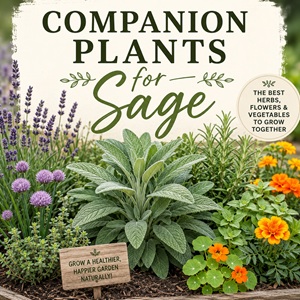
Sage is one of the most versatile herbs you can grow, and it’s even more productive when paired with the right companion plants.
This post may contain affiliate links.
Whether you’re planting a kitchen herb garden, a raised bed, or a cottage garden, companion planting can help improve plant health, attract pollinators, and naturally reduce pest problems.
In this guide, you’ll discover the best companion plants for sage, which plants to avoid, and how to create a thriving herb garden.
What Is Companion Planting?
Companion planting is the practice of growing certain plants together because they benefit one another.
Some plants help repel pests, while others attract pollinators or improve growing conditions for neighboring plants.
Benefits of companion planting include:
- Attracting bees and butterflies
- Deterring harmful insects
- Making better use of garden space
- Improving plant health
- Encouraging biodiversity
- Creating a more productive garden
Sage is an excellent companion plant because its fragrant leaves naturally help discourage several common garden pests.
Want to try making your own jelly at home?
Get my free guide with 8 easy, beginner-friendly jelly recipes you can confidently make.
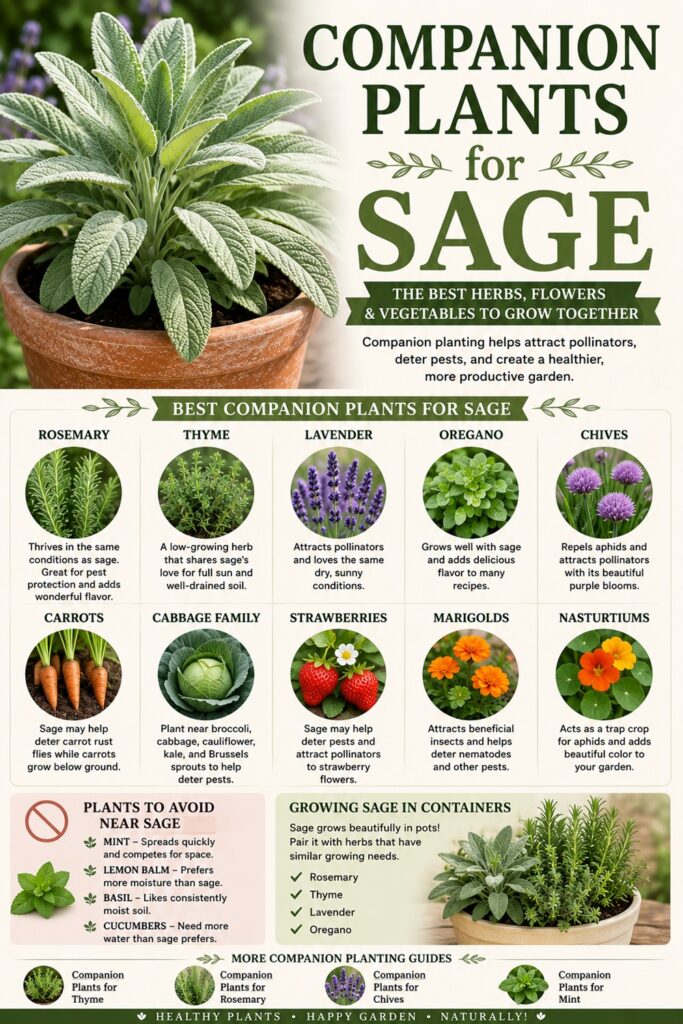
Best Companion Plants for Sage
Rosemary
Rosemary and sage are one of the best herb combinations because they thrive under nearly identical growing conditions. Both prefer full sun, well-drained soil, moderate watering, and good air circulation.
They also look beautiful growing together in herb gardens and decorative containers.
Be sure to read our guide to Companion Plants for Rosemary for more planting ideas.
Thyme
Thyme is another Mediterranean herb that pairs perfectly with sage. Both herbs enjoy dry soil, plenty of sunshine, and infrequent watering.
Together they create a low-maintenance herb garden that’s both beautiful and productive.
Learn more in our guide to Companion Plants for Thyme.
Lavender
Lavender and sage make a classic companion planting combination. Their similar growing requirements make them easy to care for, and both produce flowers that attract bees, butterflies, and other beneficial pollinators.
Oregano
Oregano grows well beside sage because both herbs appreciate full sun and well-drained soil. Planting them together creates a productive culinary herb garden filled with fragrant herbs you’ll use all season long.
Chives
Chives help repel aphids and other insect pests while attracting beneficial pollinators with their purple blossoms. Their upright growth also provides an attractive contrast to sage’s soft, silvery foliage.
For more ideas, see our article on Companion Plants for Chives.
Carrots
Carrots and sage have long been grown together. Sage’s strong aroma may help discourage carrot rust flies, while carrots grow beneath the soil without competing for space above ground.
Cabbage Family Vegetables
Sage is an excellent companion for members of the cabbage family, including:
- Broccoli
- Cabbage
- Cauliflower
- Kale
- Brussels sprouts
Many gardeners believe sage helps confuse or repel cabbage moths and cabbage worms.
Strawberries
Growing sage near strawberries may help deter certain insect pests while attracting pollinators during bloom. The combination also creates an attractive edible garden.
Marigolds
Marigolds are one of the best companion flowers for almost any vegetable or herb garden. They attract beneficial insects while helping reduce certain garden pests, and they add cheerful color throughout the season.
Nasturtiums
Nasturtiums act as a trap crop by attracting aphids away from herbs and vegetables. Their colorful edible flowers also make a beautiful addition to any garden.
Plants to Avoid Growing Near Sage
While sage grows well with many herbs and vegetables, some plants have very different growing requirements.
Avoid planting sage near:
- Mint
- Lemon balm
- Basil
- Cucumbers
These plants generally prefer richer soil and more consistent moisture than sage. Growing them separately allows each plant to receive the care it needs.
For more information, see our guide to Companion Plants for Mint.
Growing Sage in Containers
Sage grows exceptionally well in containers and pairs nicely with herbs that enjoy similar conditions, including:
- Rosemary
- Thyme
- Lavender
- Oregano
Grouping these herbs together makes watering and maintenance much easier since they all prefer full sun and well-drained soil.
Benefits of Companion Planting with Sage
Adding sage to your herb or vegetable garden offers several benefits:
- Naturally helps discourage certain insect pests
- Attracts bees and other pollinators
- Creates a diverse and healthy garden ecosystem
- Makes efficient use of garden space
- Simplifies watering by grouping plants with similar needs
- Adds beauty with its soft, gray-green foliage
Frequently Asked Questions
Can sage and rosemary grow together?
Yes. Sage and rosemary are excellent companions because they have nearly identical growing requirements.
Can I plant sage next to basil?
It’s possible, but not ideal. Basil prefers consistently moist soil, while sage likes soil to dry slightly between waterings.
Is sage a good companion for vegetables?
Yes. Sage grows especially well near carrots and members of the cabbage family and may help deter certain insect pests.
Does sage attract pollinators?
Absolutely. When allowed to flower, sage attracts bees, butterflies, and many other beneficial insects.
More Companion Planting Guides
If you’re planning a productive herb garden, be sure to read these helpful guides:
- Companion Plants for Rosemary
- Companion Plants for Thyme
- Companion Plants for Chives
- Companion Plants for Mint
You may also enjoy these growing guides:
- How to Grow Sage in Pots
- How to Grow Rosemary in Pots
- How to Grow Thyme in Pots
- How to Grow Oregano in Pots
- How to Grow Mint in Pots
- How to Grow Lemon Balm in Pots
Sage is one of the easiest herbs to include in a companion planting garden.
Its fragrant foliage, drought tolerance, and ability to attract pollinators while helping deter pests make it a valuable addition to herb gardens, vegetable beds, and containers.
By pairing sage with herbs like rosemary, thyme, oregano, and chives, along with beneficial flowers and vegetables, you can create a healthier, more productive garden that’s beautiful as well as practical.
Follow my kitchen garden living board on Pinterest.