Growing cilantro in containers is an easy way to enjoy fresh herbs even if you don’t have room for a traditional garden.
This post may contain affiliate links.
A pot on your patio, porch, balcony, or sunny deck can provide fresh cilantro for salsa, tacos, soups, salads, and your favorite homemade meals.
Cilantro grows quickly, making it a rewarding herb for beginner gardeners. The trick is giving it the right growing conditions and knowing when to plant it.
Cilantro prefers cool weather and tends to bolt, or go to seed, when temperatures rise.
In this guide, I’ll show you how to choose the right container, plant cilantro, care for it throughout the growing season, and harvest fresh leaves for your kitchen.
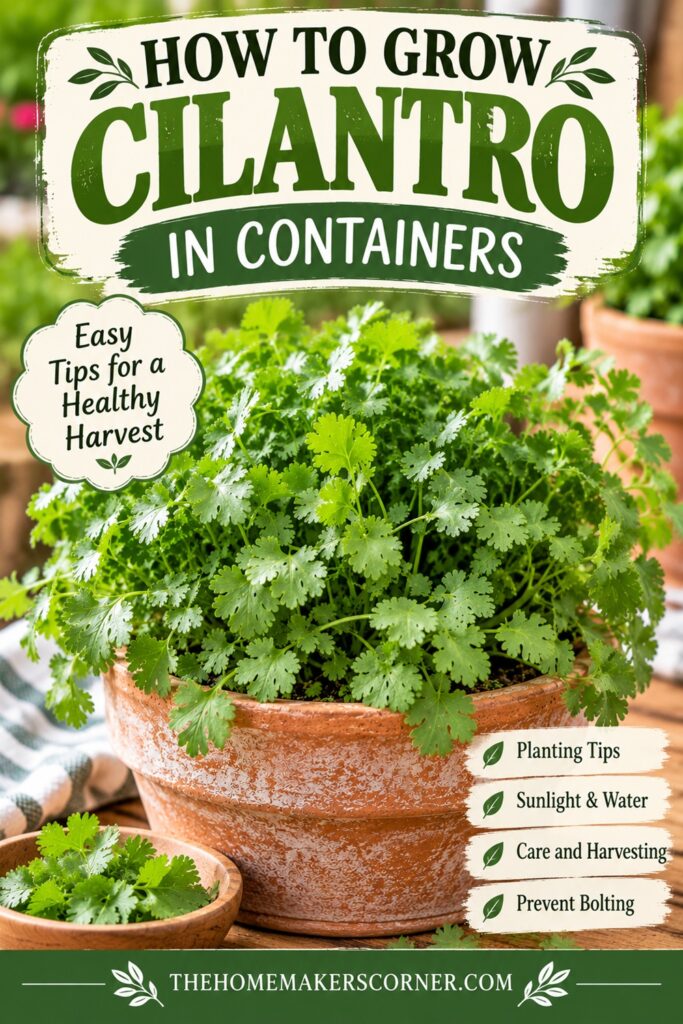
Why Grow Cilantro in Containers?
Container gardening makes growing herbs convenient, especially if you have limited outdoor space.
Here are a few reasons to grow cilantro in pots:
Want to try making your own jelly at home?
Get my free guide with 8 easy, beginner-friendly jelly recipes you can confidently make.
- Perfect for patios, balconies, and small gardens
- Easy to move into a cooler or shadier location when temperatures rise
- Convenient to harvest while cooking
- Less competition from weeds
- Easy to start from seed
- Makes a useful addition to a kitchen herb garden
If you enjoy growing your own herbs, you might also like my guides to growing basil in pots, growing dill in pots, and growing chives in containers.
Choose the Right Container for Cilantro
Cilantro develops a long taproot, so it needs a container that provides enough depth for healthy root growth.
Choose a pot that is:
- At least 8–10 inches deep
- About 10–12 inches wide or larger
- Equipped with drainage holes
- Large enough to hold several plants without overcrowding
A deeper pot is especially helpful because cilantro doesn’t appreciate being transplanted once its roots are established.
You can use plastic, terracotta, ceramic, or another type of garden container as long as it drains properly.
Keep in mind that terracotta pots dry out more quickly, so they may need more frequent watering during warm weather.
If you want to grow several herbs together, consider using a larger planter with separate areas for plants that have similar growing needs.
Choose the Best Soil for Container-Grown Cilantro
Cilantro grows best in loose, well-draining soil that holds enough moisture to keep its roots from drying out.
Use a good-quality potting mix designed for containers. Avoid filling your pot with garden soil, which can become compacted and drain poorly in a container.
You can mix in a small amount of finished compost to add organic matter and support healthy growth.
Fill your container to within an inch or two of the top, leaving enough room for watering without spilling soil over the sides.
When to Plant Cilantro
Cilantro grows best during cool weather. In many areas, the best times to plant are early spring and late summer for a fall harvest.
Cilantro can tolerate light frost, but it struggles when temperatures become consistently hot. Warm weather encourages the plant to flower and produce seeds, which is called bolting.
For the best results:
- Plant in early spring as soon as the soil can be worked.
- Make another planting in late summer for fall harvesting.
- Avoid planting during the hottest part of summer if you want a long supply of fresh leaves.
- Sow additional seeds every two to three weeks during suitable weather for a more continuous harvest.
Because cilantro has a relatively short growing cycle, succession planting is one of the easiest ways to keep fresh leaves available.
How to Plant Cilantro Seeds in a Pot
Cilantro is usually easiest to grow from seed because it develops a taproot and doesn’t always respond well to transplanting.
Follow these simple steps:
- Fill your container with quality potting mix and water it lightly.
- Sow cilantro seeds about 1/4 inch deep.
- Space seeds approximately 1–2 inches apart if you plan to harvest individual plants, or sow them a little more closely for baby leaves.
- Cover lightly with soil.
- Water gently to keep the soil evenly moist.
- Place the pot in a location with suitable sunlight and good air circulation.
Cilantro seeds may take about 7–21 days to germinate, depending on temperature and growing conditions.
Once the seedlings emerge, thin them if necessary so the plants have enough room to grow. You can use the thinnings as tender greens in salads or other dishes.
How Much Sunlight Does Cilantro Need?
Cilantro needs sunlight to grow well, but it doesn’t love intense heat.
Aim for approximately 4–6 hours of sunlight daily. In cooler climates, it can tolerate more sun. In warmer weather, morning sunlight followed by afternoon shade can help keep the plant from bolting too quickly.
One advantage of container gardening is that you can move your pot as the weather changes.
If your cilantro begins flowering earlier than expected, excessive heat may be the reason. You can let the plant produce seeds for coriander or start another pot in a cooler location.
How Often Should You Water Cilantro?
Cilantro prefers consistently moist soil but does not like sitting in waterlogged soil.
Check your container regularly, especially during warm or windy weather.
Water when the top inch of soil begins to feel dry. Water thoroughly until excess moisture drains from the bottom of the pot, then empty any water collected in a saucer.
Containers can dry out much faster than garden beds, so you may need to water daily during hot weather. During cooler periods, watering will usually be less frequent.
Avoid allowing the soil to dry out completely, as this can stress the plants and encourage premature flowering.
Fertilizing Cilantro in Containers
Cilantro doesn’t need heavy fertilizing to produce healthy leaves.
A quality potting mix with a little compost is often enough for a short growing season. If your plants are growing slowly or the leaves appear pale, you can use a balanced liquid fertilizer according to the product label.
Avoid excessive fertilizer, especially high-nitrogen products, which can encourage lush growth without necessarily improving the flavor of your herbs.
How to Harvest Cilantro
You can begin harvesting cilantro leaves once the plants are established and have several sets of true leaves.
Use clean scissors to snip the outer leaves and stems, leaving the central growing point intact when possible. This allows the plant to continue producing new growth.
For the best flavor, harvest leaves while they are young and tender.
Here are a few harvesting tips:
- Harvest only a portion of the plant at a time.
- Use fresh leaves as soon as possible for the best flavor.
- Sow new seeds regularly to replace plants that become mature or begin flowering.
- If the plant bolts, collect the seeds once they mature and dry them for use as coriander.
Fresh cilantro can also be preserved for later use. If you have more than you can use, read my guide to how to dry cilantro for tips on preserving your harvest.
Common Problems When Growing Cilantro in Pots
Cilantro Is Flowering Too Soon
This is usually caused by warm weather, long periods of heat, or plant stress.
Move the container to a cooler location with afternoon shade, keep the soil consistently moist, and start another batch of seeds when conditions are favorable.
Leaves Are Turning Yellow
Yellow leaves can be caused by overwatering, poor drainage, insufficient light, or nutrient deficiencies.
Check that the container drains properly and allow the top layer of soil to dry slightly between waterings.
Plants Are Wilting
Cilantro can wilt when the soil dries out, especially in small pots during warm weather.
Check the soil before watering. If it is dry, water thoroughly. If the soil is already wet, check drainage and make sure the roots aren’t staying soggy.
Seedlings Aren’t Growing Well
Crowded seedlings, poor light, and inconsistent moisture can all slow growth.
Thin crowded plants, provide suitable sunlight, and keep the soil evenly moist without making it waterlogged.
Can You Grow Cilantro Indoors?
Yes, cilantro can grow indoors in a container, provided it receives enough light and has room for its roots.
Place the pot near a bright, sunny window or use a grow light if natural light is limited. A cooler indoor location is often better than a hot window where temperatures rise significantly during the day.
Use a container with drainage holes and rotate it occasionally so the plants receive even light.
Indoor cilantro may not grow as vigorously as plants grown outdoors in ideal spring or fall weather, but it can still provide fresh leaves for cooking.
Other Herbs to Grow in Containers
Once you have cilantro growing, you might enjoy adding a few more herbs to your patio or kitchen garden.
Here are more container herb guides:
- Easy Tips for Growing Basil in Pots
- Growing Dill in Pots for Fresh Herbs All Season
- The Best Way to Grow Chives in Containers
- How to Grow Rosemary in Pots
- How to Grow Thyme in Pots
- How to Grow Sage in Pots
- How to Grow Tarragon in Pots
Growing herbs in containers is a practical way to enjoy fresh flavors without needing a large garden.
With a few pots and the right growing conditions, you can create a productive little herb garden right outside your kitchen door.
Enjoy Fresh Cilantro From Your Container Garden
Growing cilantro in containers is simple once you understand its preference for cool weather, moist soil, and good drainage.
Start with seeds, choose a deep pot, provide suitable sunlight, and harvest the leaves regularly. Planting successive batches throughout the growing season will help you enjoy fresh cilantro for as long as the weather allows.
Whether you’re growing cilantro for homemade salsa, tacos, soups, or everyday cooking, a container garden makes it easy to keep this flavorful herb close at hand.
Follow my container gardening board on Pinterest.