Tarragon is one of those herbs that doesn’t need a lot of space to grow well, which makes it a great choice for a container garden.
This post may contain affiliate links.
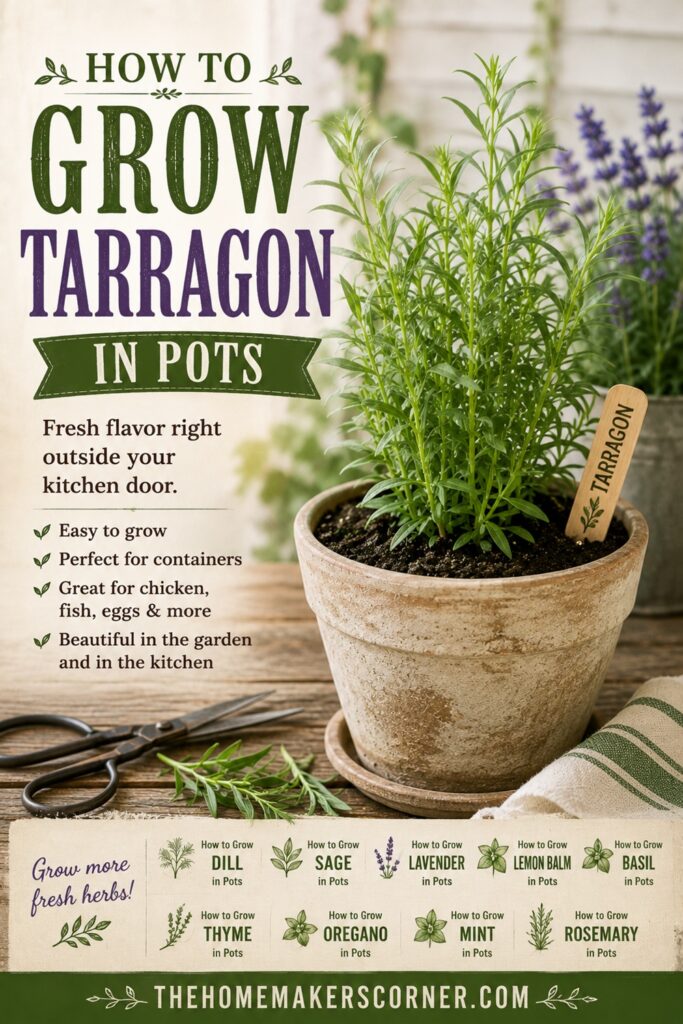
If you enjoy cooking with fresh herbs, growing tarragon in a pot gives you an easy supply right outside your kitchen door.
French tarragon has a delicate anise-like flavor that works especially well with chicken, fish, eggs, vegetables, sauces, and salad dressings.
Growing it in a container also makes it easier to give tarragon the well-drained soil it prefers.
Choosing a Tarragon Plant
If you’re growing tarragon for cooking, look for French tarragon (Artemisia dracunculus). It has the best flavor for culinary use.
French tarragon is generally grown from a plant or cutting rather than seed. If you see Russian tarragon seeds at the garden center, keep in mind that Russian tarragon is a different plant and has a much weaker flavor.
Choose the Right Pot
Tarragon doesn’t need a huge container, but it does appreciate room for its roots to spread.
Want to try making your own jelly at home?
Get my free guide with 8 easy, beginner-friendly jelly recipes you can confidently make.
Choose a pot that is at least 12 inches wide and 10–12 inches deep for one plant. Make sure the container has drainage holes in the bottom.
Terracotta pots work particularly well because they allow excess moisture to evaporate through the sides of the container.
If you’re growing several herbs together, give tarragon its own container or place it with herbs that enjoy similar growing conditions.
Use Well-Drained Potting Soil
Good drainage is one of the most important things when growing tarragon in pots.
Use a quality potting mix rather than garden soil, which can become compacted in a container. You can mix in a little compost to add nutrients, but avoid making the soil too rich or heavy.
Tarragon prefers soil that drains well rather than staying constantly wet.
Where to Put Your Tarragon Pot
Place your tarragon container somewhere that receives at least 6 hours of sunlight a day.
Morning and afternoon sun are ideal. In very hot climates, a location that gets some afternoon shade can help keep the plant from becoming stressed during the hottest part of the day.
A sunny patio, porch, balcony, or spot near the kitchen door can all work well.
How to Plant Tarragon in a Pot
Fill your container with potting soil, leaving a couple of inches of space below the rim.
Remove the tarragon plant from its nursery container and gently loosen any tightly bound roots. Set it in the pot at about the same depth it was growing before.
Fill around the roots with potting soil and water thoroughly.
Allow the excess water to drain completely.
How Often to Water Tarragon
Tarragon doesn’t like sitting in wet soil.
Water when the top inch or so of soil feels dry. When you water, give the plant a thorough drink and allow the excess water to drain from the bottom of the container.
During hot summer weather, container-grown herbs may need water more frequently than herbs growing in the ground.
The important thing is to avoid keeping the soil constantly soggy.
Fertilizing Tarragon
Tarragon isn’t a heavy feeder.
If you start with good-quality potting soil mixed with a little compost, the plant may need very little additional fertilizer.
If growth begins to look weak, you can use a diluted, balanced fertilizer during the growing season.
Avoid overfertilizing. Too much fertilizer can encourage lots of soft growth without necessarily improving the flavor of the leaves.
How to Harvest Tarragon
Once your tarragon plant is established, you can begin harvesting small amounts of leaves.
Use clean scissors or garden snips to cut the stems just above a pair of leaves. Regular harvesting actually encourages the plant to produce new growth.
For the best flavor, harvest young leaves and stems before the plant flowers.
Don’t remove more than about one-third of the plant at a time, especially when the plant is still young.
Pruning Tarragon
Tarragon can become a little leggy as it grows, particularly when it isn’t getting enough sunlight.
Trim back long stems to encourage bushier growth. Regular harvesting is usually enough to keep a container-grown plant looking full and productive.
At the end of the growing season, you can cut the plant back and allow it to go dormant.
Growing Tarragon Through Winter
French tarragon is a perennial herb and can go dormant during winter.
If you’re growing it in a container, the roots are more exposed to cold temperatures than they would be in the ground.
In colder climates, move the pot to a protected location such as an unheated garage, sheltered porch, or other cool area.
Don’t keep the plant in a warm room where it will be encouraged to grow actively through the winter.
Water sparingly while the plant is dormant.
Using Fresh Tarragon
Fresh tarragon has a distinctive flavor, so a little goes a long way.
Try adding it to:
- Roast chicken
- Chicken salad
- Egg salad
- Fish and seafood
- Cream sauces
- Homemade salad dressings
- Potato dishes
- Roasted vegetables
- Omelets and scrambled eggs
- Herb butter
- Homemade vinegar
Tarragon is especially good paired with chicken, lemon, mustard, and creamy sauces.
More Herbs You Can Grow in Pots
If you’re building a collection of container-grown herbs, tarragon doesn’t have to be the only one growing on your patio.
Learn How to Grow Dill in Pots for a fresh supply of dill for pickles, salads, potatoes, and seafood.
Try How to Grow Sage in Pots for an easy container herb that’s wonderful with poultry, pork, stuffing, and roasted vegetables.
How to Grow Lavender in Pots is another great option if you want an herb that is both beautiful and useful.
For a lemony herb that’s wonderful for teas and desserts, see How to Grow Lemon Balm in Pots.
How to Grow Basil in Pots is perfect for summer cooking, pesto, pasta, salads, and homemade sauces.
Learn How to Grow Thyme in Pots for a compact herb that’s particularly well suited to container gardening.
How to Grow Oregano in Pots gives you another easy culinary herb for pizza, pasta, sauces, and Mediterranean dishes.
Just be aware that How to Grow Mint in Pots is especially useful because growing mint in a container helps keep it from spreading throughout the garden.
And if you cook with rosemary regularly, How to Grow Rosemary in Pots is a great way to keep fresh rosemary close at hand.
Growing Tarragon in a Container Garden
Growing herbs in pots is one of my favorite ways to keep fresh herbs close to the kitchen. You don’t need a large garden or even a backyard to grow a useful collection.
A few containers on a patio or sunny porch can give you fresh herbs throughout the growing season—and tarragon is a particularly nice addition because its flavor is so different from the more common herbs.
Once you have your tarragon established, you may find yourself reaching for it every time you’re cooking chicken, making a salad dressing, or putting together a simple homemade sauce.
Follow my kitchen garden living board on Pinterest.