If you love the flavors of Italian cooking, this homemade Tuscan herb seasoning is an easy way to bring those savory garden herbs into your everyday cooking.
This post may contain affiliate links.
Made with rosemary, sage, thyme, oregano, and sea salt, this simple seasoning blend adds a delicious rustic flavor to chicken, roasted vegetables, potatoes, soups, pasta, beans, and homemade bread.
It’s also a great way to use dried herbs from your garden and create a homemade pantry staple you’ll reach for again and again.
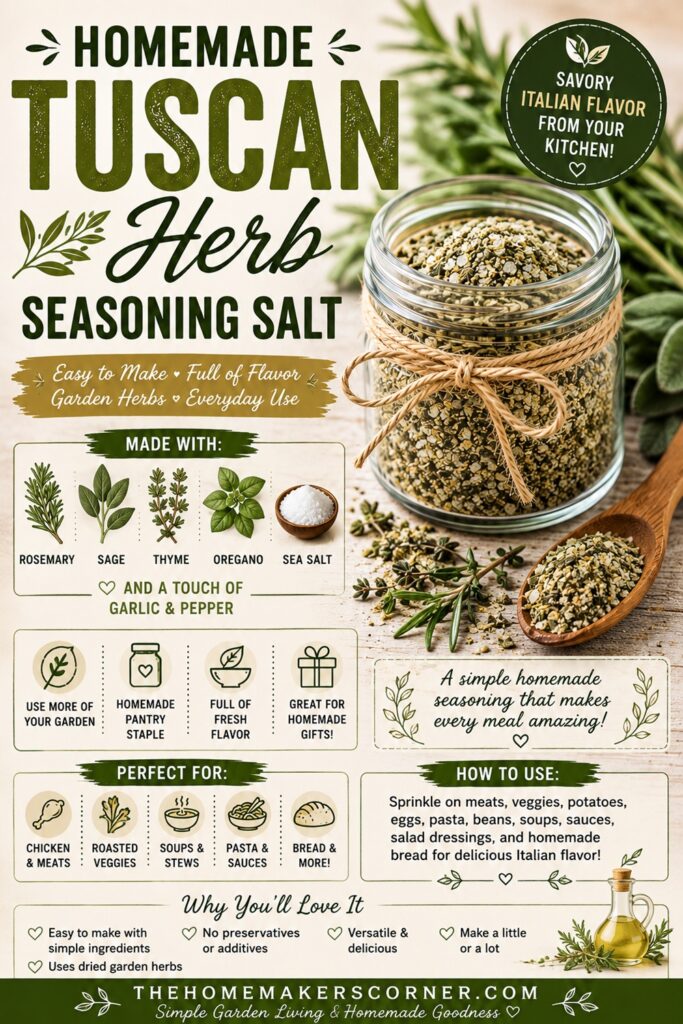
Why You’ll Love This Tuscan Herb Seasoning
There are plenty of reasons to make your own seasoning blends at home.
- Easy to make with simple ingredients
- Uses dried garden herbs
- Adds lots of flavor to everyday meals
- No complicated ingredients
- Makes a useful homemade pantry staple
- Wonderful for Italian-inspired recipes
- Easy to package as a homemade food gift
If you’ve already made some of my other herb salt recipes, this is a fun one to add to your collection.
Ingredients
- 1/2 cup coarse sea salt or kosher salt
- 2 tablespoons dried rosemary
- 1 tablespoon dried sage
- 1 tablespoon dried thyme
- 1 tablespoon dried oregano
- 1 teaspoon dried garlic, optional
- 1/2 teaspoon freshly ground black pepper, optional
I like using a little more rosemary in this blend because it gives the seasoning that unmistakable rustic flavor that works so well with roasted meats and vegetables.
If you’re using herbs you’ve dried yourself, make sure they are completely dry and crisp before making the seasoning.
Want to try making your own jelly at home?
Get my free guide with 8 easy, beginner-friendly jelly recipes you can confidently make.
How to Make Tuscan Herb Seasoning
1. Prepare the Herbs
If you’re using whole dried rosemary or larger pieces of dried herbs, you may want to chop them slightly before mixing.
The herbs should be completely dry before combining them with the salt.
2. Combine the Ingredients
Add the sea salt, rosemary, sage, thyme, oregano, and any optional garlic and black pepper to a food processor or spice grinder.
Pulse several times until the herbs are finely chopped and evenly distributed throughout the salt.
Don’t process it into a fine powder. I prefer a slightly coarse texture because you can see the individual herbs in the finished seasoning.
3. Taste and Adjust
Give the seasoning a taste and adjust the herbs according to your preference.
Want more rosemary? Add some.
Prefer a stronger garlic flavor? Add a little more dried garlic.
That’s one of the best things about making your own homemade seasonings—you can make the blend exactly the way you like it.
4. Store Your Seasoning
Transfer the finished Tuscan herb seasoning to a clean, dry glass jar with a tight-fitting lid.
Store it in a cool, dry pantry away from heat and moisture.
A small jar with a pretty label also makes a wonderful homemade food gift.
How to Use Tuscan Herb Seasoning
This is one of those versatile seasoning blends that can go on just about everything.
Try it on:
- Roasted potatoes
- Roasted vegetables
- Chicken
- Pork
- Fish
- Pasta
- White beans
- Soups and stews
- Tomato sauce
- Homemade pizza
- Focaccia
- Garlic bread
- Rice
- Eggs
- Grilled vegetables
- Salad dressings
Tuscan Roasted Potatoes
One of my favorite ways to use this seasoning is on roasted potatoes.
Toss cubed potatoes with olive oil and a generous sprinkle of Tuscan herb seasoning. Roast until the potatoes are golden brown and crisp around the edges.
The rosemary, thyme, oregano, and garlic pair beautifully with the roasted potatoes.
Season Homemade Bread
This seasoning is also wonderful sprinkled over homemade bread before baking.
Try mixing a little into focaccia dough or sprinkling it over the top along with olive oil. It’s an easy way to add extra flavor to your homemade bread recipes.
Can I Use Fresh Herbs?
For this particular seasoning blend, I recommend using dried herbs.
Fresh herbs contain moisture, which can cause the finished seasoning to spoil or clump. Drying the herbs first concentrates their flavor and makes the finished seasoning much easier to store.
If you grow rosemary, sage, thyme, or oregano in your garden, this is a great way to preserve those herbs for later.
Tuscan Herb Seasoning vs. Italian Herb Seasoning
While the two blends are similar, I like giving them slightly different flavor profiles.
Italian Herb Seasoning tends to lean toward basil and oregano, with rosemary and thyme adding additional flavor.
Tuscan Herb Seasoning is a little more rustic and savory, with rosemary, sage, thyme, and oregano taking center stage.
You can, of course, adjust either blend to suit your own cooking.
More Homemade Herb Salt Recipes
If you enjoy making your own homemade seasonings, try some of these other herb salt recipes:
- Rosemary Sage Herb Salt
- Everyday Sage Herb Salt
- Lavender Herb Salt
- Chive Herb Salt
- Basil Herb Salt
- Dill Herb Salt
- Garlic Herb Salt
- Rosemary Herb Salt
- Lemon Herb Salt
- Homemade Celery Salt
You can also find all of these recipes together in my Homemade Herb Salt Recipes roundup.
A Simple Homemade Pantry Staple
I love making homemade seasoning blends because they make everyday cooking easier.
A few dried herbs from the garden and some good sea salt can become a versatile seasoning that works on everything from roasted vegetables to homemade bread.
This Tuscan herb seasoning is especially nice to have on hand when you want to add a little Italian-inspired flavor to dinner without pulling half the spice cabinet out of the cupboard.
And once you start making your own blends, it’s easy to experiment with different combinations of herbs and create your own signature homemade seasonings.
Follow my homemade pantry board on Pinterest.