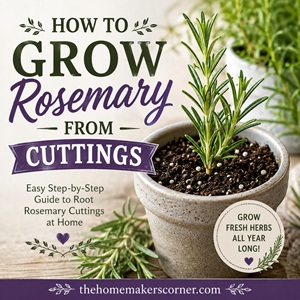
Growing rosemary from cuttings is one of the easiest and most affordable ways to expand your herb garden. Instead of buying new plants every season, you can root healthy stems from an existing rosemary plant and enjoy fresh herbs for years to come.
This post may contain affiliate links.
Whether you’re filling your kitchen garden, planting containers, or creating a fragrant cottage garden, propagating rosemary is a simple project that beginners can successfully master.
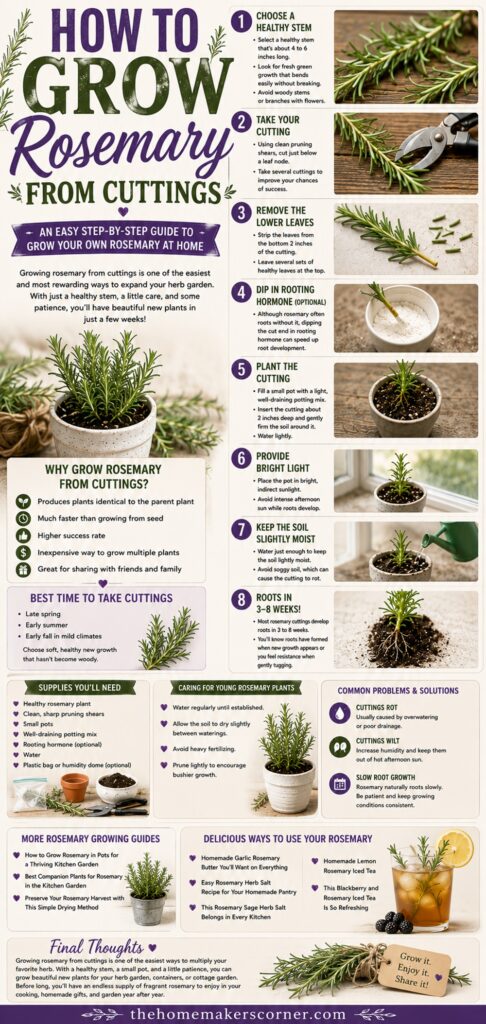
Why Grow Rosemary from Cuttings?
Growing rosemary from cuttings has several advantages over starting from seed.
- Produces plants identical to the parent plant
- Much faster than growing from seed
- Higher success rate
- Inexpensive way to grow multiple plants
- Great for sharing with friends and family
If you’re just getting started, you’ll also enjoy How to Grow Rosemary in Pots for a Thriving Kitchen Garden.
The Best Time to Take Rosemary Cuttings
The ideal time to take rosemary cuttings is:
- Late spring
- Early summer
- Early fall in mild climates
Choose soft, healthy new growth that hasn’t become woody.
Supplies You’ll Need
- Healthy rosemary plant
- Clean, sharp pruning shears
- Small pots
- Well-draining potting mix
- Rooting hormone (optional)
- Water
- Plastic bag or humidity dome (optional)
Step 1: Choose a Healthy Stem
Select a healthy stem that’s about 4 to 6 inches long.
Want to try making your own jelly at home?
Get my free guide with 8 easy, beginner-friendly jelly recipes you can confidently make.
Look for fresh green growth that bends easily without breaking.
Avoid woody stems or branches with flowers.
Step 2: Take Your Cutting
Using clean pruning shears, cut just below a leaf node.
Take several cuttings to improve your chances of success.
Step 3: Remove the Lower Leaves
Strip the leaves from the bottom 2 inches of the cutting.
Leave several sets of healthy leaves at the top.
Step 4: Dip in Rooting Hormone (Optional)
Although rosemary often roots without it, dipping the cut end in rooting hormone can speed up root development.
Step 5: Plant the Cutting
Fill a small pot with a light, well-draining potting mix.
Insert the cutting about 2 inches deep and gently firm the soil around it.
Water lightly.
Step 6: Provide Bright Light
Place the pot in bright, indirect sunlight.
Avoid intense afternoon sun while roots are developing.
Step 7: Keep the Soil Slightly Moist
Water just enough to keep the soil lightly moist.
Avoid soggy soil, which can cause the cutting to rot.
How Long Does Rosemary Take to Root?
Most rosemary cuttings develop roots in 3 to 8 weeks, depending on the variety and growing conditions.
You’ll know roots have formed when the cutting begins producing new growth or resists a gentle tug.
When to Transplant
Once roots are well established, transplant your new rosemary into:
- A larger container
- Raised beds
- Your herb garden
- A sunny cottage garden border
Choose a location with:
- Full sun
- Excellent drainage
- Good air circulation
Caring for Young Rosemary Plants
After transplanting:
- Water regularly until established.
- Allow the soil to dry slightly between waterings.
- Avoid heavy fertilizing.
- Prune lightly to encourage bushier growth.
Common Problems
Cuttings Rot
Usually caused by overwatering or poor drainage.
Cuttings Wilt
Increase humidity and keep them out of hot afternoon sun.
Slow Root Growth
Rosemary naturally roots slowly. Be patient and keep growing conditions consistent.
More Rosemary Growing Guides
Keep your rosemary healthy with these helpful articles:
- How to Grow Rosemary in Pots for a Thriving Kitchen Garden
- Best Companion Plants for Rosemary in the Kitchen Garden
- Preserve Your Rosemary Harvest with This Simple Drying Method
Once your rosemary is ready to harvest, try these delicious recipes:
- Homemade Garlic Rosemary Butter You’ll Want on Everything
- Easy Rosemary Herb Salt Recipe for Your Homemade Pantry
- This Rosemary Sage Herb Salt Belongs in Every Kitchen
- Homemade Lemon Rosemary Iced Tea
- This Blackberry and Rosemary Iced Tea Is So Refreshing
Growing rosemary from cuttings is one of the easiest ways to multiply your favorite herb.
With just a healthy stem, a small pot, and a little patience, you can grow beautiful new rosemary plants for your herb garden, containers, or cottage garden.
Before long, you’ll have an endless supply of fragrant rosemary to enjoy in your cooking, homemade gifts, and garden year after year.
Follow my simple garden living board on Pinterest.