Are you considering planting roses in your garden but don’t know when to start? Timing is crucial when it comes to planting roses, and it can make all the difference between a thriving and a struggling garden.
This post may contain affiliate links.
In this article, we’ll discuss the best time to plant roses so that you can enjoy a beautiful and healthy garden.
Firstly, it’s important to consider the climate in your area. Roses require a specific temperature range to thrive, and planting them at the wrong time can lead to poor growth or even death.
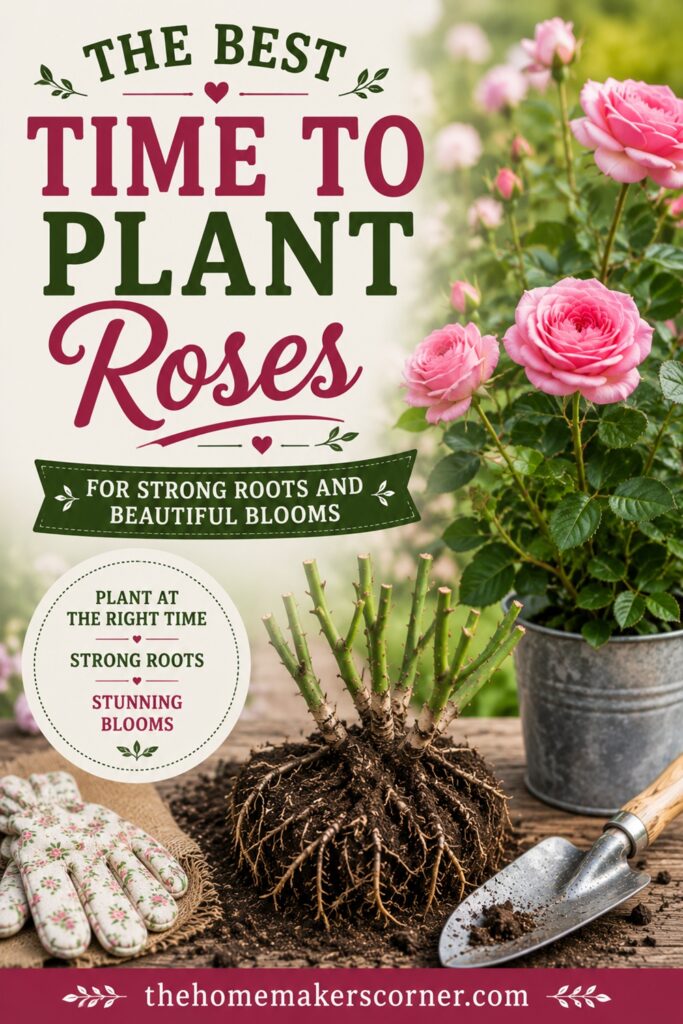
Generally, the best time to plant roses is in the early spring or late fall, when the temperatures are mild and the soil is moist.
This allows the roots to establish themselves before the hot summer months or bitter winter weather.
Related Article: Transplanting Roses: A Simple Guide for Successful Blooms
If you’re unsure about the best time to plant roses in your area, it’s always a good idea to consult with a local gardening expert or nursery.
Related Article: Best Companion Plants for Roses: Boost Growth and Beauty in Your Garden
Want to try making your own jelly at home?
Get my free guide with 8 easy, beginner-friendly jelly recipes you can confidently make.
They can provide you with valuable advice on the specific needs of roses in your region and help you choose the best varieties for your garden.
With the right timing and care, you can enjoy a stunning display of roses in your garden for years to come.
Determining the Best Planting Time
When it comes to planting roses, timing is everything. You want to make sure you plant your roses at the right time of year to give them the best chance of thriving.
Here are some things to consider when determining the best planting time for your roses.
Related Article: When to Pick Rose Hips
Understanding Your Climate
The climate in your area plays a big role in determining when to plant roses.
If you live in an area with cold winters, you’ll want to plant your roses in the spring, after the threat of frost has passed. If you live in a warmer climate, you may be able to plant your roses in the fall or even in the winter.
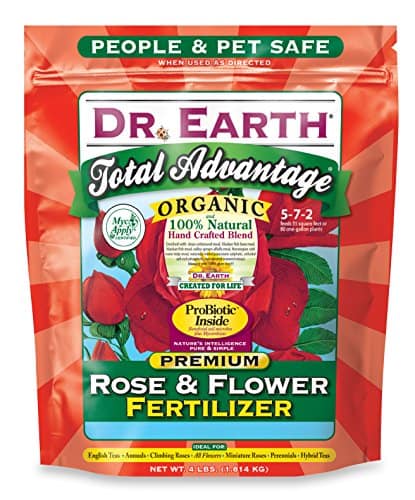
Dr. Earth 702P Organic 3 Rose & Flower Fertilizer in Poly Bag, 4-Pound
To determine the best planting time for your roses, you’ll need to know the average temperatures in your area and the first and last frost dates.
You can find this information online or by contacting your local gardening center. Once you have this information, you can choose the best time to plant your roses.
Recognizing Seasonal Cues
Another way to determine the best planting time for your roses is to pay attention to seasonal cues. In the spring, when the weather starts to warm up and the trees start to bud, it’s a good time to plant roses.
In the fall, when the leaves start to change color and the temperatures start to drop, it’s also a good time to plant roses.
You can also look for other seasonal cues, such as the blooming of other flowers in your area. When you see other flowers starting to bloom, it’s a good sign that it’s time to plant your roses.
Preparing the Planting Site
Before planting your roses, it is important to prepare the planting site properly to ensure the best possible growing conditions for your new plants. This involves selecting the right location and preparing the soil.
Soil Preparation
Roses prefer well-draining soil with a pH between 6.0 and 7.0. You can easily measure the pH of your soil with this inexpensive soil pH meter.
If your soil is heavy and clay-like, you may need to amend it with organic matter such as compost, peat moss, or aged manure to improve drainage and soil structure.
Mix the organic matter into the soil to a depth of at least ,inches, and remove any rocks or debris.
It is also important to test the soil pH before planting your roses. You can purchase a soil test kit at your local garden center or online.
If the pH is too high or too low, you can adjust it by adding lime to raise the pH or sulfur to lower it.
Related Article: How to Deadhead Roses: A Friendly Guide for Beginners
Selecting the Right Location
Roses need at least 6 hours of direct sunlight each day to thrive. Choose a sunny spot in your garden that receives plenty of direct sun, preferably in the morning and early afternoon.
Avoid planting your roses in areas with too much shade or where they may be exposed to strong winds.
Good drainage is also essential for roses. Avoid planting them in low-lying areas or places where water tends to collect. If your soil does not drain well, consider planting your roses in raised beds or containers.
By properly preparing the planting site, you can give your roses the best possible start and ensure healthy growth and beautiful blooms.
Planting Techniques
When it comes to planting roses, there are two main types to consider: bare-root roses and container-grown roses. Each type requires different planting techniques to ensure successful growth and blooming.
Planting Bare-Root Roses
Bare-root roses are dormant plants that have been dug up and stored without any soil around their roots. Here are some steps to follow when planting bare-root roses:
- Soak the roots in water for at least 24 hours before planting to rehydrate them.
- Dig a planting hole that is wide enough to accommodate the root ball and deep enough to allow the graft union (the swollen area where the stems meet the roots) to be just above the soil level.
- Create a small mound of soil in the center of the hole to support the root ball.
- Spread the roots over the mound and fill in the hole with soil, making sure to tamp it down gently to remove any air pockets.
- Water the plant thoroughly to settle the soil around the roots.
Related Article: What to Plant in May: A Guide to Spring Gardening
Planting Container-Grown Roses
Container-grown roses are plants that have been grown in a pot and have an established root system. Here are some steps to follow when planting container-grown roses:
- Dig a planting hole that is twice as wide as the container and deep enough to allow the graft union to be just above the soil level.
- Remove the plant from the container and gently loosen any tangled roots.
- Place the plant in the hole and backfill with soil, making sure to tamp it down gently to remove any air pockets.
- Water the plant thoroughly to settle the soil around the roots.
1 Gallon, Knock Out Rose Coral, with Gentle Green Foliage and Bold Coral Pink Blooms
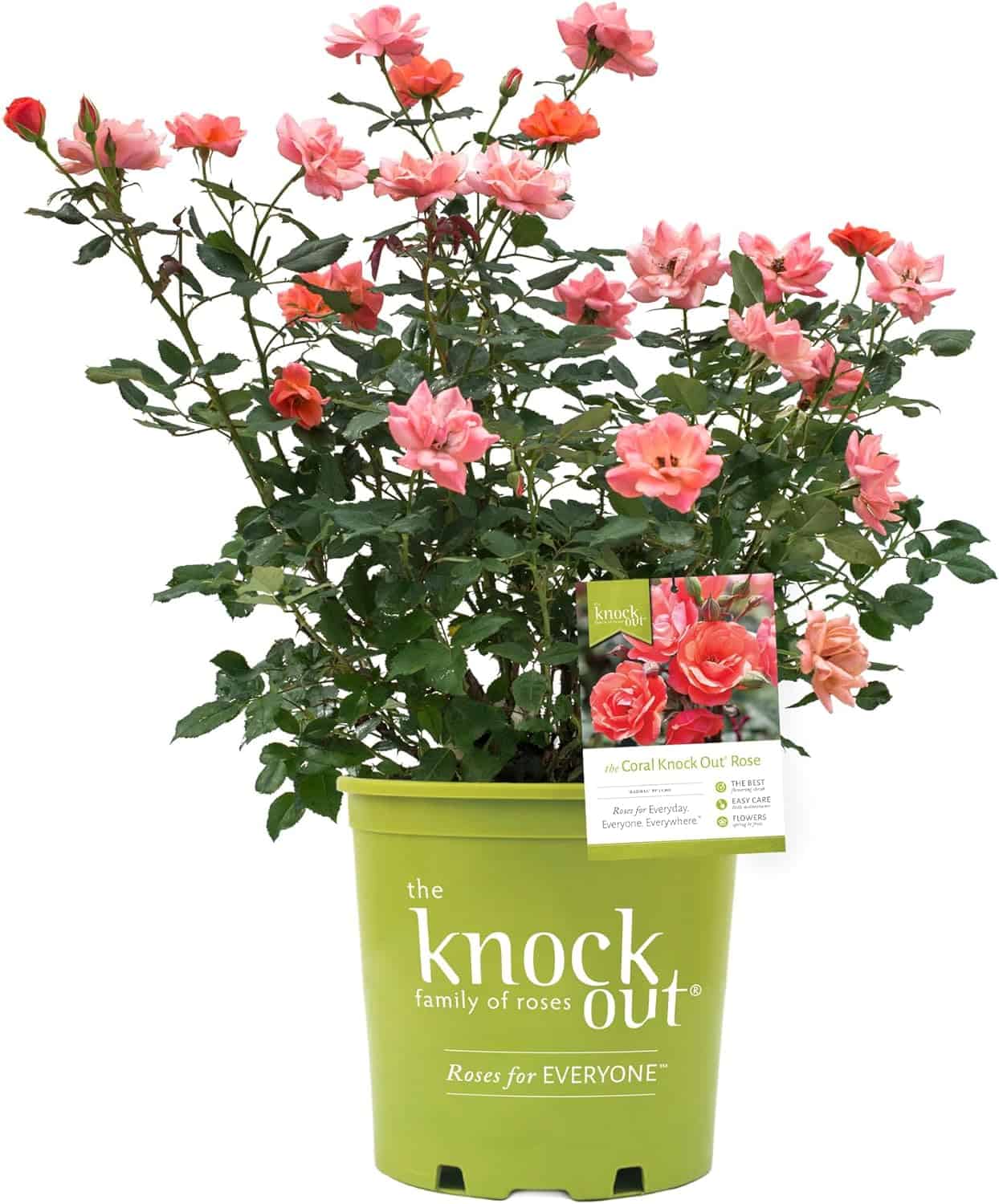
No matter which type of rose you are planting, it is important to ensure that the planting hole is deep enough to accommodate the root ball and that the graft union is just above the soil level.
Water the plant thoroughly after planting and continue to water regularly to keep the soil moist but not waterlogged. With proper planting techniques, your roses will thrive and bloom beautifully.
Post-Planting Care
Congratulations on planting your new roses! Now it’s time to take care of them to ensure they thrive. Here are a few tips for post-planting care:
Watering and Mulching
Watering is crucial for the health of your roses. Be sure to water them deeply and regularly, especially during hot and dry weather. It’s best to water in the morning or evening to avoid evaporation.
Mulching can help retain moisture in the soil and also suppress weeds.
Apply a layer of organic matter such as compost, shredded leaves, or bark chips around the base of your roses. This will also provide nutrients as it breaks down over time.
Related Article: The Secret to Growing Miniature Roses
Fertilizing and Pruning
Fertilizing is important to provide your roses with the necessary nutrients for healthy growth and blooming.
Use a balanced fertilizer with equal amounts of nitrogen, phosphorus, and potassium. Apply it according to the instructions on the package, usually every 4-6 weeks during the growing season.
Pruning is necessary to promote new growth and remove dead or diseased wood. Prune your roses in late winter or early spring before new growth appears.
Cut back any canes that are thinner than a pencil and remove any crossing or rubbing canes. Also, remove any dead or diseased wood.
Taking care of your roses after planting is essential for their health and beauty. With proper watering, mulching, fertilizing, and pruning, your roses will flourish and provide you with stunning blooms for years to come.
Related Article: Tips for Growing Beautiful Roses
Protecting Roses from Pests and Diseases
Growing roses can be a rewarding experience, but it can also be frustrating when pests and diseases attack your plants. Here are some tips to help you protect your roses from pests and diseases:
Disease Prevention
Preventing diseases is an important step in keeping your roses healthy. Here are some things you can do to prevent diseases:
Choose disease-resistant varieties: When selecting roses to plant, choose varieties that are known to be resistant to common diseases. This will help reduce the risk of your roses getting infected.
Keep your roses clean: Regularly remove dead leaves and other debris from around your roses. This will help prevent the spread of diseases.
Water your roses properly: Overwatering can lead to fungal diseases, so make sure you water your roses deeply but infrequently.
Use fungicides: If you notice signs of fungal diseases, such as black spots on the leaves, use a fungicide to treat the problem.
Pest Control
Pests can also be a problem for roses. Here are some tips to help you control pests:
- Use natural predators: Encourage natural predators, such as ladybugs and lacewings, to eat the pests that attack your roses.
- Use insecticidal soap: If you notice pests on your roses, use an insecticidal soap to kill them.
- Keep your roses healthy: Healthy roses are less susceptible to pest infestations, so make sure your roses are well-fed and watered.
- Check your roses regularly: Regularly inspect your roses for signs of pests. Early detection can help prevent a small problem from becoming a big one.
By following these tips, you can help protect your roses from pests and diseases. Remember to keep your roses healthy and well-maintained, and you’ll be rewarded with beautiful blooms all season long.
Follow my gardening board on Pinterest.