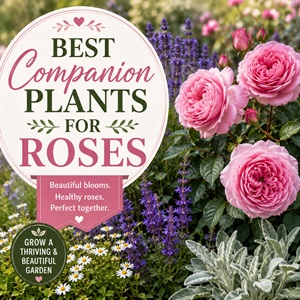
Roses are the stars of the garden, but they look even better—and often grow healthier—when they’re surrounded by the right companion plants.
This post may contain affiliate links.
Companion planting isn’t just about creating a beautiful flower bed. The right plants can attract pollinators, improve air circulation, discourage pests, and extend the season of color in your garden.
Whether you’re creating a romantic cottage garden or simply looking for ways to keep your roses thriving, these companion plants are some of the best choices.
Why Plant Companion Plants with Roses?
Growing roses alongside compatible plants offers several benefits:
- Attracts bees, butterflies, and other pollinators
- Helps deter common rose pests
- Creates layers of color and texture
- Covers bare soil around rose bushes
- Encourages a healthier garden ecosystem
- Provides blooms throughout the growing season
The key is choosing plants that enjoy the same growing conditions as roses: full sun, well-drained soil, and regular watering.
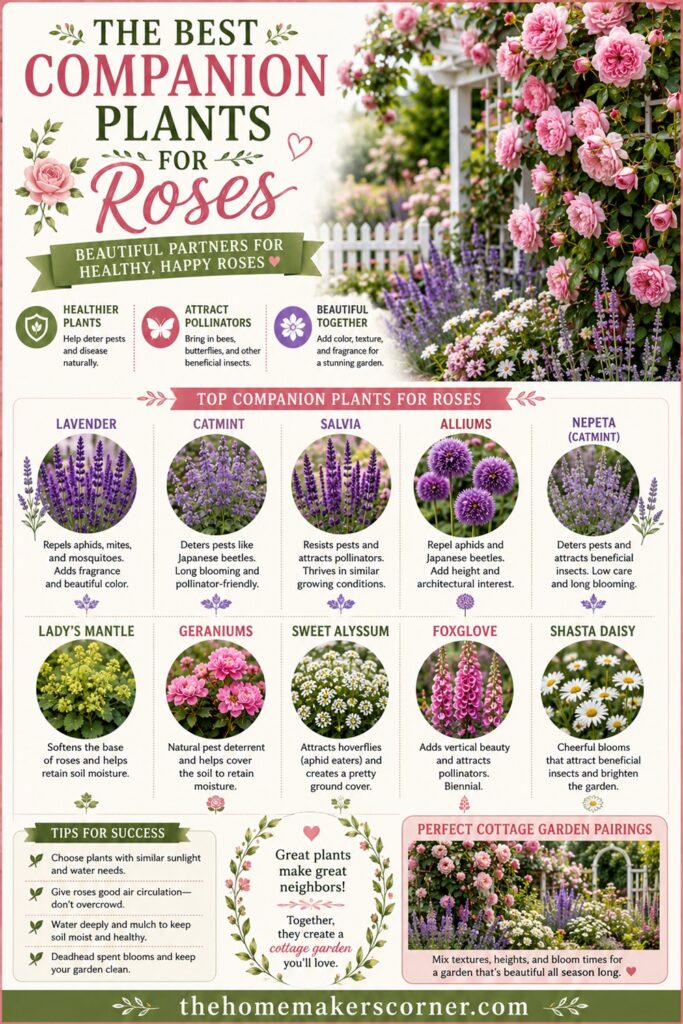
1. Lavender
Lavender is one of the most popular companions for roses. Its fragrant purple blooms create a beautiful contrast against almost any rose color while attracting pollinators throughout the summer.
Many gardeners also believe lavender helps discourage aphids and other insect pests with its strong fragrance.
Want to try making your own jelly at home?
Get my free guide with 8 easy, beginner-friendly jelly recipes you can confidently make.
Why you’ll love it:
- Adds wonderful fragrance
- Attracts bees and butterflies
- Beautiful cottage garden look
- Drought tolerant once established
Read more: How to Grow Lavender in Containers Year After Year
2. Catmint (Nepeta)
Catmint blooms for months and softens the edges of rose beds with clouds of lavender-blue flowers. It thrives in the same sunny conditions as roses and is easy to grow.
Its long flowering season keeps your garden colorful even when roses take a short break between flushes.
3. Salvia
Salvia adds upright spikes of blue, purple, pink, or white flowers that contrast beautifully with rounded rose blooms.
It attracts hummingbirds, bees, and butterflies while adding vertical interest throughout the garden.
4. Alliums
Ornamental alliums produce striking globe-shaped flowers that bloom before many roses reach their peak.
Their onion-family scent may help discourage aphids and other pests while adding a unique architectural element to the garden.
5. Chives
Flowering chives are both edible and ornamental. Their purple blossoms attract beneficial insects, and many gardeners grow them near roses to help discourage aphids.
They’re easy to tuck into the front of a rose bed without taking up much space.
Read more: How to Grow Chives Easily in Your Home Garden
6. Lady’s Mantle
Lady’s mantle produces soft mounds of scalloped foliage with airy chartreuse flowers in late spring.
It makes an excellent edging plant that hides bare rose stems while giving flower beds a lush, cottage garden appearance.
7. Sweet Alyssum
Sweet alyssum forms a carpet of tiny white, pink, or purple flowers that bloom for months.
It attracts hoverflies, whose larvae feed on aphids, making this little annual a hardworking addition to rose gardens.
8. Foxglove
Foxgloves bring height and old-fashioned charm to cottage gardens.
Their tall flower spikes create a dramatic backdrop behind roses and attract hummingbirds and pollinators throughout the season.
Note: Foxgloves are toxic if eaten, so plant them thoughtfully around children and pets.
9. Geraniums (Hardy Geraniums)
Hardy geraniums spread gently beneath roses, creating an attractive living mulch.
Their long bloom time and dense foliage help suppress weeds while filling empty spaces between shrubs.
Read more: How to Grow Geraniums from Cuttings
10. Shasta Daisies
Bright white daisies pair beautifully with nearly every rose variety.
Their cheerful blooms add contrast and help create the relaxed, overflowing look that’s characteristic of a classic cottage garden.
Tips for Successful Companion Planting
To keep both your roses and companion plants healthy:
- Plant where they’ll receive at least six hours of sunlight daily.
- Give roses enough space for good air circulation.
- Choose companions with similar watering needs.
- Mulch to help retain moisture and reduce weeds.
- Deadhead spent flowers throughout the season to encourage continued blooming.
- Fertilize roses regularly during the growing season.
Create a Beautiful Cottage Garden
One of the easiest ways to achieve a timeless cottage garden is by combining roses with layers of flowering perennials and annuals.
Try pairing climbing roses with lavender, catmint, foxgloves, and Shasta daisies for a garden filled with fragrance, texture, and continuous blooms from spring through fall.
With thoughtful companion planting, your rose garden can become healthier, attract more pollinators, and provide beautiful color all season long.
Follow my gardening board on Pinterest.