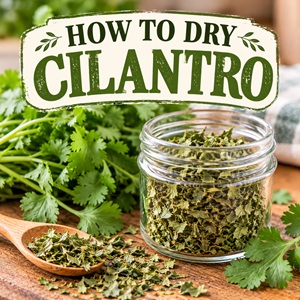
If you grow cilantro in your garden or find yourself with more fresh cilantro than you can use, drying it is an easy way to preserve some of your harvest.
This post may contain affiliate links.
Dried cilantro is convenient to keep in your pantry and can be added to soups, sauces, casseroles, and other recipes whenever you need it.
Fresh cilantro has a bright, distinctive flavor, and drying does change that flavor somewhat. Dried cilantro won’t taste exactly like fresh cilantro, but it is still useful to have on hand for everyday cooking.
Here is how to dry cilantro at home using a dehydrator, your oven, or the traditional air-drying method.
Can You Dry Cilantro?
Yes! Cilantro can be dried at home, although it doesn’t retain as much of its fresh flavor as some other herbs.
Because cilantro leaves contain a fair amount of moisture, using a food dehydrator is usually the easiest way to dry them evenly.
If you have a garden full of fresh herbs, you can preserve them in several ways. You might also enjoy my guide to 15 Ways to Preserve Fresh Herbs for more ideas.
Want to try making your own jelly at home?
Get my free guide with 8 easy, beginner-friendly jelly recipes you can confidently make.
How to Prepare Fresh Cilantro for Drying
Before drying cilantro, you’ll want to prepare it properly.
- Harvest fresh cilantro. Choose healthy green leaves and tender stems. Avoid leaves that are yellow, wilted, or damaged.
- Wash the cilantro. Rinse the leaves and stems under cool running water to remove dirt and debris.
- Dry thoroughly. Use a salad spinner or gently pat the cilantro dry with a clean kitchen towel. Removing as much surface moisture as possible helps the drying process go more smoothly.
- Remove damaged leaves. Discard any yellow or spoiled leaves, and trim away especially thick stems.
- Separate the leaves. Spread the cilantro out so air can circulate around the leaves during drying.
The cleaner and drier your cilantro is before you begin, the better your results will be.
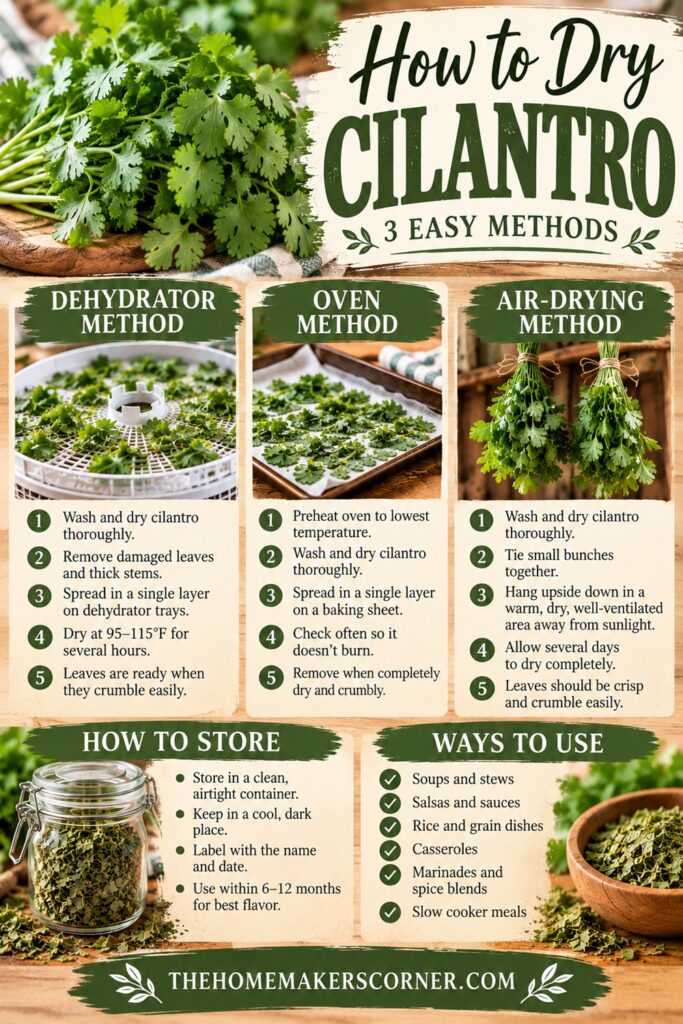
How to Dry Cilantro in a Dehydrator
A food dehydrator is my preferred method for drying herbs because it provides consistent, gentle heat.
- Wash the cilantro and dry it thoroughly.
- Remove any damaged leaves and trim away thick stems.
- Spread the cilantro leaves and tender stems in a single layer on your dehydrator trays.
- Set the dehydrator to a low temperature, around 95–115°F, following your dehydrator manufacturer’s instructions.
- Dry for several hours, checking periodically. The exact time will depend on the amount of cilantro, the humidity in your home, and your dehydrator.
- The cilantro is ready when the leaves are completely dry and crumble easily between your fingers.
Allow the dried cilantro to cool before placing it in a storage container.
How to Dry Cilantro in the Oven
You can also dry cilantro in the oven if you don’t have a dehydrator. This method requires a little more attention because ovens may not maintain temperatures low enough for delicate herbs.
- Preheat your oven to its lowest available temperature.
- Wash the cilantro and dry it as thoroughly as possible.
- Remove any damaged leaves and spread the cilantro in a single layer on a baking sheet lined with parchment paper.
- Place the baking sheet in the oven and check the cilantro frequently.
- Remove the cilantro as soon as the leaves are completely dry and crumbly.
Keep a close eye on the cilantro so it doesn’t brown or burn. If your oven runs hot, a dehydrator or another preservation method may give you better results.
How to Air-Dry Cilantro
Air-drying is another option, although cilantro can be tricky to dry this way because its leaves hold moisture.
- Wash the cilantro and dry it thoroughly.
- Gather a small bunch and tie the stems together loosely.
- Hang the bunch upside down in a warm, dry, well-ventilated area away from direct sunlight.
- Check the herbs regularly as they dry.
Depending on the humidity and airflow, air-drying can take several days or longer. If the cilantro develops any signs of mold or an off smell, discard it.
Because cilantro is more delicate than many culinary herbs, a dehydrator is generally a more dependable choice.
How to Store Dried Cilantro
Once the cilantro is completely dry, crumble the leaves gently or leave them whole until you’re ready to use them.
Store the dried cilantro in a clean, completely dry, airtight container. Keep it in a cool, dark cupboard away from heat, moisture, and direct sunlight.
Label the container with the herb’s name and the date you dried it. Check the cilantro before using it, and discard it if you notice moisture, mold, or an unusual smell.
For the best flavor, try to use dried herbs within about six to twelve months. They may remain usable longer if stored properly, but their flavor gradually fades.
How to Use Dried Cilantro
Dried cilantro works well in recipes where the herb has time to rehydrate and blend with other ingredients. Try adding it to:
- Soups and stews
- Homemade salsa and sauces
- Rice and grain dishes
- Casseroles
- Marinades and spice blends
- Slow cooker meals
Keep in mind that dried cilantro has a different flavor from fresh cilantro. If a recipe depends on the bright, fresh taste of cilantro, fresh leaves or frozen cilantro may be a better choice.
Other Herbs You Can Dry at Home
If you’re preserving your herb garden, you can dry many other culinary and fragrant herbs using similar methods.
Here are more guides for drying herbs:
- How to Dry Rosemary
- The Best Way to Dry Fresh Thyme
- How to Dry Parsley
- How to Dry Dill
- The Best Way to Dry Oregano
- How to Dry Basil
- How to Dry Tarragon
- The Best Way to Dry Sage
- How to Dry Lavender
- How to Dry Chives
- How to Harvest and Dry Bee Balm
- The Complete Guide to Preserving Herbs
Preserve Your Cilantro Harvest
Drying cilantro is a simple way to make use of extra herbs and keep a supply in your pantry for everyday cooking.
Although dried cilantro has a milder, different flavor than fresh cilantro, it can still be a handy addition to soups, sauces, and other cooked dishes.
If you have more herbs growing in your garden, take a look at the other herb-drying guides above and find a few more ways to preserve your harvest.
Follow my simple garden living board on Pinterest.