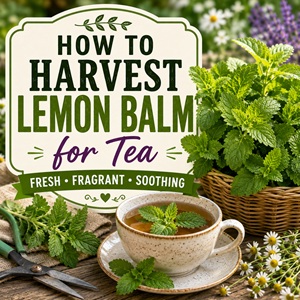
Lemon balm is one of the easiest herbs to grow and one of the most rewarding to harvest for tea.
This post may contain affiliate links.
Its bright, citrusy aroma and naturally calming flavor make it a favorite for evening tea, homemade herbal blends, and drying for year-round use.
If you harvest lemon balm at the right time, you’ll enjoy the freshest flavor and the highest concentration of fragrant oils.
Why Grow Lemon Balm for Tea?
Lemon balm (Melissa officinalis) is a member of the mint family and grows vigorously in cottage gardens, herb beds, and containers.
Many gardeners love it because it:
- Produces fresh leaves throughout the growing season
- Attracts bees and other pollinators
- Is easy to dry and store
- Makes a light, refreshing herbal tea
- Pairs well with mint, chamomile, and lavender
It’s a wonderful addition to any cottage garden focused on simple garden living.
Harvest Before the Plant Flowers
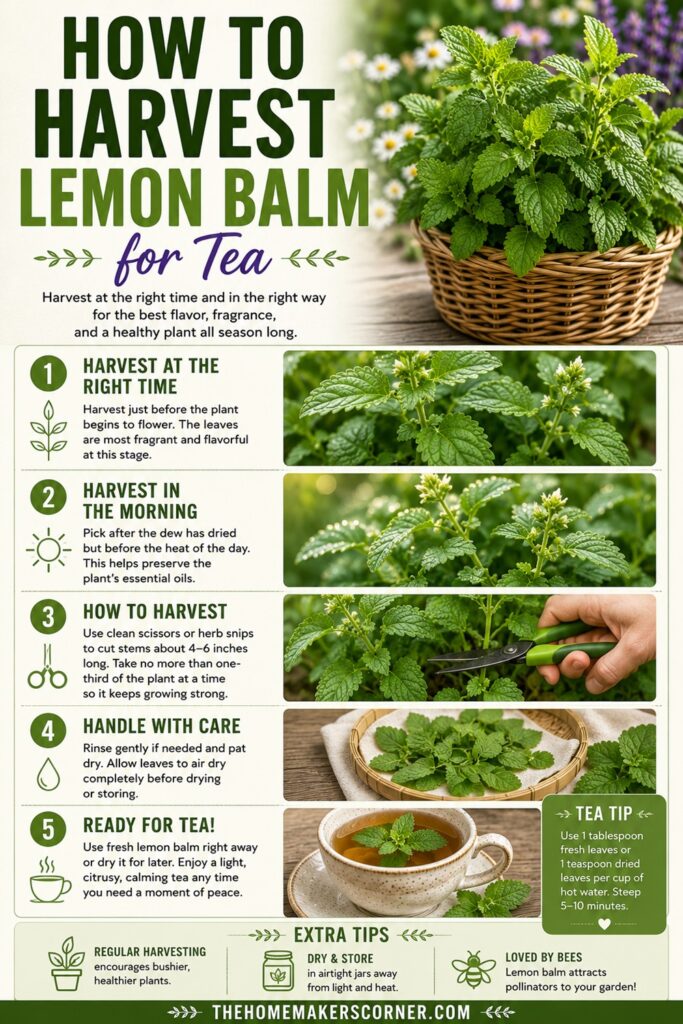
The best time to harvest lemon balm for tea is just before the plant begins flowering.
Want to try making your own jelly at home?
Get my free guide with 8 easy, beginner-friendly jelly recipes you can confidently make.
At this stage:
- The leaves contain the highest concentration of essential oils.
- The lemon scent is strongest.
- The flavor is fresh, sweet, and vibrant.
Once the plant begins blooming, the leaves are still edible, but their flavor becomes milder.
Harvest in the Morning
For the freshest tea, harvest:
- After the morning dew has dried
- Before the afternoon heat
- On a dry, sunny day
Morning harvesting helps preserve the fragrant oils that give lemon balm its wonderful citrus aroma.
How to Harvest Lemon Balm
Using clean garden scissors or herb snips, cut healthy stems about 4 to 6 inches long.
Avoid removing more than one-third of the plant at a time so it continues producing new growth throughout the season.
Regular harvesting actually encourages bushier, healthier plants.
Wash Only if Necessary
If your plants are clean, you can often skip washing the leaves.
If they need cleaning:
- Rinse gently with cool water.
- Pat dry with a towel.
- Allow the leaves to air dry completely before drying them for storage.
Too much moisture can slow the drying process.
Dry the Leaves
There are several easy ways to dry lemon balm.
Air Dry
Tie small bundles together and hang them upside down in a warm, dry room with good airflow.
Keep them:
- Out of direct sunlight
- Away from humidity
- In a well-ventilated space
Dry on Screens
Spread leaves in a single layer on drying screens or mesh trays.
Turn them occasionally until they’re crisp.
Drying usually takes about one to two weeks, depending on humidity.
Store Dried Lemon Balm
Once the leaves are completely dry:
- Remove them from the stems.
- Store whole leaves rather than crushing them.
- Place them in airtight glass jars or tea tins.
- Keep containers in a cool, dark pantry.
Properly stored lemon balm will retain good flavor for up to one year.
How to Make Lemon Balm Tea
For one cup of tea:
- Use 1 tablespoon of fresh lemon balm leaves or
- 1 teaspoon of dried leaves
Pour hot (not boiling) water over the leaves and steep for 5 to 10 minutes.
For extra flavor, try adding:
- Honey
- Fresh lemon slices
- Peppermint
- Chamomile
- Lavender
- Spearmint
Lemon balm also makes an excellent base for homemade herbal tea blends.
More Herbal Tea Ideas
More Ways to Enjoy Lemon Balm
After harvesting plenty for tea, you can also use lemon balm in many other ways around the home.
Try using fresh or dried leaves in:
- Homemade herbal tea blends
- Infused honey
- Simple syrups
- Lemon balm sugar
- Fruit salads
- Iced herbal tea
- Potpourri
- Homemade sachets
A Simple Harvest Worth Savoring
Harvesting lemon balm is one of the simplest pleasures of a cottage garden. With just a few snips, you can fill your pantry with fragrant leaves that bring a taste of summer to every cup of tea.
Whether you’re brewing a relaxing evening drink or creating your own herbal tea blends, homegrown lemon balm is an easy way to enjoy the garden long after the growing season ends.
More Lemon Balm Ideas
- Refreshing Lemon Balm Iced Tea Recipe for Summer
- Homemade Lemon Balm Tincture Easy Steps for a Calming Herbal Remedy
- How to Grow Lemon Balm from Cuttings
- How to Grow Lemon Balm in Pots
- How to Preserve Lemon Balm from the Garden
Follow my cottage garden tea herbs board on Pinterest.