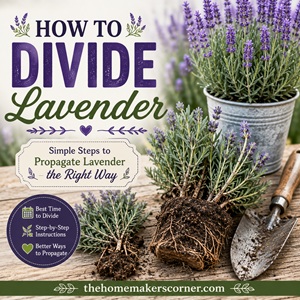
Lavender is one of the most beautiful and fragrant plants you can grow, but if you’re hoping to create more plants by dividing an established lavender, you may want to reconsider.
This post may contain affiliate links.
Unlike many perennial flowers, lavender doesn’t respond well to division because of its woody root system.
The good news is there are better ways to propagate lavender if you’d like more plants for your garden.
Can You Divide Lavender?
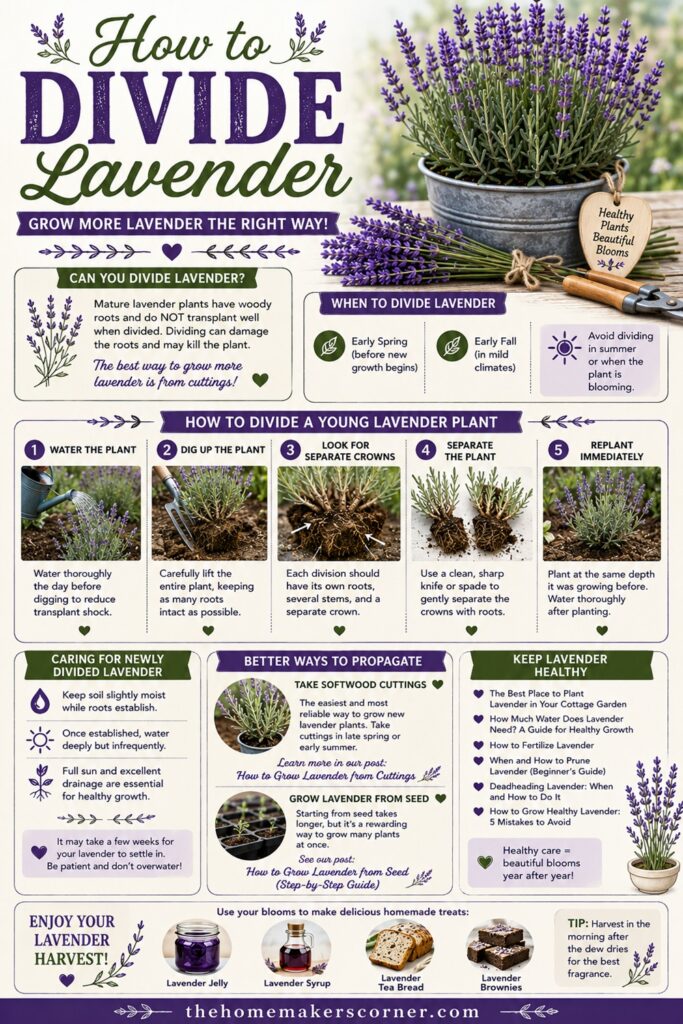
Technically, you can divide a very young lavender plant with multiple stems growing from separate crowns, but mature lavender plants should not be divided.
Older plants develop thick, woody stems and deep root systems that don’t recover well after being split. Dividing mature lavender often damages the roots and may kill both sections.
Instead, most gardeners propagate lavender using cuttings.
If you’re interested in growing new plants, be sure to read How to Grow Lavender from Cuttings, one of the easiest and most reliable methods.
Want to try making your own jelly at home?
Get my free guide with 8 easy, beginner-friendly jelly recipes you can confidently make.
When Can Lavender Be Divided?
If you have a young lavender plant with multiple crowns, the best time to divide it is:
- Early spring before active growth begins
- Early fall in mild climates
Avoid dividing lavender during the heat of summer or when the plant is blooming.
How to Divide a Young Lavender Plant
If your lavender is still young enough to divide, follow these steps.
1. Water the Plant
Water thoroughly the day before digging to reduce transplant shock.
2. Dig Up the Entire Plant
Use a garden fork or shovel to carefully lift the entire root ball while disturbing as few roots as possible.
3. Look for Separate Crowns
Healthy divisions should each have:
- Their own roots
- Several healthy stems
- A separate growing crown
If the plant has only one woody crown, do not divide it.
4. Separate the Plant
Using a clean garden knife or sharp spade, gently separate the crowns while preserving as many roots as possible.
5. Replant Immediately
Plant each division at the same depth it was originally growing.
Water thoroughly after planting.
Caring for Newly Divided Lavender
Keep newly planted lavender slightly moist while the roots establish, but don’t overwater.
Once established, return to a deep but infrequent watering schedule.
Full sun and excellent drainage are essential for healthy growth.
Better Ways to Propagate Lavender
If your goal is simply to grow more lavender plants, these methods are much more successful than division.
Take Softwood Cuttings
Softwood cuttings taken in late spring or early summer root quickly and produce plants identical to the parent.
Learn more in How to Grow Lavender from Cuttings.
Grow Lavender from Seed
Starting lavender from seed takes longer but is a rewarding way to grow many plants at once.
See How to Grow Lavender from Seed (Step-by-Step Guide).
Keep Lavender Healthy After Planting
Healthy lavender starts with proper care throughout the year. These guides can help:
- The Best Place to Plant Lavender in Your Cottage Garden
- How Much Water Does Lavender Need? A Guide for Healthy Growth
- How to Fertilize Lavender
- When and How to Prune Lavender (Beginner’s Guide)
- Deadheading Lavender: When and How to Do It
- How to Grow Healthy Lavender: 5 Mistakes to Avoid
Once your lavender plants are thriving, you can harvest the fragrant flowers to make Lavender Jelly, Lavender Syrup, Lavender Tea Bread, and Lavender Brownies.
Although it may seem like an easy way to create more plants, dividing mature lavender is usually not recommended.
Most established plants have woody crowns that don’t recover well after being split. For the best success, propagate lavender from cuttings or seed instead.
With proper care, your lavender will reward you with years of fragrant blooms and beauty in your garden.
Follow my lavender board on Pinterest.