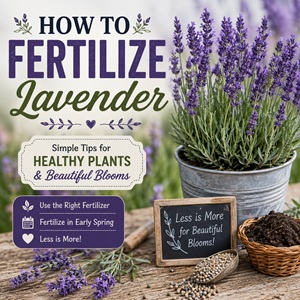
Lavender is one of the easiest herbs to grow, but many gardeners make one common mistake—they fertilize it too much.
This post may contain affiliate links.
Unlike heavy-feeding vegetables and flowers, lavender actually thrives in lean, well-drained soil. Too much fertilizer encourages leafy growth instead of the fragrant flowers the plant is known for.
If you’re wondering whether your lavender needs fertilizer, here’s what you need to know.
Does Lavender Need Fertilizer?
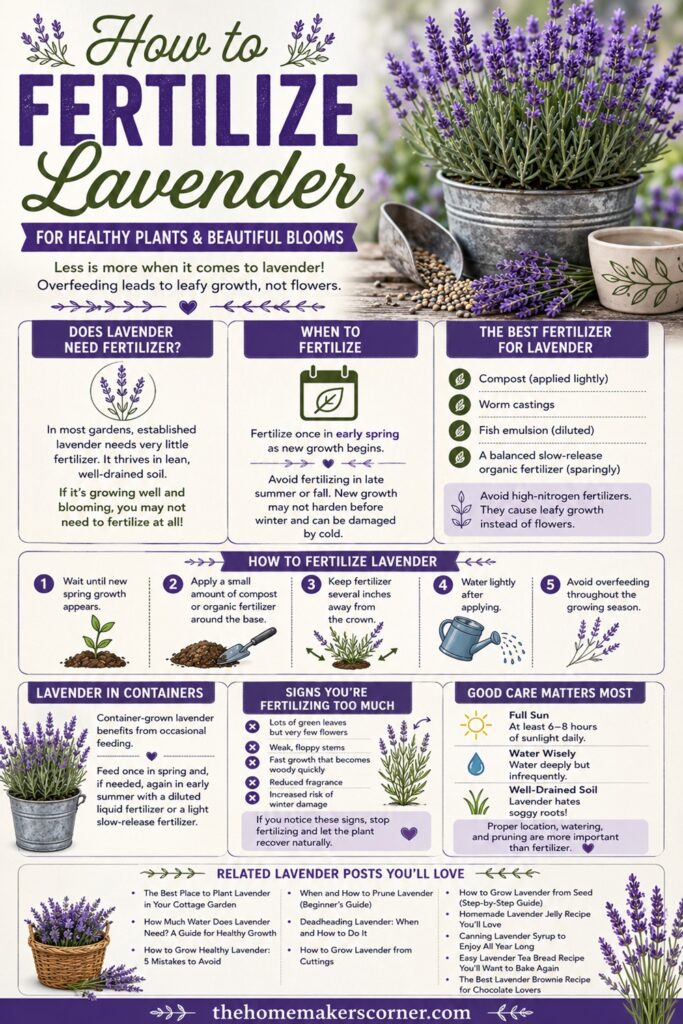
In most gardens, established lavender plants need very little fertilizer.
They naturally grow in rocky, nutrient-poor soils around the Mediterranean, so rich soil can actually shorten the plant’s life and reduce flowering.
If your lavender is growing well and blooming every year, you may not need to fertilize it at all.
When to Fertilize Lavender
The best time to fertilize lavender is once in early spring as new growth begins.
Want to try making your own jelly at home?
Get my free guide with 8 easy, beginner-friendly jelly recipes you can confidently make.
Avoid fertilizing in late summer or fall. New growth produced late in the season may not have time to harden before winter, making plants more susceptible to cold damage.
The Best Fertilizer for Lavender
Choose a fertilizer that is low in nitrogen.
Good options include:
- Compost applied lightly around the plant
- Worm castings
- Fish emulsion diluted according to package directions
- A balanced slow-release organic fertilizer (used sparingly)
Avoid high-nitrogen lawn fertilizers, which encourage soft green growth instead of flowers.
How to Fertilize Lavender
- Wait until new spring growth appears.
- Apply a small amount of compost or organic fertilizer around the base of the plant.
- Keep fertilizer several inches away from the crown.
- Water lightly after applying.
- Avoid overfeeding throughout the growing season.
Remember, less is more when growing lavender.
Should Lavender Be Fertilized in Containers?
Lavender grown in pots benefits from occasional feeding because nutrients wash out with regular watering.
Feed container-grown lavender once in spring and, if needed, again in early summer with a diluted liquid fertilizer or a light application of slow-release organic fertilizer.
Signs You’re Fertilizing Too Much
Overfertilized lavender often shows these signs:
- Lots of green leaves but very few flowers
- Weak, floppy stems
- Fast growth that becomes woody quickly
- Reduced fragrance
- Increased risk of winter damage
If you notice these symptoms, stop fertilizing and allow the plant to recover naturally.
Healthy Lavender Starts with Good Care
Proper watering, pruning, and planting location are much more important than fertilizer. Lavender prefers full sun, excellent drainage, and slightly dry conditions.
If you’re just getting started, these guides can help:
- The Best Place to Plant Lavender in Your Cottage Garden
- How Much Water Does Lavender Need? A Guide for Healthy Growth
- How to Grow Healthy Lavender: 5 Mistakes to Avoid
- When and How to Prune Lavender (Beginner’s Guide)
- Deadheading Lavender: When and How to Do It
If you’d like to grow even more lavender plants, don’t miss:
Once your lavender is thriving, you can enjoy harvesting it for homemade treats like Homemade Lavender Jelly, Canning Lavender Syrup, Lavender Tea Bread, and Lavender Brownies.
Lavender doesn’t need much fertilizer to thrive. In fact, feeding it too often can do more harm than good.
A light application of compost or a low-nitrogen fertilizer in early spring is usually all your plants need to produce healthy growth and beautiful, fragrant blooms year after year.
Follow my lavender board on Pinterest.