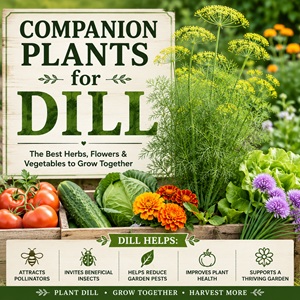
Dill is one of the most beneficial herbs you can add to your vegetable garden.
This post may contain affiliate links.
Not only is it a flavorful culinary herb, but it’s also an excellent companion plant that attracts pollinators and beneficial insects while helping create a healthier garden ecosystem.
Whether you’re growing dill in raised beds, containers, or a kitchen garden, choosing the right companion plants can improve plant health, encourage pollination, and even help reduce pest problems.
In this guide, you’ll discover the best companion plants for dill, what to avoid planting nearby, and how to make the most of this versatile herb.
Why Companion Plant with Dill?
Companion planting is the practice of growing plants together that naturally benefit one another.
Growing dill near compatible plants can:
- Attract bees and butterflies
- Invite beneficial insects like ladybugs and lacewings
- Improve pollination
- Help reduce harmful garden pests
- Increase biodiversity
- Make better use of garden space
When dill flowers, its umbrella-shaped blooms become magnets for pollinators and predatory insects that help control aphids, caterpillars, and other common pests.
Want to try making your own jelly at home?
Get my free guide with 8 easy, beginner-friendly jelly recipes you can confidently make.
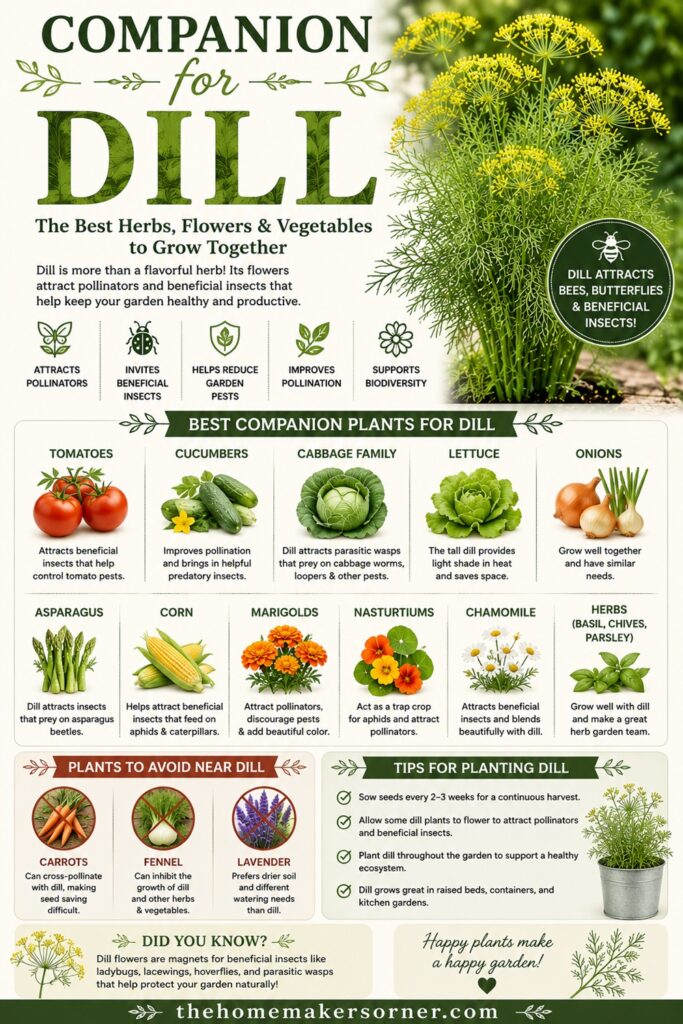
Best Companion Plants for Dill
Tomatoes
Many gardeners enjoy planting dill near tomatoes because it attracts beneficial insects that help control tomato pests.
Young dill plants can be especially helpful nearby, although mature plants may compete with tomatoes if planted too closely.
Cucumbers
Dill and cucumbers are classic garden companions.
Dill flowers attract pollinators that improve cucumber production while also bringing in beneficial insects that help reduce pest populations.
This pairing is especially popular in vegetable gardens—and fresh dill is perfect for making homemade pickles.
Cabbage Family Vegetables
Dill grows well near:
- Cabbage
- Broccoli
- Cauliflower
- Brussels sprouts
- Kale
The flowers attract parasitic wasps and other beneficial insects that feed on cabbage worms and cabbage loopers.
Lettuce
Lettuce benefits from growing near dill because the tall, airy foliage can provide light afternoon shade in warm climates.
Since lettuce matures quickly, it also makes excellent use of garden space around young dill plants.
Onions
Onions and dill generally grow well together.
Both enjoy similar growing conditions and don’t compete heavily for nutrients.
Asparagus
Dill attracts beneficial insects that prey on asparagus beetles, making it a popular companion for asparagus beds.
Corn
Planting dill near corn helps attract predatory insects that feed on aphids and caterpillars often found on corn plants.
Marigolds
Marigolds are excellent companion flowers for dill.
They:
- Attract pollinators
- Discourage certain garden pests
- Add beautiful color to vegetable gardens
Nasturtiums
Nasturtiums help protect nearby vegetables by acting as a trap crop for aphids.
Their edible flowers also attract bees and butterflies throughout the growing season.
Chamomile
Chamomile attracts beneficial insects and blends beautifully with dill in herb gardens while creating a diverse pollinator-friendly planting.
Plants to Avoid Growing Near Dill
Although dill grows well with many vegetables, there are a few plants that aren’t ideal companions.
Carrots
While dill and carrots belong to the same plant family, they can cross-pollinate if allowed to flower, making seed saving difficult.
Fennel
Fennel is one of the few herbs that doesn’t play well with most garden plants.
It may inhibit the growth of nearby herbs and vegetables, including dill.
Lavender
Lavender prefers drier soil than dill and has different watering needs, making the two less compatible companions.
Growing Dill in Containers
Dill grows beautifully in containers and can be paired with vegetables or herbs that appreciate similar growing conditions.
If you’re creating a container garden, dill grows well near:
- Lettuce
- Marigolds
- Nasturtiums
Because dill develops a deep taproot, choose a large container if combining it with other plants.
Benefits of Growing Dill in Your Garden
Adding dill to your garden offers many advantages.
It helps:
- Attract bees and butterflies
- Bring in beneficial predatory insects
- Improve pollination
- Support healthy biodiversity
- Produce fresh herbs for cooking and pickling
- Add delicate texture and height to herb gardens
Frequently Asked Questions
Can dill and cucumbers grow together?
Yes! Dill and cucumbers are one of the most popular companion planting combinations because dill attracts pollinators and beneficial insects while providing fresh herbs for homemade pickles.
Can dill be planted with tomatoes?
Yes, especially when dill is young. Leave enough spacing so mature dill plants don’t compete with tomatoes for sunlight.
Can dill and carrots grow together?
They can, but they aren’t recommended if you’re saving seeds because they may cross-pollinate.
Does dill attract pollinators?
Absolutely. Dill flowers are favorites of bees, butterflies, hoverflies, ladybugs, lacewings, and parasitic wasps.
More Companion Planting Guides
Planning a productive herb garden? Be sure to read these companion planting guides:
- Companion Plants for Thyme
- Companion Plants for Rosemary
- Companion Plants for Sage
- Companion Plants for Chives
- Companion Plants for Mint
You may also enjoy:
- How to Grow Dill in Pots
- How to Grow Basil in Pots
- How to Grow Rosemary in Pots
- How to Grow Oregano in Pots
- How to Grow Sage in Pots
- How to Grow Lemon Balm in Pots
Dill is much more than a flavorful culinary herb—it’s one of the best companion plants for attracting pollinators and beneficial insects to your garden.
Pair it with vegetables like cucumbers, cabbage, lettuce, and tomatoes, along with companion flowers such as marigolds and nasturtiums, to create a healthier and more productive garden.
Whether you’re growing dill in raised beds, containers, or a kitchen garden, companion planting is an easy way to improve plant health naturally while enjoying a beautiful, thriving outdoor space.
Follow my kitchen garden living board on Pinterest.