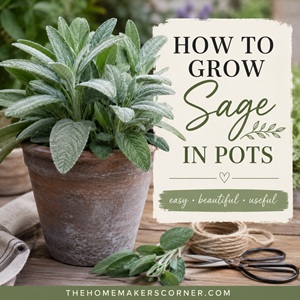
Growing sage in pots is one of the easiest ways to enjoy fresh herbs all season long. This hardy perennial herb is beautiful, drought-tolerant, and incredibly versatile in the kitchen.
This post may contain affiliate links.
Whether you’re growing herbs on a patio, balcony, or sunny windowsill, sage thrives in containers with very little maintenance.
In this guide, you’ll learn everything you need to know about growing sage in pots, from choosing the right container to harvesting fragrant leaves for cooking and preserving.
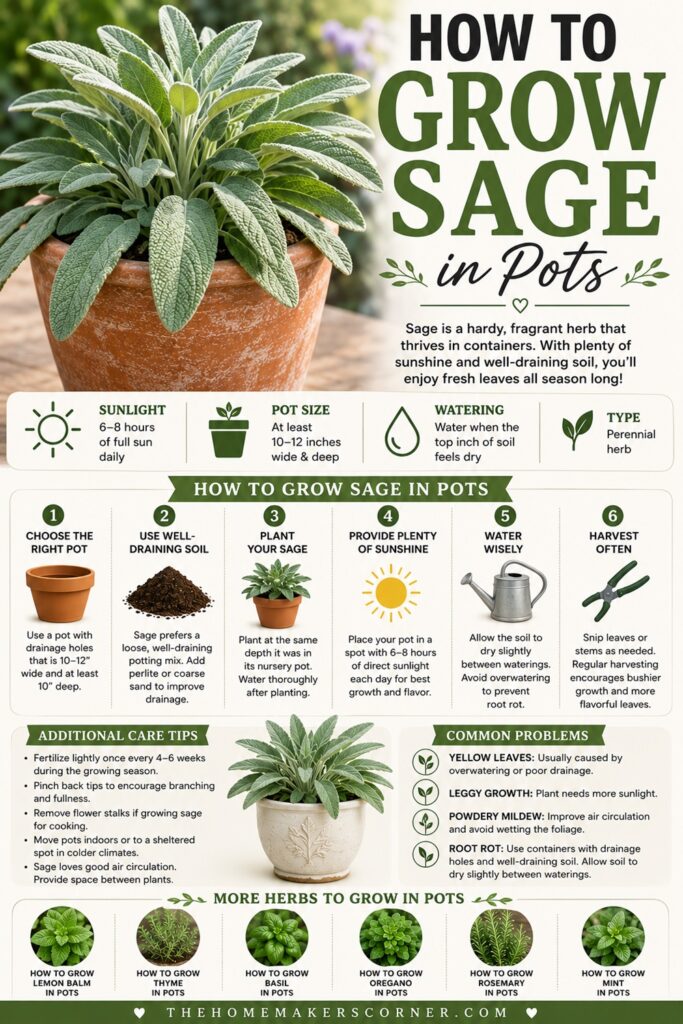
Why Grow Sage in Containers?
Container gardening makes it easy to grow herbs almost anywhere. Sage is especially well-suited for pots because it prefers well-drained soil and doesn’t like overly wet conditions.
Benefits of growing sage in pots include:
- Easy to grow for beginners
- Perfect for patios, porches, and balconies
- Less susceptible to root rot in well-draining containers
- Simple to move indoors during cold weather
- Beautiful silvery-green foliage adds ornamental interest
- Fresh herbs just steps from your kitchen
Best Sage Varieties for Containers
Several types of sage grow well in pots.
Popular varieties include:
Want to try making your own jelly at home?
Get my free guide with 8 easy, beginner-friendly jelly recipes you can confidently make.
- Common Sage – The classic culinary herb.
- Golden Sage – Beautiful variegated golden-green leaves.
- Purple Sage – Striking purple foliage that looks lovely in containers.
- Tricolor Sage – Green, cream, and purple leaves make this an ornamental favorite.
- Pineapple Sage – Bright red flowers with fruity-scented leaves.
Choosing the Right Pot
Select a container that is at least:
- 10 to 12 inches wide
- 10 inches deep
- Has drainage holes
Terracotta pots are an excellent choice because they allow excess moisture to evaporate, helping prevent soggy soil.
The Best Soil for Sage
Sage prefers loose, well-draining soil.
A quality potting mix works well. You can improve drainage by mixing in:
- Perlite
- Coarse sand
- Fine bark
Avoid heavy garden soil, which tends to compact in containers.
Sunlight Requirements
Sage thrives in:
6 to 8 hours of full sun each day.
Choose the sunniest location available for the healthiest plants and the strongest flavor.
How to Plant Sage in Pots
- Fill your container with fresh potting mix.
- Dig a hole slightly larger than the root ball.
- Place the plant at the same depth it was growing in its nursery pot.
- Backfill with soil and gently firm around the roots.
- Water thoroughly after planting.
Watering Sage
Unlike many herbs, sage prefers to dry out slightly between waterings.
Water when the top inch of soil feels dry.
Avoid overwatering, as constantly wet soil can lead to root rot.
Fertilizing
Sage doesn’t require heavy feeding.
Apply a balanced liquid fertilizer once every 4 to 6 weeks during the growing season, or mix a slow-release fertilizer into the potting soil when planting.
Too much fertilizer can reduce the concentration of flavorful oils in the leaves.
Pruning Sage
Regular harvesting encourages fuller growth.
- Pinch young stems to encourage branching.
- Remove flower stalks if you’re growing sage primarily for cooking.
- Trim back woody stems lightly in early spring.
Avoid cutting into old woody growth, as it may not produce new shoots.
Harvesting Sage
You can begin harvesting once your plant is well established.
Harvest by snipping stems just above a pair of leaves.
Avoid removing more than one-third of the plant at a time.
Fresh sage can be used immediately or preserved for later use.
Growing Sage Indoors
Sage also grows well indoors with enough sunlight.
Place containers:
- Near a south-facing window
- Under grow lights if necessary
Provide good air circulation and avoid overwatering.
Common Problems
Yellow Leaves
Usually caused by overwatering or poor drainage.
Leggy Growth
Plants need more sunlight.
Powdery Mildew
Improve air circulation and avoid wetting the foliage when watering.
Root Rot
Prevent by using containers with drainage holes and allowing soil to dry slightly between waterings.
Frequently Asked Questions
Does sage come back every year?
Yes. Common sage is a perennial in many growing zones and can live for several years with proper care.
Can sage survive winter in a pot?
In mild climates, yes. In colder regions, move containers to a sheltered location or provide winter protection.
Can you grow sage from seed?
Yes, although transplants establish much more quickly.
How often should I harvest sage?
Harvest regularly throughout the growing season, but never remove more than one-third of the plant at one time.
More Herbs to Grow in Pots
If you’re creating a kitchen herb garden, be sure to grow these easy herbs as well:
- How to Grow Basil in Pots
- How to Grow Rosemary in Pots
- How to Grow Oregano in Pots
- How to Grow Thyme
- How to Grow Mint in Pots
- How to Grow Lemon Balm in Pots
Together, these herbs create a beautiful and productive container herb garden that’s perfect for cooking, preserving, and homemade living.
Growing sage in pots is an easy way to enjoy one of the most useful culinary herbs right outside your kitchen door.
With plenty of sunshine, well-draining soil, and occasional watering, your sage plant will reward you with fragrant leaves for cooking, drying, and preserving throughout the growing season.
Whether you’re starting your first container herb garden or expanding an existing collection, sage is a timeless herb that deserves a place in every garden.
Follow my kitchen garden living board on Pinterest.