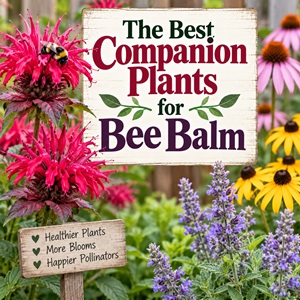
Bee balm is one of those plants that can completely transform a garden. Its colorful flowers bring bees, butterflies, and hummingbirds into the garden, while its tall, upright growth adds beautiful cottage-garden color.
This post may contain affiliate links.
But bee balm doesn’t have to grow alone.
Pairing bee balm with the right plants can create a garden with different heights, textures, colors, and bloom times, while also giving pollinators more flowers to visit throughout the season.
If you’re planning a cottage garden or pollinator garden, here are some of my favorite plants to grow alongside bee balm.
What Makes a Good Companion Plant for Bee Balm?
When choosing companion plants, look for plants that enjoy similar growing conditions.
Bee balm generally does best in full sun to partial shade and consistently moist, well-drained soil.
It also appreciates good air circulation, which is especially important because dense, crowded growth can contribute to powdery mildew.
Want to try making your own jelly at home?
Get my free guide with 8 easy, beginner-friendly jelly recipes you can confidently make.
I also like to combine plants with different heights and bloom shapes. Bee balm is tall and dramatic, so shorter plants around the base can help create a fuller garden design.
And, of course, choosing other pollinator-friendly flowers gives bees and butterflies even more reasons to visit.
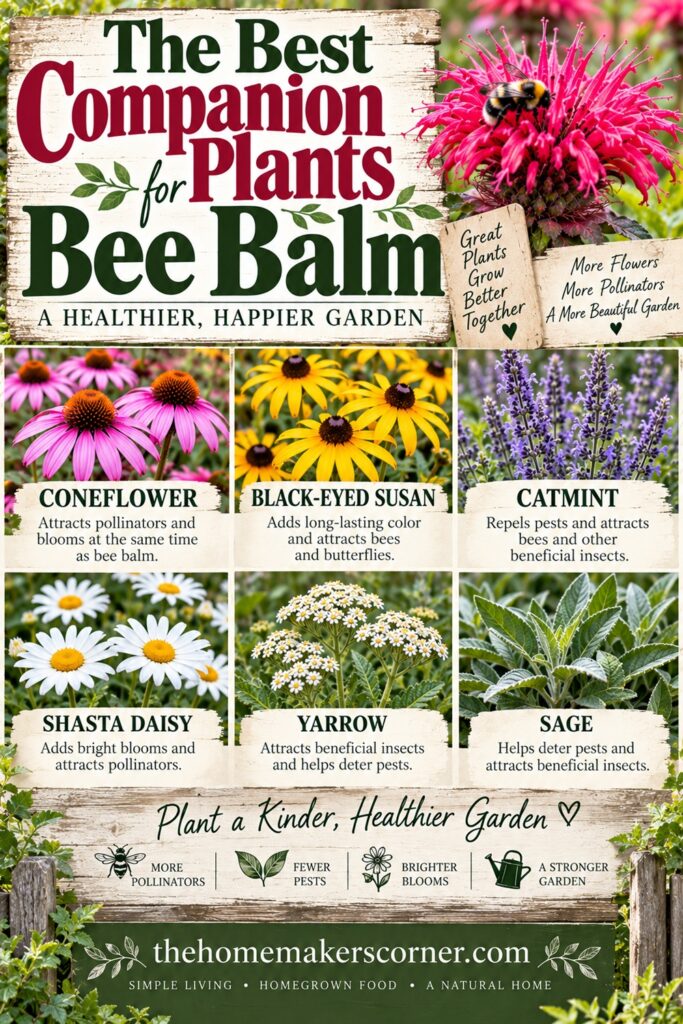
Coneflowers
Coneflowers and bee balm are a natural combination for a pollinator garden.
Both are colorful summer-blooming perennials that attract bees and butterflies. Their different flower shapes also create some beautiful contrast.
The pink, purple, and white shades of coneflowers look especially pretty next to pink or red bee balm.
Black-Eyed Susans
Black-eyed Susans bring cheerful yellow flowers to a planting that might otherwise be dominated by pinks and purples.
They’re also excellent pollinator plants, making them a great choice for a garden designed to attract bees and butterflies.
The combination of yellow Black-eyed Susans with bright bee balm is hard to beat in a summer cottage garden.
Lavender
Lavender adds silvery foliage and purple flower spikes beside the much bolder flowers of bee balm.
The two plants also create a lovely contrast in texture.
Just keep their moisture preferences in mind when planting them together. Lavender prefers drier, well-drained conditions than bee balm, so avoid placing lavender where the soil stays consistently wet.
Related: Companion Plants for Lavender
Catmint
Catmint is another beautiful purple-flowering perennial for a cottage garden.
Its softer, more delicate flower spikes work nicely in front of taller bee balm plants. Catmint can also provide a long season of flowers for pollinators.
Use it toward the front of a border, with bee balm toward the middle or back.
Yarrow
Yarrow has flat-topped clusters of tiny flowers that provide a completely different shape from bee balm.
That difference makes the two plants especially nice together in a natural-looking garden.
Yarrow also attracts beneficial insects and works beautifully in pollinator and cottage gardens.
Shasta Daisies
Shasta daisies bring bright white flowers with yellow centers to the garden.
They’re an easy way to break up larger areas of colorful bee balm and create a classic cottage-garden look.
Plant them in groups rather than scattering individual plants throughout the garden for a more natural effect.
Sage
Sage makes an interesting companion for bee balm because its silvery-green foliage provides contrast against bee balm’s colorful flowers.
It’s also a useful herb to have growing nearby.
If you enjoy growing herbs as well as flowers, adding sage to your cottage garden gives you both beauty and something useful to harvest.
Related: Companion Plants for Sage: What to Grow Nearby
Asters
Asters are particularly useful when you’re trying to extend the season of your pollinator garden.
Their late-season flowers provide an important source of nectar when many summer flowers are beginning to fade.
Plant asters near bee balm for a garden that continues providing color and food for pollinators later in the season.
Salvia
Salvia’s upright flower spikes make a nice vertical contrast with the rounder, shaggy flowers of bee balm.
Blue, purple, pink, and white salvias can all work beautifully depending on the color of your bee balm.
They’re also a favorite with pollinators.
Roses
Roses and bee balm can make a gorgeous cottage-garden combination.
The large, romantic flowers of roses contrast with the unusual shape of bee balm, while both can bring plenty of color and pollinator activity to the garden.
Related: 10 Best Companion Plants to Grow With Roses
Peonies
Peonies are another classic cottage-garden flower that pairs beautifully with bee balm.
Peonies bloom earlier in the season, while bee balm takes over later, so planting both can help create a succession of flowers.
Related: Peony Companion Planting Guide for a Cottage Garden
Zinnias
Zinnias are wonderful for filling in spaces around taller perennials.
They come in an enormous range of colors and attract butterflies and other pollinators.
Planting zinnias near bee balm can give your garden a relaxed, overflowing cottage-garden appearance.
Dill
Dill may not be the first plant you think of when you picture a bee balm garden, but herbs can fit beautifully into a cottage garden.
Letting dill flower adds delicate yellow umbels and provides another source of flowers for beneficial insects.
It also gives you something useful to harvest for the kitchen.
Thyme
Thyme is another useful herb that can work well toward the front of a garden border.
Its low-growing habit makes it a nice contrast to tall bee balm.
If you’re creating a kitchen garden that blends flowers and herbs together, thyme is an especially useful addition.
Related: Best Companion Plants for Thyme in Your Herb Garden
Chives
Chives are another easy herb to tuck into a cottage garden.
Their purple flowers are attractive alongside bee balm, and they’re useful in the kitchen as well.
This is one of my favorite things about combining herbs and flowers—you don’t have to choose between a beautiful garden and a productive one.
Related: Best Companion Plants for Chives in the Kitchen Garden
How to Arrange Bee Balm and Companion Plants
One of the easiest ways to create a beautiful bee balm planting is to think about height.
Place the tallest plants toward the back of the border, medium-height plants in the middle, and shorter plants toward the front.
For example, you might plant:
Back: Bee balm, roses, asters
Middle: Coneflowers, Black-eyed Susans, yarrow
Front: Catmint, thyme, chives
This creates layers instead of having all of your plants competing for attention.
Think About Bloom Time
Another thing I like to consider is when each plant blooms.
Peonies can provide early-season color, followed by many of the summer flowers such as bee balm, coneflowers, Black-eyed Susans, and zinnias. Asters can help carry the garden into fall.
That means you’re not just creating a pretty garden for one month. You’re creating a garden that changes throughout the growing season.
Give Bee Balm Plenty of Air Circulation
Bee balm can spread quickly, so don’t plant it so densely that air can’t move around the plants.
Good spacing is especially important in humid weather.
If your bee balm has become overcrowded, thinning or dividing it can help keep the planting healthier.
Create a Pollinator-Friendly Cottage Garden
You don’t need a huge garden to create a welcoming space for pollinators.
Even a small border planted with bee balm, coneflowers, Black-eyed Susans, lavender, catmint, and yarrow can provide a beautiful mix of flowers, colors, and textures.
And I love adding herbs into the mix, too.
Sage, thyme, chives, rosemary, basil, oregano, and mint can all become part of a garden that is both beautiful and useful.
You can explore more ideas with:
- Best Companion Plants for Basil
- Best Companion Plants for Oregano
- Best Companion Plants for Rosemary in the Kitchen Garden
- Best Companion Plants for Mint in Your Herb Garden
Bee balm is already a showstopper in the summer garden, but surrounding it with the right companions can make the entire garden feel fuller and more intentional.
Combine flowers, herbs, different heights, textures, and bloom times, and you’ll have a garden that isn’t just beautiful—it becomes a place where pollinators can find food throughout the season.
And that’s really the beauty of a cottage garden: a little bit of wildness, a lot of flowers, and plenty of useful plants growing together.
Follow my gardening board on Pinterest.