If you grow your own tarragon, drying some of your harvest is an easy way to keep this flavorful herb on hand long after the growing season ends.
This post may contain affiliate links.
Dried tarragon is especially useful in sauces, chicken dishes, soups, salad dressings, and homemade seasoning blends.
Tarragon has a delicate flavor with a hint of anise, and drying it lets you enjoy that flavor throughout the year. I like to dry herbs in small batches so I always have a jar of homegrown herbs ready in the pantry.
When to Harvest Tarragon for Drying
The best time to harvest tarragon for drying is just before the plant flowers, when the leaves are young and flavorful.
Choose a dry morning after the dew has evaporated. Cut healthy stems with clean garden scissors, leaving plenty of growth on the plant so it can continue producing.
If you’re growing tarragon in a container, regular harvesting also helps keep the plant bushy and productive.
How to Prepare Tarragon for Drying
Start by checking the stems for insects, damaged leaves, or dirt.
Want to try making your own jelly at home?
Get my free guide with 8 easy, beginner-friendly jelly recipes you can confidently make.
If the tarragon is clean, you generally don’t need to wash it. If it does need washing, rinse it gently under cool water and pat it thoroughly dry with a clean towel.
It’s important to remove as much moisture as possible before drying. Extra moisture can make herbs take longer to dry and can encourage mold.
Strip away any damaged leaves and separate the tarragon into small bunches.
How to Air Dry Tarragon
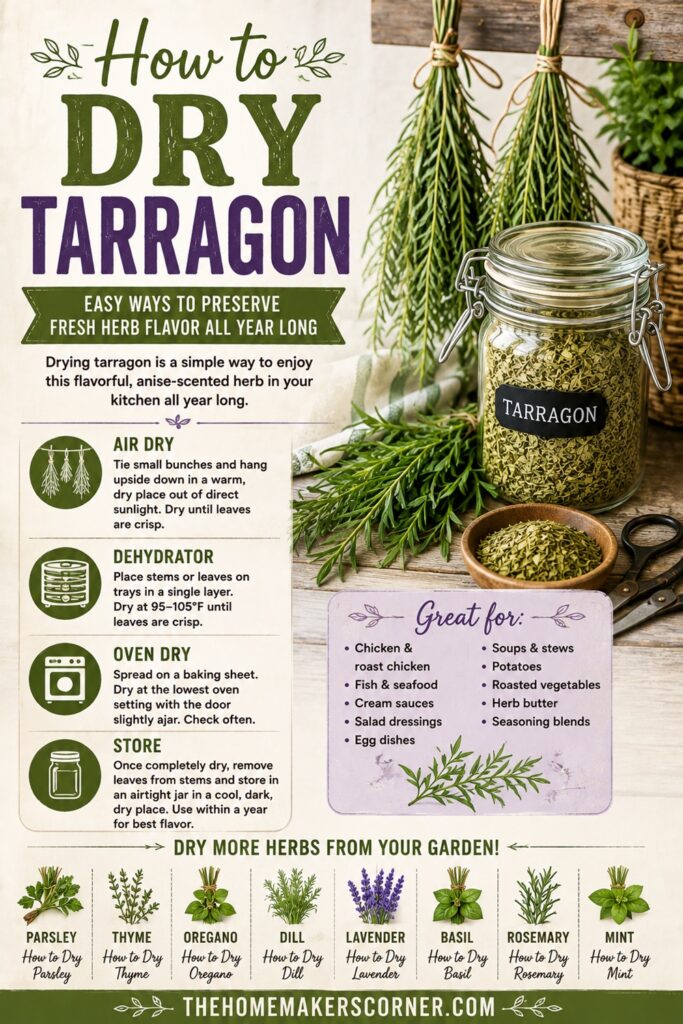
Air drying is one of the simplest ways to preserve tarragon, especially if you don’t have a dehydrator.
- Gather several tarragon stems into a small bundle.
- Tie the stems together with kitchen twine or a rubber band.
- Hang the bundles upside down in a warm, dry, well-ventilated place.
- Keep them out of direct sunlight.
- Allow the tarragon to dry until the leaves are completely crisp.
Small bunches are better than large ones because air needs to circulate around the herbs.
Depending on the humidity in your home, air drying can take anywhere from several days to a couple of weeks.
The leaves are ready when they crumble easily between your fingers.
How to Dry Tarragon in a Dehydrator
A food dehydrator is one of the easiest ways to get consistently dried herbs.
Spread the tarragon stems or leaves in a single layer on the dehydrator trays. Don’t pile the herbs on top of each other.
Set the dehydrator to its lowest herb-drying temperature, generally around 95–105°F, and dry until the leaves are crisp.
Check the herbs periodically because delicate leaves can dry fairly quickly.
How to Dry Tarragon in the Oven
You can also use your oven if you don’t have a dehydrator.
Spread the tarragon in a single layer on a baking sheet lined with parchment paper.
Set the oven to its lowest possible temperature and leave the door slightly ajar if your oven allows you to do so safely.
Check the herbs frequently. You want them to dry slowly without actually cooking or browning them.
Once the leaves are completely dry and crisp, remove them from the oven and allow them to cool completely.
How to Tell When Tarragon Is Completely Dry
Don’t rush this step.
Tarragon is ready to store when the leaves are dry and crumbly, rather than flexible or soft.
If the stems still bend easily or the leaves feel damp, give them more drying time.
It’s better to dry them a little longer than to put moisture into a storage jar, where it can lead to mold.
How to Store Dried Tarragon
Once the tarragon is completely dry, gently remove the leaves from the stems.
You can leave the leaves whole or crumble them into smaller pieces.
Store the dried tarragon in an airtight glass jar or another airtight container. Keep it somewhere cool, dark, and dry, such as a pantry or spice cabinet.
I prefer to leave dried herbs relatively whole until I’m ready to use them. Keeping the leaves intact helps preserve their flavor and aroma.
Label the jar with the herb and the date you dried it.
How Long Does Dried Tarragon Last?
For the best flavor, try to use dried tarragon within about a year.
It may remain usable longer, but herbs gradually lose their color, aroma, and flavor as they age.
If your tarragon still smells fragrant when you open the jar, it’s a good sign that it has retained its flavor.
How to Use Dried Tarragon
Dried tarragon is especially good in recipes where it has time to rehydrate and release its flavor.
Try adding it to:
- Chicken soup
- Roast chicken
- Chicken salad
- Egg salad
- Fish and seafood
- Cream sauces
- Salad dressings
- Potato dishes
- Roasted vegetables
- Omelets
- Herb butter
- Homemade seasoning blends
- Soups and stews
Tarragon pairs particularly well with chicken, fish, eggs, mustard, lemon, and creamy sauces.
When substituting dried tarragon for fresh, start with a smaller amount because dried herbs have a more concentrated flavor.
Drying Other Herbs From Your Garden
Once you start drying your own herbs, it’s easy to build a little homemade herb pantry.
You might also enjoy How to Dry Parsley, How to Dry Thyme, and How to Dry Oregano for three herbs that are particularly useful in everyday cooking.
For preserving summer herbs, try How to Dry Dill, How to Dry Basil, and How to Dry Rosemary.
And if you grow herbs for both cooking and other homemade projects, How to Dry Lavender and How to Dry Mint are useful additions to your herb-preserving collection.
Build a Homemade Herb Pantry
Drying tarragon is a simple way to make your garden harvest last longer. Instead of buying a small jar of dried herbs every time you need one, you can grow, harvest, and preserve your own.
A few jars of dried herbs can go a surprisingly long way in the kitchen, and there’s something satisfying about opening the pantry in winter and finding herbs you harvested yourself waiting there.
If you’re growing tarragon in a container, you can also learn How to Grow Tarragon in Pots and keep a fresh supply close to your kitchen all season long.
Follow my kitchen garden living board on Pinterest.