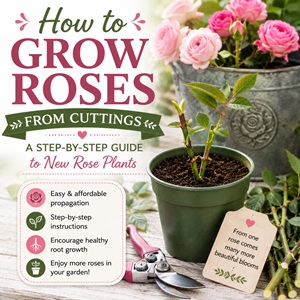
Growing roses from cuttings is one of the easiest and most rewarding ways to create new rose plants.
This post may contain affiliate links.
Instead of buying new roses, you can propagate healthy stems from an existing plant and enjoy the same beautiful blooms in your own garden.
With a little patience and the right growing conditions, many roses will develop roots and become healthy plants that can be transplanted into the garden or grown in containers.
Can You Grow Roses from Cuttings?
Yes! Many shrub roses, climbing roses, heirloom roses, and some floribunda varieties root well from stem cuttings.
While patented varieties may be protected from propagation for commercial purposes, growing cuttings from roses in your own garden is a fun way to expand your flower beds.
When to Take Rose Cuttings
The best time to take rose cuttings is during late spring through early summer when the stems are actively growing but beginning to firm up.
Softwood cuttings root the quickest because the stems are still flexible and full of moisture.
Want to try making your own jelly at home?
Get my free guide with 8 easy, beginner-friendly jelly recipes you can confidently make.
You can also take semi-hardwood cuttings later in summer, although they may take longer to root.
Supplies You’ll Need
- Healthy rose plant
- Clean, sharp pruning shears
- Small pots or seed trays
- Well-draining potting mix
- Rooting hormone (optional)
- Plastic bag or humidity dome
- Watering can or spray bottle
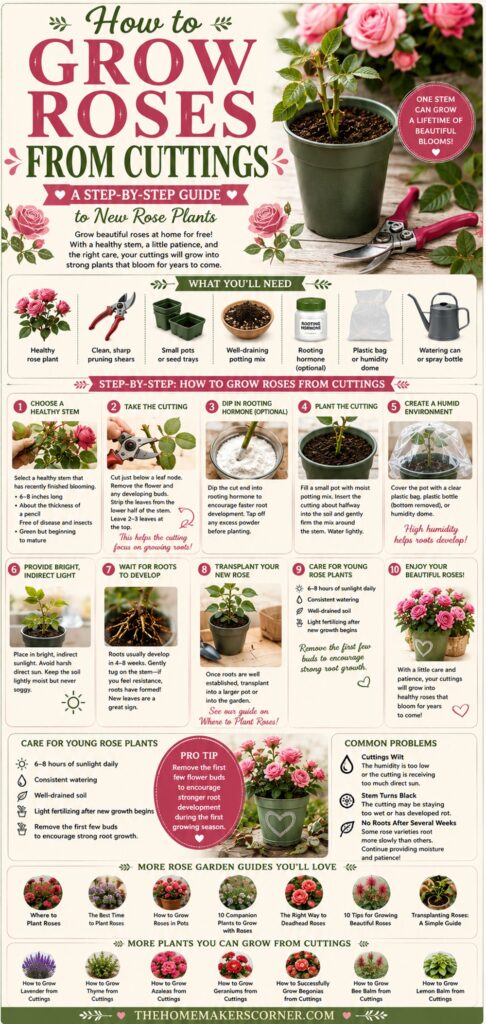
Choose a Healthy Stem
Select a healthy stem that has recently finished blooming.
Look for stems that are:
- 6 to 8 inches long
- About the thickness of a pencil
- Free of disease and insects
- Green but beginning to mature
Avoid old woody stems or very soft new growth.
Take the Cutting
Using clean pruning shears:
- Cut just below a leaf node.
- Remove the flower and any developing buds.
- Strip the leaves from the lower half of the stem.
- Leave two or three leaves near the top.
Removing excess leaves helps the cutting focus its energy on developing roots.
Dip in Rooting Hormone
Although not required, dipping the cut end into rooting hormone often speeds root development and improves your success rate.
Tap off any excess powder before planting.
Plant the Cutting
Fill a small pot with moist potting mix.
Insert the cutting about halfway into the soil and gently firm the mix around the stem.
Water lightly after planting.
Create a Humid Environment
Rose cuttings root best in high humidity.
Cover the pot with:
- A clear plastic bag
- A plastic bottle with the bottom removed
- A humidity dome
Keep the plastic from touching the leaves by supporting it with small stakes if needed.
Provide Bright, Indirect Light
Place the container in bright, indirect sunlight.
Avoid direct afternoon sun, which can quickly overheat the cutting before roots develop.
Keep the soil lightly moist but never soggy.
Wait for Roots to Develop
Most rose cuttings begin developing roots within four to eight weeks.
You can gently tug on the stem after several weeks. If you feel resistance, roots have likely formed.
Once new leaves begin growing, the cutting is ready for more sunlight.
Transplant Your New Rose
After the roots are well established, transplant your new rose into a larger container or into the garden.
If you’re planting outdoors, our guide on Where to Plant Roses will help you choose the best location.
Container gardeners will also enjoy How to Grow Roses in Pots, which covers everything you need to know about growing healthy roses in containers.
Care for Young Rose Plants
Newly rooted roses need regular care while they become established.
Provide:
- Six to eight hours of sunlight
- Consistent watering
- Well-drained soil
- Light fertilizing after new growth begins
Removing the first few flower buds encourages stronger root development during the first growing season.
Common Problems
Cuttings Wilt
The humidity is too low or the cutting is receiving too much direct sun.
Stem Turns Black
The cutting may be staying too wet or has developed rot.
No Roots After Several Weeks
Some rose varieties simply root more slowly than others. Continue providing moisture and patience before giving up.
More Ways to Grow Healthy Roses
Once your new rose is growing, these guides can help you enjoy beautiful blooms year after year:
- Where to Plant Roses
- The Best Time to Plant Roses for Beautiful Blooms
- How to Grow Roses in Pots
- 10 Companion Plants to Grow with Roses
- The Right Way to Deadhead Roses: A Step-by-Step Guide
- 10 Tips for Growing Beautiful Roses
- Transplanting Roses: A Simple Guide for Successful Blooms
If you enjoy propagating plants, you might also like these step-by-step guides:
- How to Grow Lavender from Cuttings
- How to Grow Thyme from Cuttings
- How to Grow Azaleas from Cuttings
- How to Grow Geraniums from Cuttings
- How to Successfully Grow Begonias from Cuttings
- How to Grow Bee Balm from Cuttings: A Step-by-Step Guide
- How to Grow Lemon Balm from Cuttings
Growing roses from cuttings is an inexpensive and satisfying way to fill your garden with beautiful blooms.
With a healthy stem, the right growing conditions, and a little patience, you can successfully propagate your favorite roses and enjoy them for years to come.
Whether you’re creating colorful containers, planting a fragrant border, or designing charming cottage gardens, propagating your own roses is a rewarding gardening project that anyone can try.
Follow my simple garden living board on Pinterest.