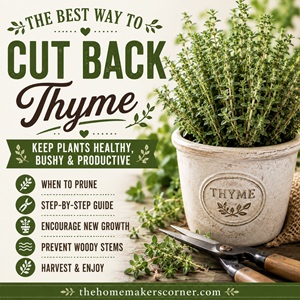
Thyme is one of the easiest herbs to grow, but like many perennial herbs, it benefits from regular pruning. Without occasional trimming, thyme can become woody, sparse, and produce fewer fragrant leaves.
This post may contain affiliate links.
Fortunately, cutting back thyme only takes a few minutes and helps keep your plants compact, healthy, and productive for years.
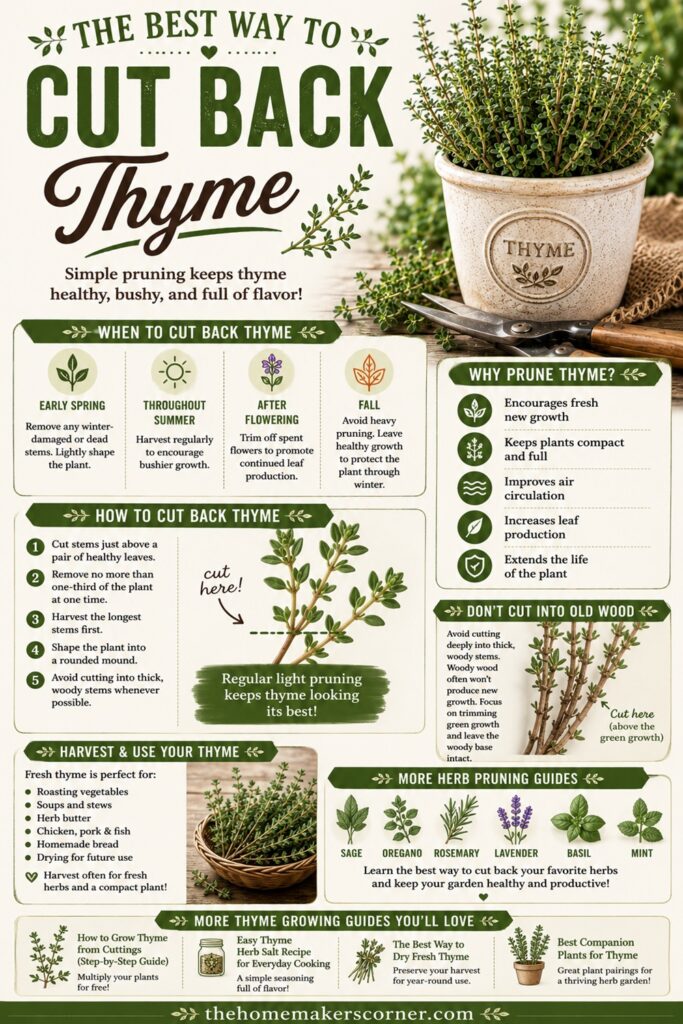
Why You Should Cut Back Thyme
Regular pruning helps thyme:
- Encourage fresh new growth
- Prevent woody stems
- Keep plants compact and full
- Improve air circulation
- Increase leaf production
- Extend the life of the plant
Frequent harvesting throughout the growing season is one of the best ways to naturally prune thyme.
When to Cut Back Thyme
Early Spring
Once new growth begins to appear, remove any winter-damaged or dead stems. Lightly shape the plant to encourage fresh growth.
Throughout Summer
Harvest thyme regularly throughout the growing season. Snipping stems often encourages the plant to branch and become fuller.
After Flowering
If your thyme flowers, trim off the spent blooms after flowering to encourage continued leafy growth.
Want to try making your own jelly at home?
Get my free guide with 8 easy, beginner-friendly jelly recipes you can confidently make.
Fall
Avoid heavy pruning late in the season. Leave enough healthy growth to protect the plant through winter.
How to Cut Back Thyme
Use clean, sharp scissors or pruning shears.
- Cut stems just above a pair of healthy leaves.
- Remove no more than one-third of the plant at one time.
- Harvest the longest stems first.
- Shape the plant into a rounded mound.
- Avoid cutting into thick, woody stems whenever possible.
Regular light pruning keeps thyme looking its best.
Don’t Cut Into Old Wood
One of the most common mistakes gardeners make is cutting deeply into old woody stems.
Unlike soft new growth, woody stems often don’t produce vigorous new shoots. Instead, focus on trimming green growth while leaving the woody base intact.
Harvest While You Prune
Fresh thyme is incredibly versatile in the kitchen.
Use it to:
- Season roasted vegetables
- Flavor soups and stews
- Make herb butter
- Season chicken, pork, and fish
- Add to homemade bread
- Dry for future use
Learning to harvest frequently gives you plenty of fresh herbs while naturally keeping your plants compact.
Grow Even Better Thyme
Healthy thyme starts with proper growing conditions.
Plant thyme in full sun with well-drained soil and avoid overwatering, as thyme prefers slightly dry conditions.
If you’re planning your herb garden, be sure to pair thyme with compatible plants to encourage healthy growth and attract beneficial pollinators.
More Herb Pruning Guides
Every herb has slightly different pruning needs. Learn the best techniques with our complete pruning guides:
- The Best Way to Cut Back Sage
- The Best Way to Cut Back Oregano
- The Best Way to Cut Back Rosemary
- The Best Way to Cut Back Lavender
- The Best Way to Cut Back Basil
- The Best Way to Cut Back Mint
Using the proper pruning technique for each herb will help keep your garden healthier and more productive.
More Thyme Growing Guides
If you love growing thyme, you may also enjoy these helpful guides:
- How to Grow Thyme from Cuttings (Step-by-Step Guide)
- Easy Thyme Herb Salt Recipe for Everyday Cooking
- The Best Way to Dry Fresh Thyme
- Best Companion Plants for Thyme
Together, these guides will help you grow, harvest, preserve, and enjoy fresh thyme all year long.
Frequently Asked Questions
How often should I prune thyme?
Lightly harvest or trim thyme every few weeks during the growing season. Regular pruning encourages dense, healthy growth.
Can I cut thyme back to the ground?
No. Avoid cutting thyme all the way back. Leave plenty of green growth so the plant can continue producing new stems.
Should I let thyme flower?
Thyme flowers attract bees and other pollinators. If you’re growing thyme mainly for cooking, trimming flower stalks after blooming encourages additional leaf production.
Can thyme become woody?
Yes. Older thyme plants naturally develop woody stems. Regular harvesting and light pruning help keep plants compact and productive.
Pruning thyme is one of the simplest ways to keep your herb garden healthy. By trimming regularly, avoiding cuts into old woody stems, and harvesting often, you’ll enjoy fuller plants and a steady supply of fragrant thyme throughout the growing season.
Whether you’re growing thyme in containers, raised beds, or an herb garden, a little routine pruning goes a long way toward keeping your plants beautiful, healthy, and productive.
Follow my simple garden living board on Pinterest.