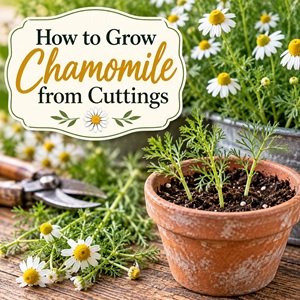
Chamomile is such a lovely addition to an herb garden. With its delicate, daisy-like flowers and sweet, apple-like fragrance, it’s a favorite for cottage gardens, pollinator gardens, and homemade herbal tea.
This post may contain affiliate links.
If you already have chamomile growing in your garden, you might be wondering if you can grow more plants from cuttings instead of buying new plants.
The answer depends on which type of chamomile you’re growing. German chamomile is usually grown from seed, while perennial Roman chamomile can be multiplied by dividing established plants.
German chamomile can be propagated from cuttings under suitable conditions, but it isn’t the easiest or most reliable method for home gardeners. Learn more about the differences between German and Roman chamomile here.
Can You Grow Chamomile from Cuttings?
Yes, chamomile can sometimes be propagated from cuttings, but success depends on the variety and growing conditions.
Before you begin, check which type of chamomile you have:
- German chamomile is an annual that grows quickly from seed. It often reseeds itself, making it easy to grow again each year.
- Roman chamomile is a perennial that spreads along the ground. Established plants can be divided to create new plants.
If your goal is to grow more chamomile for your garden, starting German chamomile from seed or dividing Roman chamomile is generally the more dependable option.
Want to try making your own jelly at home?
Get my free guide with 8 easy, beginner-friendly jelly recipes you can confidently make.
How to Try Growing Chamomile from Cuttings
If you’d like to experiment with cuttings, here’s how to give them the best chance of developing roots.
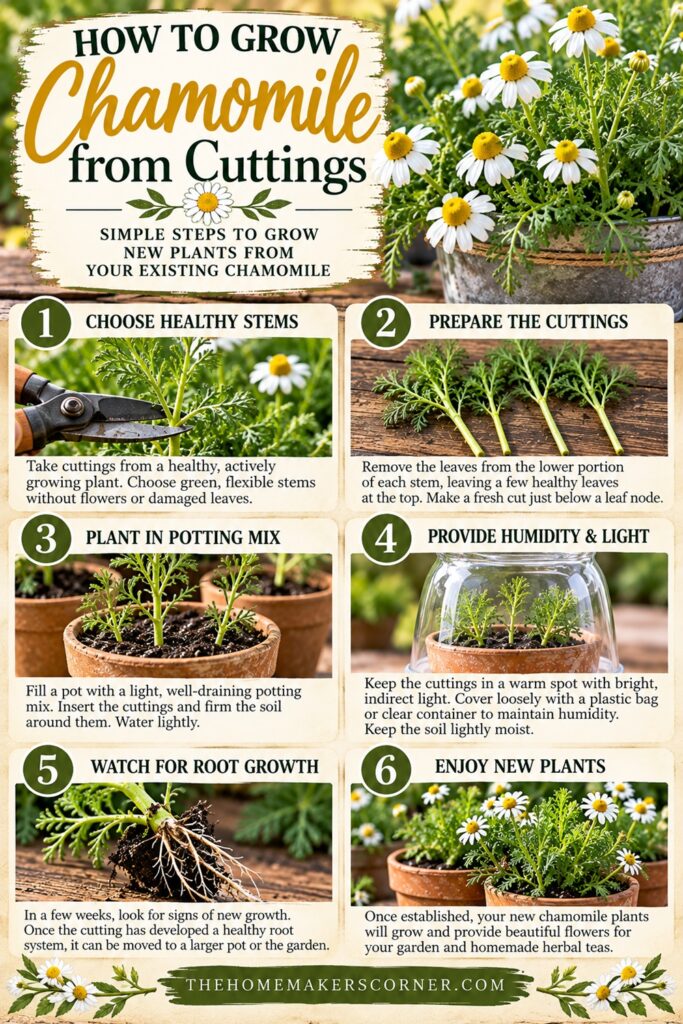
1. Choose Healthy, Young Growth
Take cuttings from a healthy, actively growing plant. Look for green, flexible stems without flowers, damaged leaves, or signs of disease.
Use clean, sharp scissors or garden snips to take several cuttings. Taking a few gives you a better chance of success.
2. Prepare the Cuttings
Remove the leaves from the lower portion of each stem, leaving a few healthy leaves at the top.
Make a fresh cut near a leaf node, where new roots may develop. Avoid crushing or damaging the stem.
3. Place the Cuttings in Moist Potting Mix
Fill a small pot with a light, well-draining propagation mix. Make a small hole in the mix and gently insert the lower portion of the cutting.
Firm the mix around the stem so it stays upright, then water lightly.
You can cover the pot loosely with a clear plastic bag to help maintain humidity. Keep the covering from touching the leaves, and open it regularly for fresh air.
4. Provide Bright, Indirect Light
Place the pot somewhere warm with plenty of bright, indirect light. Avoid intense direct sunlight while the cuttings are establishing, as this can cause them to wilt.
Keep the mix lightly moist, but never waterlogged. Too much moisture can cause the stems to rot.
5. Watch for Signs of Root Growth
Check the cuttings regularly for signs of new growth. Don’t pull on the stems to check for roots, since this can damage any that have started developing.
Not every cutting will root successfully, so don’t be discouraged if your first attempt doesn’t work.
Once a cutting has developed a healthy root system and begins growing steadily, it can be moved into a larger pot or planted in the garden when conditions are suitable.
An Easier Way to Grow More Chamomile
For most home gardeners, there are easier ways to multiply chamomile.
Growing German chamomile from seed: Scatter the tiny seeds over the surface of moist seed-starting mix and gently press them down. They need light to germinate, so don’t bury them deeply. Keep the mix moist while the seedlings develop.
Dividing Roman chamomile: If you have an established perennial plant, carefully lift a section that has roots attached and replant it in a suitable location. Water it well while it becomes established.
Both methods are generally more dependable than trying to root chamomile stems.
More Herb-Growing Guides
If you enjoy multiplying plants and growing your own herbs, you might also like these guides:
- How to Grow Basil from Cuttings
- How to Grow Lavender from Cuttings
- How to Grow Lemon Balm from Cuttings
- How to Grow Thyme from Cuttings
- How to Grow Chamomile in Pots
- Harvesting Chamomile for Tea
- Complete Guide to Preserving Herbs
Growing more herbs doesn’t have to mean buying more plants every season.
With a little patience and the right propagation method, you can gradually expand your garden and enjoy more of the herbs you love.
Follow my cottage garden tea herbs board on Pinterest.