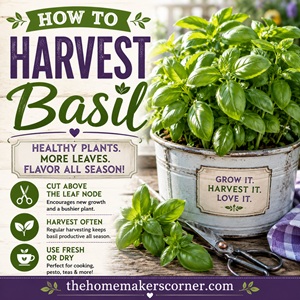
If you have a basil plant that seems to produce more leaves than you can possibly use, you’re doing something right.
This post may contain affiliate links.
Basil actually benefits from regular harvesting, and knowing where and when to cut can keep the plant bushy, productive, and full of fresh leaves all summer.
Whether you’re growing basil in the garden, in containers, or on a sunny patio, harvesting it the right way makes a big difference.
And the best part? You don’t have to wait until you need basil for a recipe. Regular harvesting is part of keeping the plant growing.
When Is the Best Time to Harvest Basil?
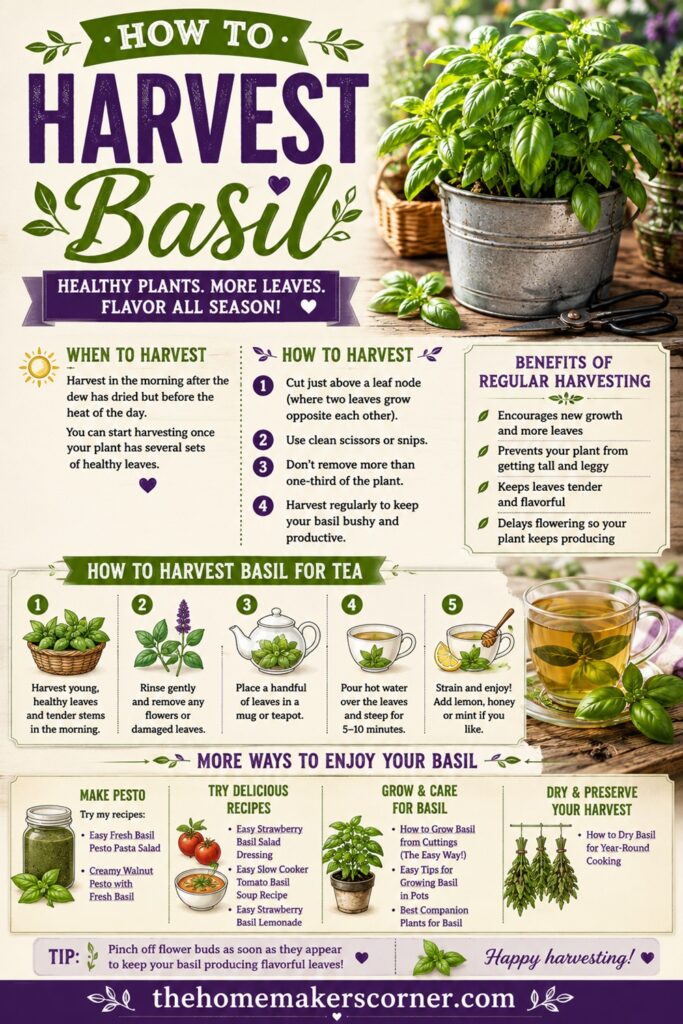
The best time to harvest basil is in the morning, after the dew has dried but before the heat of the day sets in. The leaves are fresh and full of flavorful oils at this point.
You can begin harvesting once your basil plant is well established and has several sets of healthy leaves. There’s no need to wait for it to become huge.
In fact, waiting too long can lead to a tall, leggy plant that starts producing flowers.
Want to try making your own jelly at home?
Get my free guide with 8 easy, beginner-friendly jelly recipes you can confidently make.
If your basil is getting tall, take a look at my guide on How to Prune Basil for Bigger, Bushier Plants for more detailed pruning instructions.
How to Harvest Basil Without Hurting the Plant
The biggest mistake people make is walking up to their basil plant and picking individual leaves from the bottom.
Instead, harvest entire stems.
Look for a point where two leaves grow opposite each other on the stem. This is called a leaf node.
Using clean scissors or garden snips, cut the stem about ¼ inch above that pair of leaves.
The plant will respond by producing new branches from that node. One stem can become two, and those two branches can eventually become four.
That’s how regular harvesting helps turn basil into a full, bushy plant.
A few simple harvesting rules:
- Harvest the top portions of stems rather than stripping the lower leaves.
- Cut just above a leaf node.
- Don’t remove more than about one-third of the plant at one time.
- Harvest regularly instead of waiting until you need a large amount.
- Remove flower buds as soon as you see them if your goal is continued leaf production.
If you’re growing basil in a container, you might also want to see Easy Tips for Growing Basil in Pots.
What to Do When Basil Starts Flowering
Eventually, your basil will try to flower. That’s completely normal.
If you want to keep harvesting tender leaves, cut the flowering stems back to a leaf node. This redirects the plant’s energy toward producing new leafy growth.
Once basil has flowered heavily, the leaves can become tougher and more bitter, so don’t be afraid to harvest aggressively if the plant is heading toward the end of its season.
You can also save those flowers for edible garnishes or allow some plants to flower for pollinators.
How Much Basil Can You Harvest at Once?
A healthy, established basil plant can handle regular harvesting, but don’t strip it bare.
A good rule is to remove no more than one-third of the plant at a time. Leave plenty of healthy leaves behind so the plant can continue photosynthesizing and producing new growth.
If you need a large amount for pesto or preserving, harvest from several plants rather than taking everything from one plant.
For ideas for using that harvest, try Easy Fresh Basil Pesto Pasta Salad or Creamy Walnut Pesto with Fresh Basil.
How to Harvest Basil for Tea
Basil makes a surprisingly lovely herbal tea, especially when you have more fresh leaves than you know what to do with.
For tea, harvest young, healthy basil leaves and tender stems before the plant has flowered heavily.
To harvest basil for fresh tea:
- Choose healthy, undamaged leaves.
- Harvest in the morning after the dew has dried.
- Cut the upper stems just above a leaf node.
- Remove any flowers or damaged leaves.
- Rinse the basil gently and pat it dry.
For a simple cup of fresh basil tea, place a small handful of fresh basil leaves in a mug or teapot and pour over hot water. Let it steep for about 5–10 minutes, then strain.
You can enjoy it plain or add lemon, honey, mint, or another herb.
Basil also pairs beautifully with fruit and other herbs in cold drinks. If you enjoy making garden teas, you might like my Blueberry Basil Iced Tea Recipe You’ll Sip All Summer.
Can You Dry Basil After Harvesting?
Absolutely. If your garden is producing more basil than you can use fresh, drying is one of the easiest ways to preserve it.
Harvest whole stems, remove damaged leaves, and dry the basil thoroughly before storing it.
For the complete process, see How to Dry Basil for Year-Round Cooking.
Dried basil is especially useful for soups, sauces, pasta dishes, seasoning blends, and homemade pantry mixes.
Keep Harvesting All Season
One of the great things about growing basil is that harvesting doesn’t have to be a one-time event.
The more consistently you harvest the growing tips, the more the plant branches. Keep cutting above leaf nodes, keep removing flower buds when necessary, and you’ll have fresh basil for much of the growing season.
And if you’re just getting started with basil, Growing Basil: Everything You Need to Know is a good place to start.
Once you get the hang of harvesting it correctly, you’ll probably find yourself looking for more ways to use all that basil—which is a pretty good gardening problem to have.
Follow my simple garden living board on Pinterest.