Thyme is one of the hardest-working herbs in the garden. Not only does it add incredible flavor to soups, roasted vegetables, and meats, but it’s also a beautiful, low-growing plant that attracts pollinators and helps create a healthier garden.
This post may contain affiliate links.
Whether you’re planting a dedicated herb garden or mixing herbs into your vegetable beds, choosing the right companion plants can help improve plant health, reduce pests, and make the most of your growing space.
Here’s what grows best with thyme.
Why Companion Plant Thyme?
Companion planting is the practice of growing plants together that benefit one another. Thyme makes an excellent companion because it:
- Attracts bees and other beneficial pollinators
- Helps deter cabbage worms and other garden pests
- Thrives in dry, sunny conditions
- Makes an attractive living mulch around larger plants
- Doesn’t compete heavily for nutrients
Because thyme prefers lean, well-drained soil, it pairs best with plants that enjoy similar growing conditions.
Best Companion Plants for Thyme
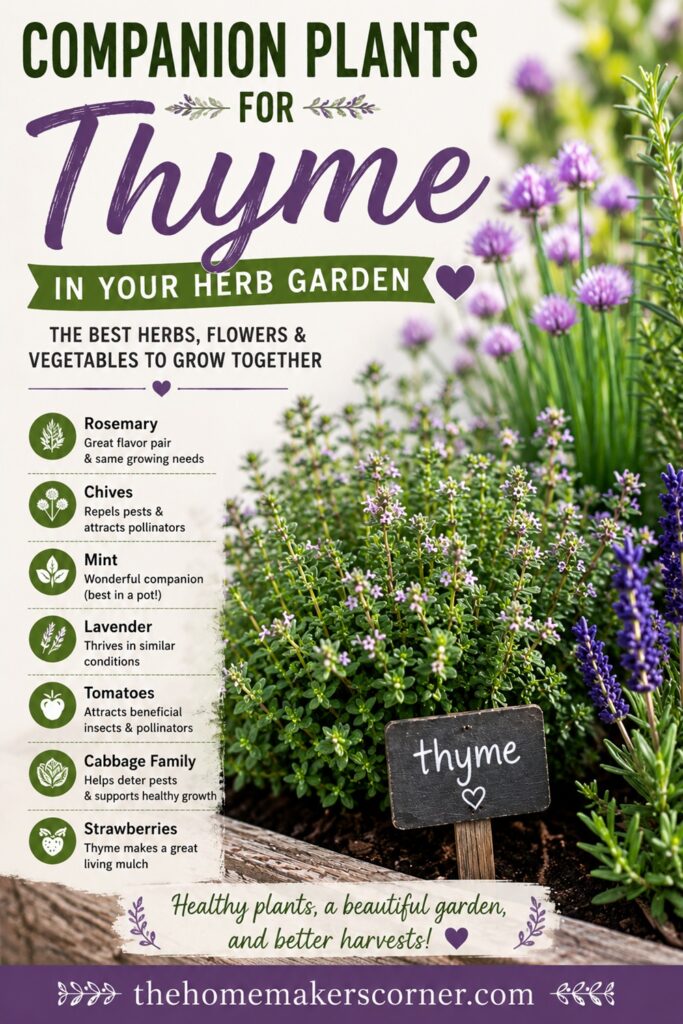
Rosemary
Rosemary and thyme are natural companions because they enjoy nearly identical growing conditions.
Both herbs thrive in:
Want to try making your own jelly at home?
Get my free guide with 8 easy, beginner-friendly jelly recipes you can confidently make.
- Full sun
- Well-drained soil
- Moderate watering
- Hot, dry weather
Planting them together creates a beautiful Mediterranean-style herb garden that’s both productive and easy to maintain.
Related: Companion Plants for Rosemary
Chives
Chives help repel aphids and other common garden pests while attracting pollinators with their purple blooms.
Together, thyme and chives create an attractive herb bed that provides fresh herbs throughout the growing season.
Related: Companion Plants for Chives
Sage
Like thyme, sage loves sunshine and dry soil.
These two perennial herbs grow beautifully together and require very similar care, making them ideal companions for low-maintenance herb gardens.
Oregano
Oregano and thyme naturally grow together in Mediterranean climates.
Both spread nicely between stepping stones or along garden borders and create a fragrant, pollinator-friendly planting.
Related: How to Grow Oregano in Pots for Fresh Herbs All Season
Lavender
Lavender and thyme complement one another perfectly.
Both prefer:
- Full sun
- Excellent drainage
- Little fertilizer
- Dry conditions
The combination creates a beautiful cottage-style herb garden that’s buzzing with bees all summer.
Mint (With Caution)
Mint can be a wonderful companion—but only if it’s grown in a container.
Since mint spreads aggressively, planting it directly beside thyme can quickly overwhelm your herb bed.
Growing mint in a nearby pot lets you enjoy both herbs without worrying about mint taking over.
Related: Companion Plants for Mint
Strawberries
Thyme makes an excellent living mulch beneath strawberries.
Its low-growing habit helps suppress weeds while attracting pollinators that improve strawberry production.
Related: Companion Plants for Strawberries: Boosting Growth and Flavor in Your Garden
Cabbage Family Crops
Plant thyme near:
- Broccoli
- Cabbage
- Cauliflower
- Kale
- Brussels sprouts
The strong fragrance may help confuse cabbage moths, while the flowers attract beneficial insects that prey on garden pests.
Tomatoes
Tomatoes and thyme make wonderful companions.
Thyme attracts pollinators and beneficial insects while remaining compact enough not to compete with tomato plants for sunlight.
Related: How to Grow Juicy Tomatoes in Containers: A Beginner’s Guide
Eggplant
Eggplant also benefits from thyme growing nearby.
The flowers attract pollinators, while the aromatic foliage may help discourage unwanted insects.
Flowers That Pair Well with Thyme
If you’re creating a cottage garden or pollinator border, thyme looks beautiful planted alongside:
- Lavender
- Salvia
- Catmint
- Coneflowers
- Yarrow
- Bee Balm
- Chamomile
Together they create months of color while attracting bees, butterflies, and other beneficial insects.
Plants to Avoid Growing Near Thyme
Not every plant appreciates thyme’s preferred growing conditions.
Avoid planting thyme next to:
- Basil
- Cilantro
- Parsley
These herbs prefer richer soil and more frequent watering than thyme enjoys.
Likewise, avoid placing thyme beside moisture-loving vegetables that require consistently damp soil.
Growing Tips for Healthy Thyme
To keep thyme thriving:
- Plant in full sun.
- Choose well-drained soil.
- Water only when the soil becomes dry.
- Avoid over-fertilizing.
- Trim plants after flowering to encourage fresh growth.
- Divide mature plants every few years to keep them vigorous.
Once established, thyme is remarkably drought tolerant and one of the easiest herbs to grow.
Frequently Asked Questions
Can thyme grow with rosemary?
Absolutely. Rosemary and thyme have nearly identical growing requirements and are two of the best herb companions you can plant together.
Does thyme attract pollinators?
Yes! When allowed to flower, thyme attracts bees, butterflies, hoverflies, and many other beneficial insects.
Can thyme be planted around vegetables?
Yes. It’s especially beneficial near tomatoes, cabbage family crops, strawberries, and eggplant because it attracts pollinators while helping create a healthier garden ecosystem.
Should thyme and mint be planted together?
Only if the mint is grown in a container. Mint spreads aggressively and can quickly overtake thyme if planted directly in the same bed.
More Herb Companion Planting Guides
Expand your herb garden with these companion planting guides:
Choosing the right companions for thyme helps create a healthier, more productive herb garden.
Whether you’re growing a few herbs in containers or planting an entire cottage-style herb bed, thyme is an excellent companion that supports pollinators, discourages pests, and pairs beautifully with many of your favorite herbs and vegetables.
Follow my kitchen garden living board on Pinterest.