Chives are one of the easiest herbs to grow in containers, making them a perfect addition to any kitchen garden.
This post may contain affiliate links.
Their mild onion flavor, attractive purple flowers, and low-maintenance nature make them a favorite among gardeners.
Whether you have a large patio or a small balcony, chives thrive in pots and provide a steady harvest throughout the growing season.
If you’re looking for a productive herb that’s both beautiful and useful, chives are an excellent choice.
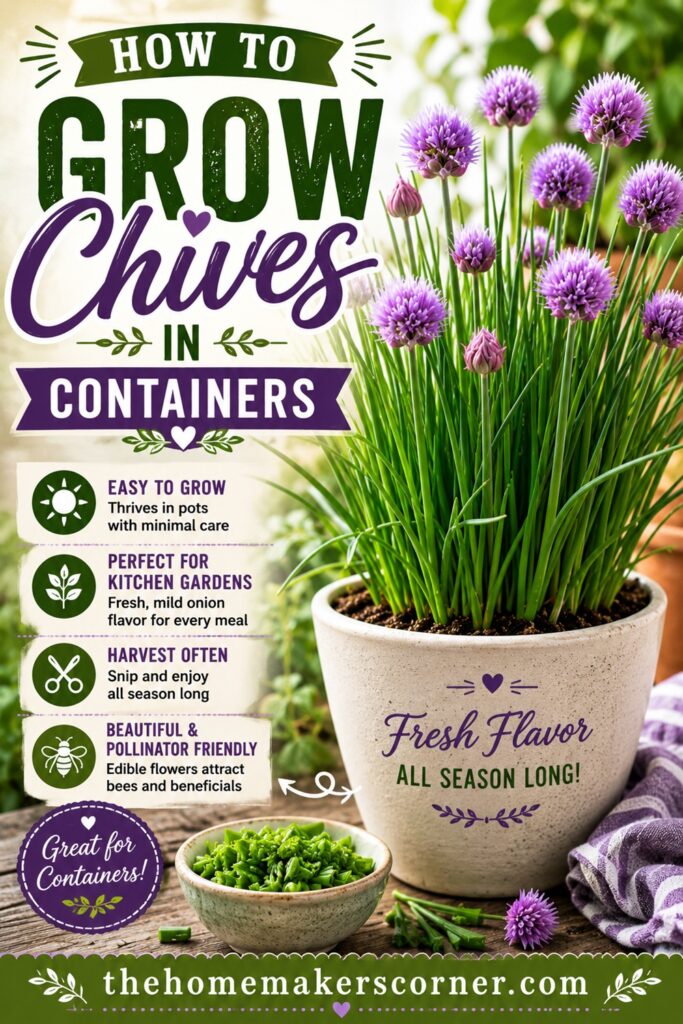
Why Grow Chives in Containers?
Growing chives in pots offers several advantages:
- Easy access for harvesting
- Control over soil conditions
- Fewer weeds
- Attractive ornamental value
- Perfect for small-space gardening
Container-grown chives can produce for years with minimal care and are ideal for kitchen gardens where fresh herbs are always within reach.
Choose the Right Container
Chives aren’t picky, but they do perform best in a container that provides enough room for their roots to spread.
Want to try making your own jelly at home?
Get my free guide with 8 easy, beginner-friendly jelly recipes you can confidently make.
Choose a pot that:
- Is at least 8 to 10 inches deep
- Has drainage holes
- Holds quality potting mix
Chives grow in clumps and gradually expand over time, so larger containers may reduce the need for frequent dividing.
Plant Chives in Well-Draining Soil
Use a quality potting mix that drains well while retaining enough moisture to support healthy growth.
Avoid heavy garden soil, which can become compacted in containers and limit root development.
Give Chives Plenty of Sun
Chives grow best in full sun.
Provide:
- 6 or more hours of sunlight daily
- Good air circulation
- Consistent moisture
In hotter climates, a little afternoon shade can help prevent stress during the hottest part of summer.
If you’re working with a partially shaded garden, you may also enjoy reading The Best Herbs That Grow in the Shade.
Water Regularly
Unlike some Mediterranean herbs, chives prefer evenly moist soil.
Water when the top inch of soil begins to dry out.
Avoid allowing containers to become completely dry for extended periods, especially during hot weather.
Fertilize Occasionally
Chives are light feeders but benefit from occasional fertilization.
Apply a balanced liquid fertilizer every few weeks during the growing season to encourage lush, green growth.
Harvest Chives Often
Regular harvesting helps keep chive plants productive and encourages fresh new growth.
To harvest:
- Cut leaves with scissors.
- Leave about 2 inches of growth above the soil.
- Harvest from the outside of the clump first.
Avoid pulling leaves by hand, as this can damage the plant.
Enjoy the Edible Flowers
One of the best features of chives is their beautiful purple flowers.
The blossoms:
- Attract bees and pollinators
- Add color to herb gardens
- Are edible
Sprinkle fresh flowers over salads, soups, and other dishes for a colorful garnish.
Dividing Chive Plants
Over time, chive plants can become crowded.
Divide mature clumps every few years to:
- Rejuvenate growth
- Create new plants
- Increase harvests
Simply remove the plant from the container, separate the clump into sections, and replant.
Preserving Your Chive Harvest
A healthy chive plant often produces more than you can use fresh.
One of the easiest ways to preserve your harvest is by drying or freezing.
Learn more in How to Preserve Chives for Year-Round Cooking.
You may also enjoy How to Freeze Herbs in Butter or Olive Oil for another easy way to preserve fresh herbs.
Growing Chives with Other Herbs
Chives make excellent companions for many kitchen garden herbs.
They grow well alongside:
- Rosemary
- Sage
- Thyme
- Oregano
- Parsley
If you’re planning a container herb garden, you may also enjoy:
- Best Companion Plants for Rosemary in the Kitchen Garden
- The Best Way to Grow Thyme in Pots for Kitchen Gardens
- How to Grow Mint in Pots for Fresh Herbs All Season
- How to Preserve Lemon Balm from the Garden
Combining several herbs in your kitchen garden provides fresh ingredients all season long.
Chives are one of the easiest herbs to grow in containers. With plenty of sunshine, regular watering, and occasional harvesting, you’ll enjoy fresh chives throughout the growing season.
Whether you’re building a dedicated kitchen garden or simply adding a few pots to your patio, chives are a productive herb that rewards gardeners with both beauty and flavor year after year.
Follow my kitchen garden living board on Pinterest.