Mint is one of the easiest herbs to grow in containers and a favorite for kitchen gardens.
This post may contain affiliate links.
Whether you enjoy fresh mint tea, homemade mint jelly, refreshing summer drinks, or simply love the fragrance of fresh herbs, growing mint in pots is an excellent way to keep this vigorous plant under control while enjoying a steady harvest throughout the growing season.
In fact, many gardeners prefer growing mint in containers because mint spreads quickly and can take over garden beds if planted directly in the ground.
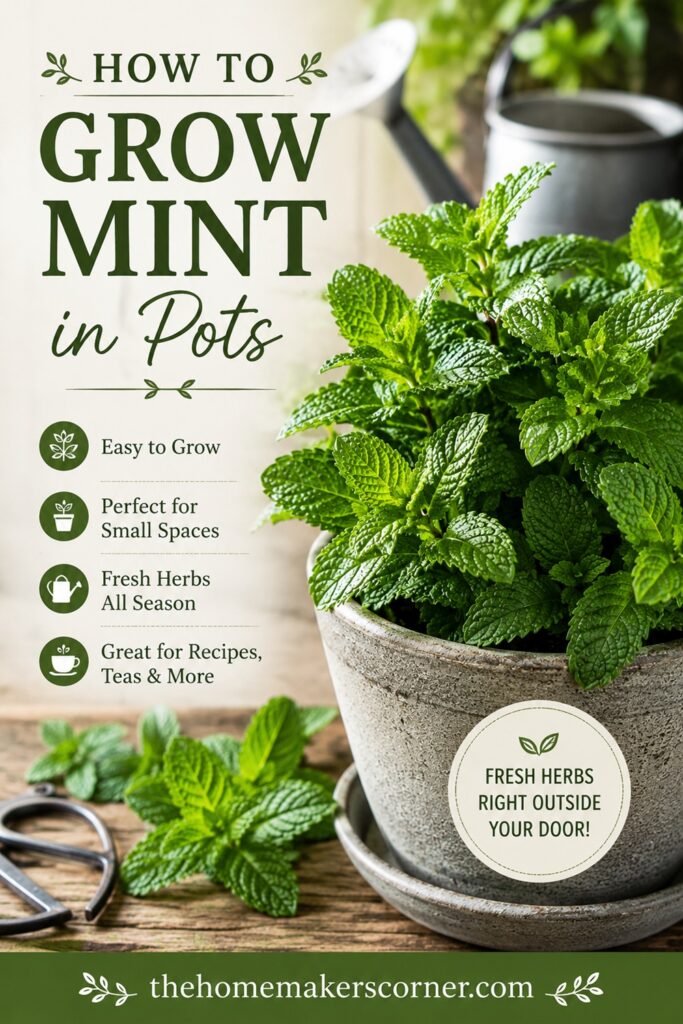
Why Grow Mint in Pots?
Mint thrives in containers and offers several benefits:
- Prevents mint from spreading aggressively
- Makes harvesting easier
- Perfect for patios, balconies, and small gardens
- Easy to move when needed
- Provides fresh herbs close to the kitchen
Container-grown mint also makes a beautiful addition to a kitchen garden, especially when paired with other herbs and edible plants.
Related Article: The Best Way to Grow Thyme in Pots for Kitchen Gardens
Choose the Right Container
Mint grows quickly and develops an extensive root system.
Want to try making your own jelly at home?
Get my free guide with 8 easy, beginner-friendly jelly recipes you can confidently make.
For best results, choose a container that:
- Is at least 10 to 12 inches wide
- Has drainage holes
- Is deep enough to accommodate root growth
Terracotta, ceramic, and plastic pots all work well.
Larger containers allow mint to grow more vigorously and require less frequent watering during hot weather.
Select a Sunny Location
Mint grows best with:
- 4 to 6 hours of sunlight daily
- Morning sun and afternoon shade in hotter climates
- Good air circulation
Unlike many Mediterranean herbs, mint can tolerate partial shade, making it a versatile choice for many gardens.
If you’re looking for other herbs that tolerate less sunlight, see The Best Herbs That Grow in the Shade.
Planting Mint
You can grow mint from:
- Nursery plants
- Divisions from established plants
- Rooted cuttings
Most gardeners find it easiest to start with a healthy nursery plant.
To plant mint:
- Fill your container with quality potting mix.
- Remove the mint from its nursery pot.
- Place it at the same depth it was previously growing.
- Fill in around the roots with soil.
- Water thoroughly.
Mint establishes quickly and often begins producing new growth within a few weeks.
Use Rich, Well-Draining Soil
Mint prefers:
- Moist but well-drained soil
- Organic matter-rich potting mixes
- Consistent moisture
A high-quality potting mix designed for containers works perfectly.
Avoid using garden soil, which can become compacted in pots.
Water Regularly
Unlike rosemary and other drought-tolerant herbs, mint enjoys evenly moist soil.
Water when the top inch of soil feels dry.
During hot summer weather, container-grown mint may require watering every day or two.
Signs your mint needs water include:
- Wilting leaves
- Dry soil
- Slower growth
Avoid allowing the soil to become completely dry for extended periods.
Fertilizing Mint
Mint is a fairly light feeder.
Apply:
- Compost in spring
- A diluted liquid fertilizer once or twice during the growing season if needed
Too much fertilizer can reduce flavor and encourage excessive growth.
Harvesting Mint
Regular harvesting encourages bushier growth and helps prevent flowering.
To harvest:
- Cut stems just above a leaf node.
- Harvest frequently throughout the growing season.
- Avoid removing more than one-third of the plant at a time.
For more detailed pruning information, see The Best Way to Prune Mint Plants.
Preserving Your Mint Harvest
One mint plant can produce more leaves than most gardeners can use fresh.
Fortunately, mint preserves beautifully.
You can:
- Dry mint for tea and recipes
- Freeze mint leaves
- Make flavored syrups
- Use mint in homemade drinks and preserves
Learn more in How to Dry Mint (Easy Ways to Preserve Fresh Mint at Home).
What to Do With Fresh Mint
If you’re wondering how to use all that mint, there are plenty of delicious options.
Fresh mint is wonderful in:
- Tea
- Lemonade
- Fruit salads
- Desserts
- Homemade jelly
You may enjoy these recipes and ideas:
- Mint Lemonade Recipe for a Refreshing Summer Drink
- Cucumber Mint Lemonade Recipe (Refreshing Summer Drink)
- Old-Fashioned Mint Jelly Recipe for Canning
- What to Do With Fresh Mint Leaves
Companion Plants for Mint
Even though mint grows best in containers, companion planting can still be helpful when placing pots around your garden.
Mint pairs well with many vegetables and herbs and can help attract pollinators while deterring some garden pests.
Learn more in Best Companion Plants for Mint in Your Herb Garden.
Common Problems
Leggy Growth
Usually caused by insufficient sunlight.
Move the container to a brighter location.
Yellow Leaves
May indicate overwatering, underwatering, or poor drainage.
Check soil moisture and ensure drainage holes are not blocked.
Flowering Plants
Mint becomes less flavorful after flowering.
Regular harvesting and pruning help delay blooming.
Growing mint in pots is one of the easiest ways to enjoy fresh herbs throughout the growing season.
Containers keep this enthusiastic grower under control while providing an abundant harvest for teas, recipes, preserves, and refreshing summer drinks.
With regular watering, occasional pruning, and plenty of harvesting, a single mint plant can provide fresh leaves for months and become one of the most productive plants in your kitchen garden.
Follow my kitchen garden living board on Pinterest.