
There’s nothing better than biting into a perfectly ripe, juicy pear. But unlike many fruits, pears shouldn’t usually be left on the tree until they’re soft.
This post may contain affiliate links.
Knowing when to harvest them is the secret to getting the best flavor and texture.
Here’s how to know when your pears are ready to pick.
When Are Pears Ready to Harvest?
Most pear varieties are ready to harvest from late summer through early fall, depending on the variety and your growing zone.
Common harvest times include:
- Early varieties: August
- Mid-season varieties: September
- Late varieties: September through October
Unlike peaches or plums, pears are picked before they’re fully ripe.
How to Tell When Pears Are Ready to Pick
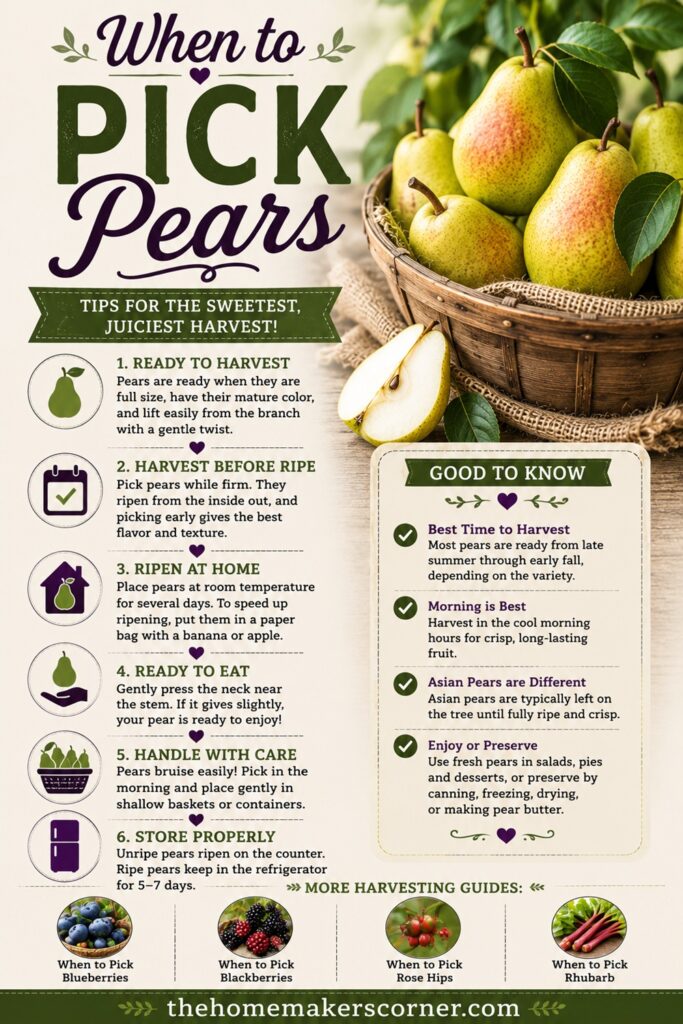
A pear is ready to harvest when it:
Want to try making your own jelly at home?
Get my free guide with 8 easy, beginner-friendly jelly recipes you can confidently make.
- Has reached full size for its variety
- Has developed its mature color
- Separates easily from the branch when gently lifted and twisted
- Feels firm, not soft
To test a pear, gently cup it in your hand and lift it upward. If the stem releases easily from the branch, it’s ready to harvest.
Don’t pull hard. If it doesn’t come off easily, leave it on the tree for a few more days.
Why Pears Are Picked Before They’re Soft
Pears ripen from the inside out.
If you leave them on the tree until they’re soft, the inside often becomes mushy before the outside is ready.
Harvesting them while they’re still firm allows them to develop their best flavor indoors.
How to Ripen Pears
After harvesting, place pears at room temperature for several days.
Most varieties ripen beautifully on the kitchen counter.
To speed up ripening, place pears in a paper bag with a ripe banana or apple. These fruits release ethylene gas, which naturally encourages ripening.
How to Tell When a Pear Is Ready to Eat
Instead of squeezing the whole fruit, check the neck near the stem.
If the flesh gives slightly when pressed with your thumb, the pear is ready to eat.
This simple test helps prevent bruising.
Harvest in the Morning
Pick pears during the cool morning hours whenever possible.
Morning harvests help fruit stay crisp and reduce heat stress, especially during warm weather.
Handle Pears Carefully
Pears bruise easily.
Place them gently into baskets or shallow containers rather than dropping them into deep buckets.
Avoid stacking fruit too high during harvest.
How Long Do Fresh Pears Last?
Storage depends on ripeness.
- Unripe pears will continue ripening on the counter for several days.
- Ripe pears will usually keep in the refrigerator for about five to seven days.
If you have a large harvest, pears are excellent for:
- Canning
- Freezing
- Drying
- Pear butter
- Pear jam
- Homemade desserts
Frequently Asked Questions
Can pears ripen on the tree?
They can, but most varieties develop better flavor and texture when picked while still firm and allowed to finish ripening indoors.
Why are my pears hard?
They probably need a few more days at room temperature. Pears naturally soften after harvest.
Do all pears ripen the same way?
Most European pears are harvested firm and ripened indoors. Some Asian pears are different—they’re usually left on the tree until fully ripe and crisp.
More Harvesting Guides
If you’re harvesting other fruits from your garden, these guides can help:
Learning when to harvest each crop ensures the best flavor and helps you enjoy your garden’s bounty throughout the growing season.
Knowing when to pick pears is one of the easiest ways to enjoy sweeter, better-tasting fruit.
Harvest pears while they’re firm and release easily from the branch, then let them finish ripening indoors.
With just a little patience, you’ll enjoy perfectly juicy pears that are ideal for fresh eating, baking, and preserving.
Follow my simple garden living board on Pinterest.