Peonies are one of the stars of the cottage garden. Their large, fragrant blooms are stunning on their own, but they become even more beautiful when paired with the right companion plants.
This post may contain affiliate links.
Choosing plants that bloom before, during, and after peony season creates a garden that’s full of color for months instead of just a few weeks.
The best companion plants for peonies enjoy similar growing conditions—full sun to partial shade and well-drained soil—but add different textures, heights, and bloom times.
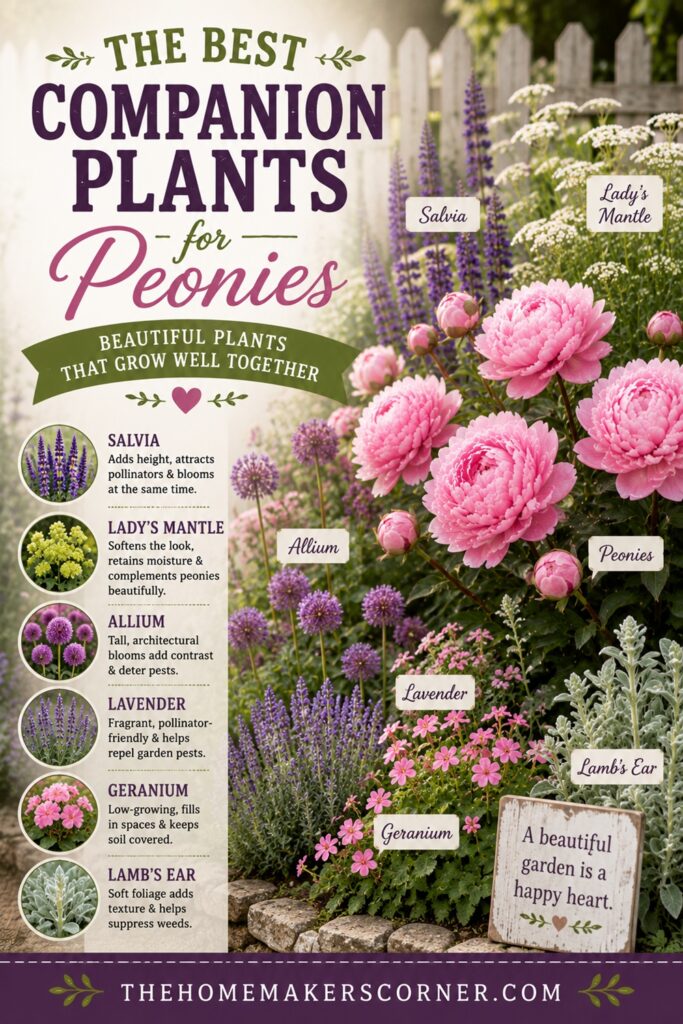
Together, they create the layered, romantic look that cottage gardens are known for.
Related Article: Best Time to Divide Peonies in Your Garden
Best Companion Plants for Peonies
Salvia
Salvia is one of the best companions for peonies. Its tall spikes of purple or blue flowers bloom around the same time as peonies, creating beautiful color contrast while attracting bees, butterflies, and hummingbirds.
Because salvia grows upright, it adds height behind peony plants without crowding them.
Want to try making your own jelly at home?
Get my free guide with 8 easy, beginner-friendly jelly recipes you can confidently make.
Lady’s Mantle
Lady’s Mantle is a classic cottage garden favorite. Its soft, chartreuse flowers and scalloped leaves create a beautiful contrast against the large, colorful blooms of peonies.
Related Article: Best Time to Plant Peonies: A Guide for Thriving Blooms
It also forms a low mound around the base of peonies, helping soften garden edges while retaining soil moisture.
Allium
Ornamental alliums add a completely different shape to the garden with their large globe-shaped blooms.
Their tall stems weave naturally between peony foliage, adding architectural interest while helping deter deer and rabbits.
Most alliums bloom just before or alongside peonies, making them an excellent companion.
Related Article: Transplanting Peonies to Pots: A Step-by-Step Guide for Beautiful Blooms
Lavender
Lavender’s silvery foliage and fragrant purple flowers pair beautifully with pink, white, and red peonies.
Both plants prefer well-drained soil and plenty of sunshine. Lavender also attracts pollinators while adding fragrance and texture long after peonies have finished blooming.
Hardy Geranium
Hardy geraniums make an excellent ground cover around peonies. Their mounding habit fills empty spaces, suppresses weeds, and provides cheerful blooms before and after peony season.
They’re especially useful for creating the full, overflowing look that’s so popular in cottage gardens.
Lamb’s Ear
Lamb’s Ear offers soft, silvery foliage that contrasts beautifully with the deep green leaves of peonies.
Even when it’s not flowering, its velvety leaves add texture and brightness to the garden while helping cover bare soil around larger plants.
Creating a Cottage Garden Look
One of the secrets to a beautiful cottage garden is planting in layers.
Start with peonies as your focal point. Add taller plants like salvia and allium behind them for height.
Fill the middle layer with fragrant lavender, then soften the front of the border with Lady’s Mantle, hardy geranium, and Lamb’s Ear.
The result is a garden that looks lush, natural, and overflowing with flowers throughout the growing season.
Tips for Successful Companion Planting
Peonies perform best when they have room to breathe. Avoid planting companions too close to the crown, as good air circulation helps prevent fungal diseases.
Choose plants with similar growing requirements. All of these companion plants thrive in full sun and well-drained soil, making them excellent neighbors for peonies.
Water deeply but avoid consistently soggy soil. Once established, many of these plants—including lavender and salvia—are fairly drought tolerant.
Plants to Avoid Near Peonies
Not every plant makes a good companion.
Avoid aggressive spreaders that can crowd peonies or compete for nutrients. Plants that require consistently wet soil are also poor choices since peonies dislike sitting in damp ground.
Large shrubs planted too closely can eventually shade peonies and reduce flowering.
Peonies are beautiful on their own, but pairing them with the right companion plants creates a garden that’s colorful from spring through summer.
Salvia adds vertical interest, Lady’s Mantle softens the edges, Allium provides striking globe-shaped blooms, Lavender brings fragrance and pollinators, Hardy Geranium fills bare spaces with cheerful flowers, and Lamb’s Ear contributes soft silver foliage that ties everything together.
Together, these plants create the timeless charm of a classic cottage garden while helping your peonies shine as the centerpiece of the landscape.
More Companion Planting Guides
- Best Companion Plants for Basil
- What Grows Well with Dill? Companion Planting Guide
- Best Companion Plants for Chives
- Best Companion Plants for Rosemary
Follow my cottage garden flowers board on Pinterest.