There’s something I really love about the garden at the end of summer. The flowers may not look quite as perfect as they did a few months ago, but there’s still so much going on.
This post may contain affiliate links.
This is also the time of year when I start thinking about what I want to do with the garden before winter arrives.
Fall garden cleanup doesn’t have to mean cutting everything down and making the garden look completely bare.
In fact, I like to leave quite a bit of the garden alone. Some plants provide food and shelter for birds, some reseed themselves, and dried flowers can be just as pretty in the fall as they were in the summer.
If you have a cottage garden, September and October are a great time to do a little tidying, save seeds, prepare your soil, and get your garden ready for another growing season.
Here are a few things I like to do.
Save Seeds From Your Favorite Flowers
Before you start cutting flowers back, take a look at the plants you’d like to grow again next year.
Want to try making your own jelly at home?
Get my free guide with 8 easy, beginner-friendly jelly recipes you can confidently make.
This is one of my favorite fall garden projects because it’s such an easy way to get more flowers without buying more seeds.
If you grew zinnias this year, let some of the flower heads dry completely before collecting the seeds. You can learn how to save zinnia seeds for next year’s garden here.
The same thing works beautifully with marigolds and sunflowers. I like to leave a few flower heads in the garden specifically for seed saving.
And don’t forget about the birds. Sunflower heads full of seeds are a wonderful late-season food source, so you don’t necessarily need to harvest every single one.
Don’t Cut Everything Back
This is probably my biggest piece of advice when it comes to fall garden cleanup.
You don’t have to cut everything down.
Some perennial flower stems and seed heads can be left standing through the winter. They give the garden some structure after the leaves have fallen, and birds can feed on the seeds.
Plants such as coneflowers, asters and other cottage garden favorites can provide valuable late-season food for pollinators and birds.
Read next: How to Grow Asters to Attract More Butterflies
I usually remove anything that is diseased or looks unhealthy, but otherwise I don’t worry about making every garden bed perfectly tidy.
There will be plenty of time for cleanup in the spring.
Clean Up Diseased Plants
While I’m not a fan of overly aggressive fall cleanup, I do remove plants that have obvious signs of disease.
If foliage is covered with powdery mildew, black spots or other fungal problems, I don’t leave it sitting in the garden over winter.
Remove diseased plant material and dispose of it rather than adding it to your compost pile.
Healthy plant material is a different story. Some stems and leaves can simply be left in place to break down naturally and return organic matter to the soil.
Give Your Perennials a Little Attention
Fall is also a good time to look around and see if any of your perennial flowers have gotten too large for their space.
Some perennials can be divided in the fall, giving you several new plants from one established plant.
This is especially useful in a cottage garden because it’s an easy way to fill in empty spaces or create more of a plant without spending money on new plants.
Just make sure you know whether a particular plant prefers to be divided in fall or spring before you start digging.
Don’t Forget About Hydrangeas
Hydrangeas are one of those plants that can make fall garden cleanup a little confusing because when you prune them matters.
Some hydrangeas bloom on old wood, while others bloom on new wood, so cutting them back at the wrong time can mean removing next year’s flower buds.
If you have hydrangeas in your garden, take a look at whether you should cut back hydrangeas in the fall before you start pruning.
Sometimes the best thing you can do is simply leave them alone.
Harvest the Last of Your Herbs
Before your first frost, take a look through your herb garden and bring in anything you want to preserve.
Basil is especially vulnerable to cold weather, so I like to harvest as much as I can before the first frost.
You can use fresh herbs right away, or dry them for use throughout the winter.
Read next: How to Harvest Basil for Fresh Use, Tea & More
This is also a good time to harvest herbs for homemade seasoning blends, infused vinegars and other pantry projects.
One of my favorite things about growing herbs is that the garden doesn’t stop being useful just because summer is ending.
Harvest Rose Hips
If you grow roses, don’t overlook the little fruits that develop after the flowers fade.
Those rose hips are a beautiful sign that the season is changing, and they can be harvested for a variety of uses.
Read next: How to Grow and Harvest Rose Hips
I actually love leaving some rose hips on the plants because they add so much fall color to the garden.
You don’t have to harvest everything. Sometimes part of simple garden living is just enjoying what’s still growing.
Add Compost or Mulch
Fall is a great time to give your garden soil a little attention.
Add a layer of finished compost around established plants, being careful not to pile it directly against plant stems.
You can also add mulch to help protect plant roots from temperature swings and winter weather.
Leaves can be especially useful in the garden. Rather than treating every fallen leaf as something that needs to be removed, consider chopping them up and using them as mulch or adding them to your compost.
Your garden can turn quite a bit of its own waste into next year’s soil.
Plant Spring-Blooming Bulbs
If you want tulips, daffodils, crocuses or other spring bulbs in your garden, fall is the time to get them in the ground.
This is one of those garden chores that feels a little strange because you’re planting something when the garden is winding down, but you’ll be very glad you did when those first flowers appear in spring.
I especially love spring bulbs tucked into cottage garden beds where they can come up among the perennials.
Leave a Little Mess
This might be the most important part.
Your garden doesn’t need to look perfect going into winter.
Leave some dried flower heads. Leave some stems standing. Let fallen leaves collect around plants. Leave a few seeds for the birds.
A cottage garden is supposed to feel a little relaxed and natural.
There is something really nice about walking through the garden in late fall and seeing dried flowers, rose hips, fading herbs and seed heads instead of an empty garden bed.
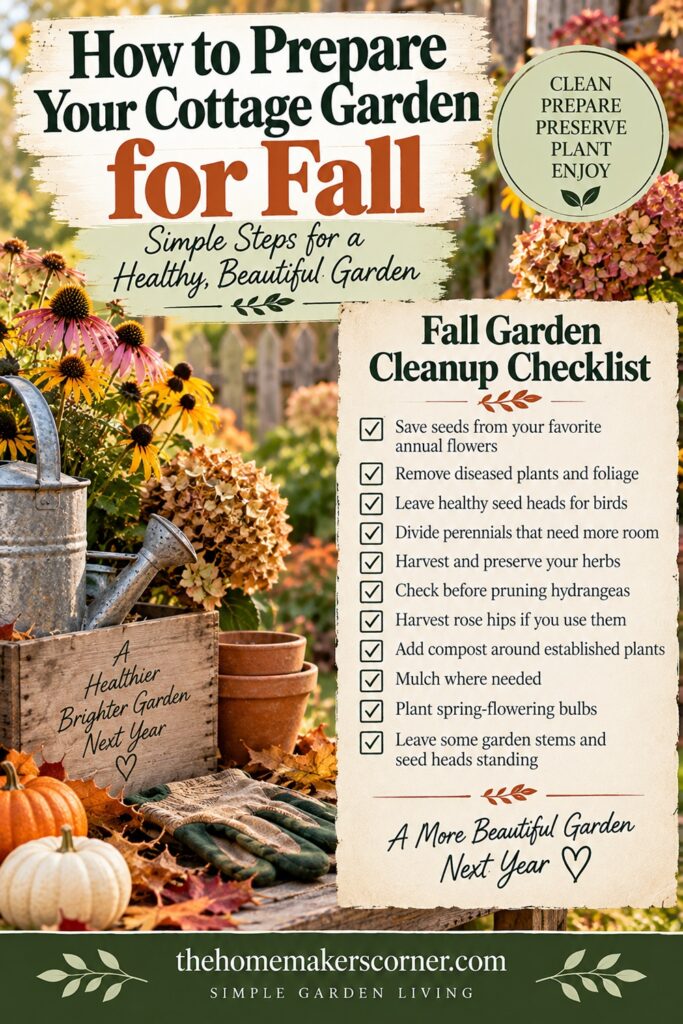
A Simple Fall Garden Checklist
If you want to keep your fall garden cleanup simple, here’s a good place to start:
- Save seeds from your favorite annual flowers
- Remove diseased plants and foliage
- Leave healthy seed heads for birds
- Divide perennials that need more room
- Harvest and preserve your remaining herbs
- Check before pruning hydrangeas
- Harvest rose hips if you use them
- Add compost around established plants
- Mulch where needed
- Plant spring-flowering bulbs
- Leave some garden stems and seed heads standing
You don’t have to do all of these things in one weekend.
That’s one of the things I love about simple garden living. The garden doesn’t need to be a list of chores that has to be completed perfectly. There’s something to harvest, save, plant or enjoy in every season.
And when spring finally comes around, you’ll be glad you left a little life behind in the garden.
Follow my fall garden living board on PInterest.